
Großer Gabelschwanz ■ Puss moth ♂
Cerura vinula (Linnaeus, 1758)
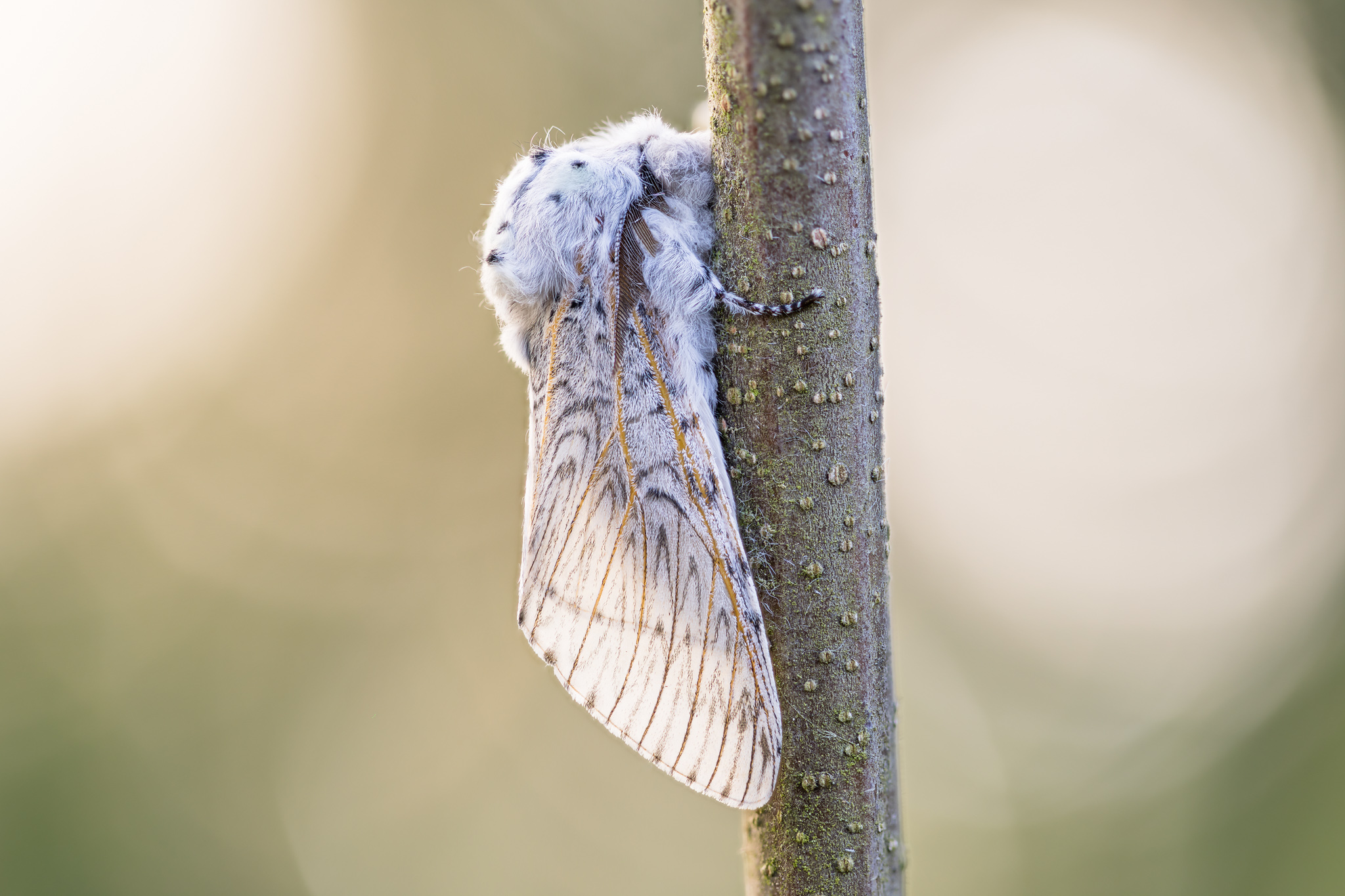
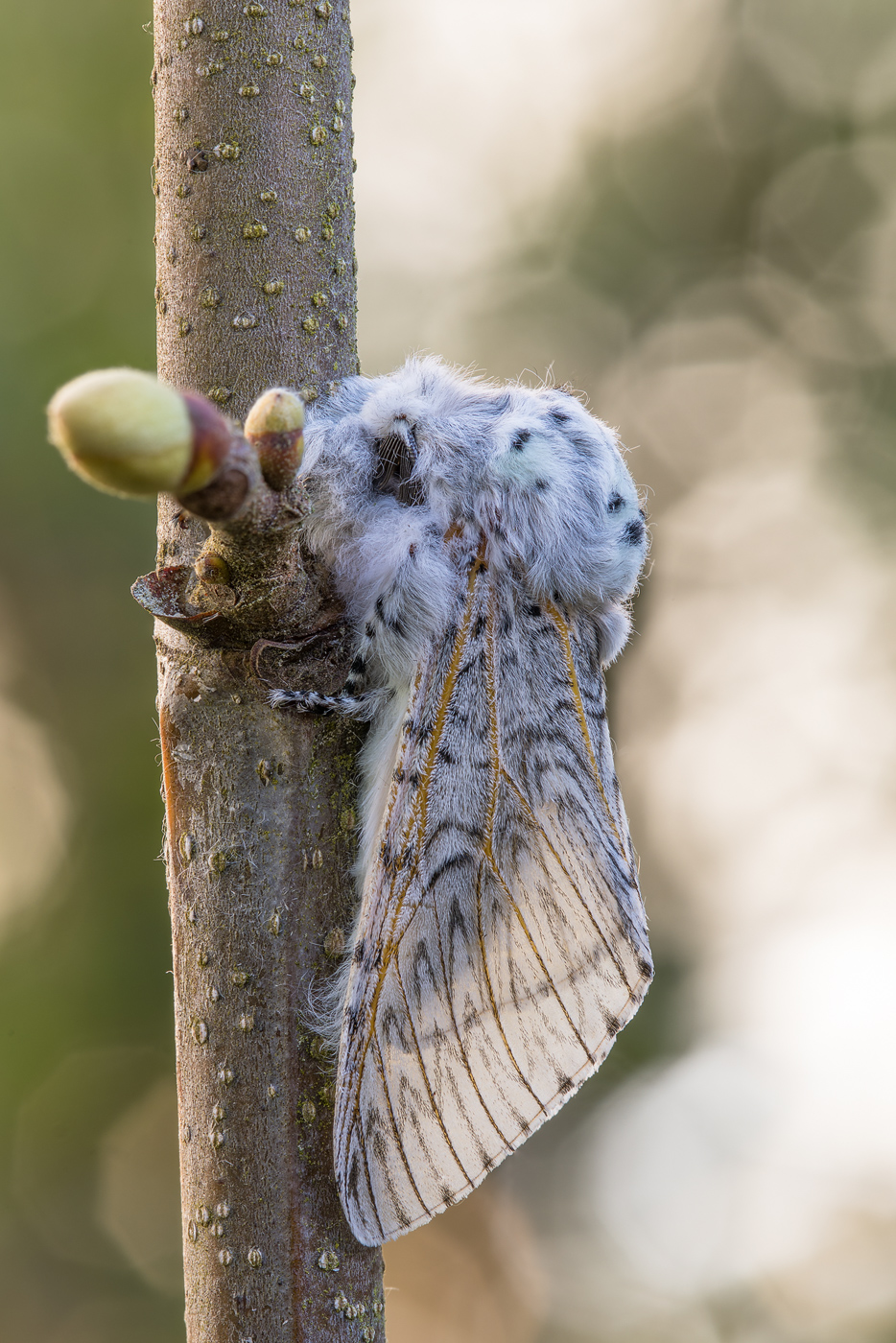
Der große Gabelschwanz ist ein Nachtfalter aus der Familie der Zahnspinner (Notodontidae). Mit einer Flügelspannweite von über 70 mm gehört dieser Schmetterling zu den größeren Nachtfaltern. Ab April heftet das Weibchen seine Eier an die Blätter von jungen Pappeln und Weiden. Bevorzugt werden feuchte Standorte an Gewässern. Der Schmetterling ist faszinierend mit seinem weißen Pelz und den gelben Adern auf den Vorderflügeln. Sehr schön kann man bei diesem Männchen die gefiederten Fühler erkennen. Diese dienen dazu, den Geruch der Weibchen aus großer Entfernung aufzunehmen. Nach der Kopula legt das Weibchen dunkelbraune Eier. Die Eiablage erfolgt an Pappeln und Weiden. Der Falter fliegt in einer Generation von April bis Ende Juni. Er lebt nur einige Tage und nimmt während dieser Zeit keine Nahrung zu sich. Sein Leben dient einzig der Fortpflanzung.
The puss moth is a moth from the family of Notodontidae. With a wingspan of over 70 mm, this moths belongs to the larger moths. From April the female attaches its eggs to the leaves of young poplars and willows. Preferred are humid places at waters. The moth is fascinating with its white fur and yellow veins on the front wings. The feathered antennae of this male can be seen very clearly. These serve to absorb the smell of the females from a great distance. After the copula, the female lays dark brown eggs. The laying of eggs takes place at poplars and willows. The butterfly flies in a generation from April to the end of June. It lives only a few days and does not eat during this time. Its life is for reproduction only.
Photographed on 07.04.2019
▲ Click on the image for full resolution ▲
Noch interessanter als den Falter, finde ich die bis zu 80 mm lange Raupe. Diese ist faszinierend mit ihrem roten Kopf und den beiden Schwänzchen. Sie kann bei Gefahr, Ameisensäure zur Abwehr von Feinden einige Zentimeter weit versprühen. Leider konnte ich bisher noch nie Eier oder Raupen von diesem fantastischen Nachtfalter finden. Ich werde die Suche nicht aufgeben und bin zuversichtlich, dass meine Suche dieses Jahr erfolgreich verläuft.
Even more interesting than the moth is the up to 80 mm long caterpillar. This caterpillar is fascinating with its red head and two tails. In case of danger it can spray formic acid a few centimetres to ward off enemies. Unfortunately I could never find eggs or caterpillars of this fantastic moth. I will not give up my search and I am confident that my search will be successful this year.
▲ Click on the image for full resolution ▲
〰️
| Category | Macro |
| Camera | Canon 5D Mark IV |
| Lens | Canon EF 100 mm 1:2.8L Macro IS USM |
| Location | Germany, Bavaria, Lower Franconia, South Spessart |
Wenn dir mein Beitrag gefällt, freue ich mich über deine Nachricht.
Herzlichen Dank und viele Grüße vom 
If you like my contribution, I am looking forward to your message.
Many thanks and greetings from Germany 🦋
Frühere Beiträge in der Übersicht │ Previous articles in the overview