

[Picture source]

Attachment is defined as intense and continuous emotional connection that bonds one person with another. It does not need to be reciprocated, which means that a human being is able to develop an attachment to another human being without the attachment being shared back. It is identified by certain predictable behaviors in children, like searching for physical closeness to the attachment figure, when a child feels upset or threatened. Responsiveness turns up to be crucial for attachment - it is more important for the child which adult caregiver communicates and plays with him or her, rather than who provides food, changes the clothes or washes him or her.
Attachment Theory
Attachment theory is a psychological model that describes how important effect psychological attachment has on individual development.
It describes that human being's ability to create emotional and physical attachment to another human being provides a feeling of security and stability for growth, development, risk taking and sustainable development, as a personality. It states that it is essential for child's individual development to have strong emotional and physical attachment to at minimum one primary caregiver.
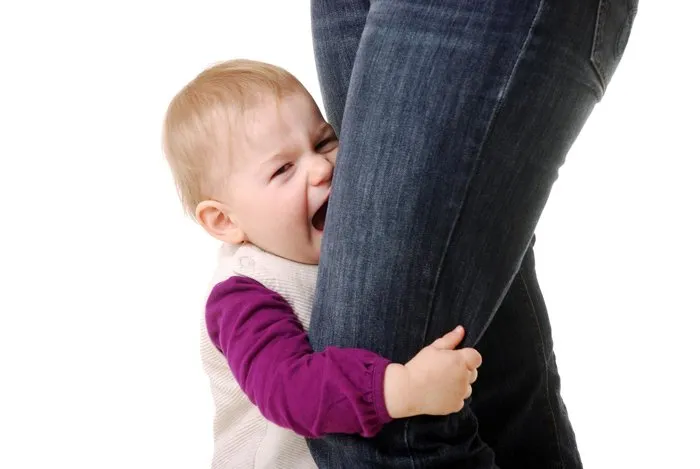
Attachment behavior in children means behavior that is expressed for the purpose of creating attachment during times when a child is stressed or perplexed.
Attachment behavior in adult caregivers means the way adult caregivers develop their attachment relationship with the child. For example, how receptive and sensitive an adult is to child's needs.
Psychologist, psychiatrist and psychoanalyst John Bowlby is considered as the originator of the Attachment Theory.
His theory was developed as an outcome of his years of research of child's developmental psychology.
According to Bowlby's discovery the child firstly develops just one primary attachment to the attachment figure, and after that she or he would use this attachment figure as a secure base for exploration.
Later, developmental psychologist Mary Ainsworth continued the research and coined the term "attachment behavior".
[Picture source]

Strange Situation Procedure
Mary Ainsworth created a testing method called the Strange Situation Classification, that is specifically designed to study different types of child's attachment and behavior.
The test is performed by watching the behavior of the child in a set of eight episodes. Each episode lasts around 3 minutes:
1 - The mother, with her child and the experimenter (episode lasts less than 1 minute).
2 - The mother and her child alone.
3 - The stranger comes to join the mother and her child.
4 - Mother leaves her child and the stranger alone.
5 - The mother comes back and the stranger leaves the room.
6 - The mother comes back and the child is left completely alone.
7 - The stranger returns.
8 - The mother comes back and the stranger leaves the room.
The results were classified in four attachment styles. These attachment styles were assessed according to four interaction behaviors expressed towards the mother in two reunion episodes:
1 - Proximity and contacting seeking
2 - Contact maintaining
3 - Avoidance of proximity and contact
4 - Resistance to contact and comforting
[Picture source]
Attachment Styles
Secure Attachment
- Child is stressed when mother leaves the room.
- Child avoids the stranger when left alone, but becomes friendly when mother is present.
- Child becomes positive and happy when mother comes back.
- Child uses the mother as a secure base to explore their environment.

Insecure Attachment - Anxious-avoidant Attachment
- Child shows no sign of stress when mother leaves the room.
- Child is fine around the stranger and plays normally when the stranger is present.
- Child shows little interest when mother comes back.
- Mother and stranger are able to comfort the child equally well.

Insecure Attachment - Anxious-ambivalent / Resistant Attachment
- Child shows signs of intense stress when mother leaves the room.
- Child avoids the stranger and shows fear of stranger.
- Child approaches the mother but resists physical contact - may attempt to push mother away.
- Child cries even more and explores less than as in Secure or Anxious-avoidant types.

Insecure Attachment - Disorganized / Disoriented Attachment
- Child's first impulse is to look for comfort from the mother but when mother comes closer, the child is afraid to be close.
- Child shows ambivalent or odd behavior towards the mother. For example, child first runs up to his or her mother and then immediately pulls away. Sometimes child may even run away from the mother, curling up in a ball or trying to hit her.

Attachment theory suggests that period between 0 to 5 years is critical for an attachment.
If sustainable attachment did not have a chance to develop during this crucial period, then the child will suffer from irreversible developmental consequences such as cognitive or emotional problems such as reduced intelligence, anxieties, aggression etc.
The type of attachment which children establish with their attachment figures shapes the way they will create their attachments as adults. Unsustainable attachment during childhood can dramatically impact their adult relationships.

References:
Attention: This post has been written by

The author is responsible for the whole article
The author will receive 100% of the STEEM Dollars from this post