

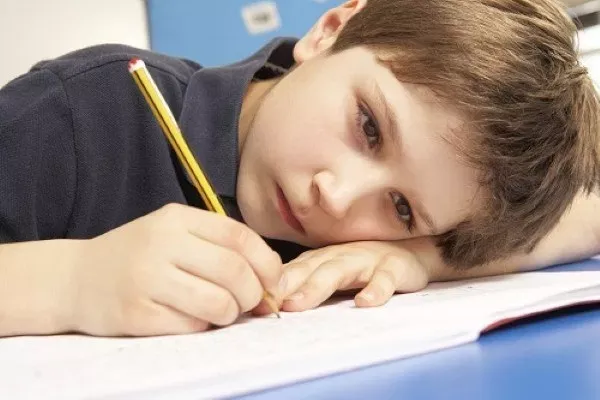
We have become accustomed to see how normal, the run runs of children day after day, many with some discouragement, worry and even stress, for getting at night and not having finished the homework assigned from school.
Fortunately, in recent years, voices have been rising from countries such as Spain and Chile, for example, which speak of the need to reduce the amount of work and tasks that schoolchildren take home, questioning, including their actual contribution to the learning opportunities of these.
Some think that school tasks take away time for play and recreation and sharing with the family. They consider, in addition, counterproductive, to arrive home in the afternoon, with the fatigue of the day, and to have to continue working, often under stress, to finish the assignment entrusted.
source

source
In other words, the tendency is to stop assigning repetitive, memory and tedious tasks, typical of the traditional school, to make way for school tasks that are truly learning experiences for the student, which are mostly carried out within the school, respecting where possible, the student's time and their families.

source
We live today a globalized and complex world. The students of today demand more dynamic, communicative and interactive activities.
The search for information is practically a skill that they already develop at an early age from their homes. Orienting those skills and interests towards educational objectives of interest to the student. I believe that is the challenge of the future.

source
Recall that the ultimate goal of education should be to ensure better skills for better job prospects, from the individual point of view, and to be able to function successfully, in a society that changes very quickly. Hence, the school, rather than transmitting well-established knowledge, has to teach how to learn and adapt to changing situations typical of this century.

source