
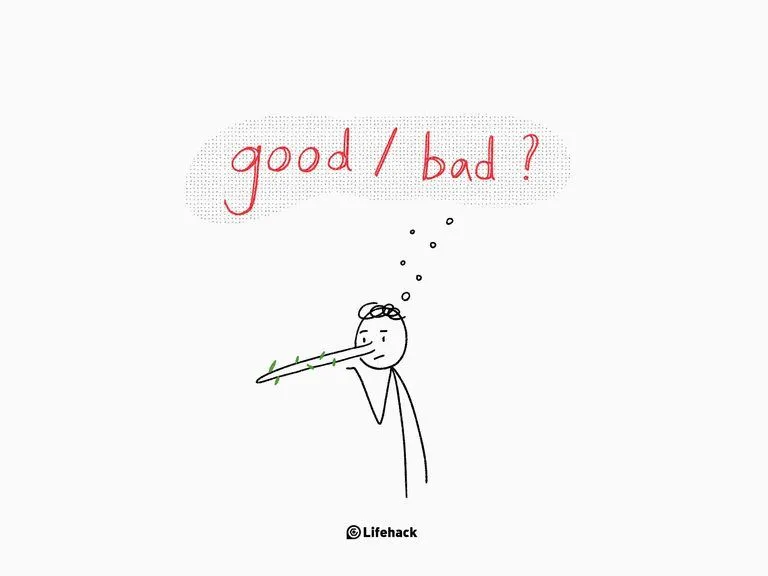
Liar, liar, liar pants on fire! No one wants to get trapped in a lie and appear to be deceptive or dishonest. But does telling a lie actually make you either of those things? Find out more as you read through. The unpleasant truth is, there are some advantage to lying; and they aren’t always for personal gain.
Occasionally, people prefer to lie to protect others and spare their feelings. Because let’s face it, the truth first of all hurts.
Why do we even lie Basically, we all need to take a minute to be honest with ourselves and confess that we all lie. Really? Yeah, trust me. It is in our hereditary nature to deceive and mos times protect.
Yes, we intermittently tell lies to mask up bad behavior, manipulate others, or rise to power and obtain what we desire.
But we also lie to spare the feelings of others, avoid unneeded conflict, or to simply brighten up someone’s day.
Dishonesty is in our nature 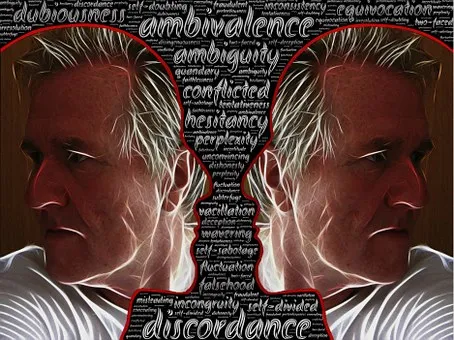
source
Scientist believe that the act of lying came into play after the development of language. It is the unfolding of delusive strategy, just as animals use camouflage to trick their predators or prey.
In terms of efficacy, lying is the easiest way to rise to power and obtain resources. If your enemy is larger and probably stronger than you, then physical force will not be very active. But if you are able to withstand and manipulate your enemy; not only can you obtain their resources, but make them believe that it was their idea own idea.
In actuality, we are habituated to lie at a young age. Didn’t your parents tell you to always thank your host for that “appetizing” meal that you had to choke down? Public graces aside, it’s still a lie.
Children naturally learn to lie between the ages of 2-5.
''Kang Lee,'' a psychologist from the University of Toronto studied children between the ages of 2-8 to measure the kind of lies that children tell.
As soon as children begin to lie at the age of 2, it is an evidence that they are starting to test out their independence. They lie just to see what they can get away with.
Scientifically, at the age of 8, children actually have the ability of lying to spare the feelings of others. The results of the study actually found that these lies are motivated by compassion and sympathy rather than manipulation and deceit.

Lying is a reflection of our goals
Most times you don’t even need to open your mouth to tell a lie. A simple facial expression is enough to transmit a lie
Embellishments, aggrandizement, these are the close counterparts to outright lies. But in this case, these lies are almost never malevolent. But in fact, a projection of one’s ambition.
In an experiment carried out by Robert Feldman, he questioned a number of students about their grades and attempt in school. Most of them were false about their actual grades. But instead of becoming concerned as most people do amidst a lie, they became extremely engaged and enthusiastic to boast about their achievements.
We lie if honesty won’t work”- Tim Levine
Is there any difference between moral and immoral lying? If we’re being honest and genuine with ourselves, the answer is a resounding yes. Some lies are well intentioned- meant to safegaurd those who are being lied to.
Lying has even been established to have psychological advantage for the liar. Those who are exceptionally honest with themselves are more inclined to depression than those who are not. Evidently, honest people are often deciphered as blunt, sometimes even pathological
There are even interpersonal advantage to be gained from lying and knowing when it is okay to do so. As a matter of fact, if someone detects that you have lied to them to protect them, it could multiply the trust that they have in you.
These well intentioned lies are known as pro-social lies.
Honestly, lying isn’t so bad.
What really controls the magnitude of the lie is the intent behind it. Lies that are told to safeguard others can actually help to strengthen relationships. Other lies that are told to embellish ones image are debatable inoffensive.
In conclusion, It all boils down to one fact- we all have our motive for the lies that we tell and the facts that we desire not to share. At the end of the day, what we don’t know have no right to hurt us.
Most times a tiny lie is necessary to guarantee that all is well and all runs smoothly.
If this method/procedures works for you, I would love to hear your feedback. Any suggestions, requests, comments, or even sharing how these effect your everyday experiences is most welcome.
JOIN US ON STACH DISCORD HERE
STACH is a physical Accelerator Hub dedicated to decentralizing the offline by breaking the barriers to accessing the internet like light, internet and conducive working space.
STACH is supported by @Sndbox as a Sndcastle project.

