

© Westley Nash (2018)
The first time we fear the water is usually the first time we realise that we can drown in it. This is because on a survival aspect we are built to learn from our experiences, and so if a stressful or traumatic experience tells us that something is hazardous, then our natural instinct is to get as far away from it as possible (and to stay away from it) rather than risk exposing ourselves to further danger; henceforth we fear it. But then you have to wonder:
"How is it that we can still swim in the water,
even knowing we could drown?"
I myself hold a certification in Health & Safety and having seen all that I have concerning risk and consequence, I can tell you that nothing can be considered as 100% safe! Yes you can put all the safety measures and controls in place that you want, but for the majority of processes there will always be a “residual risk” left to contend with. So in the end, Health & Safety is often more about managing risk, as opposed to simply eliminating it. Now of course, I’m talking mostly from a workplace aspect, but I have also found that the same exact principle can apply to our daily lives as well.

Consider all of us here on this planet: When you really think about it, as a species we are completely at the mercy of the elements. This is because the planet is a system in action and so goes through natural cycles, minute by minute, second by second, and while for the most part it remains fairly stable, on occasion these cycles can result in an extreme circumstance taking place, creating something devastating and catastrophic for all life here on Earth. Natural disasters such as Hurricanes, Tornados, Earthquakes, Forest Fires, Drought (to name but a mere few) are the many shocking displays of the planet's power that we are simply unable to match.

The same goes for our own daily cycles too, such as when we travel to work, visit the shops or socialise. Like it or not, we are all at an increased risk of being involved in an accident, attack or altercation, maybe an emergency situation or some other unexpected event every single time we venture out into the world. Such events are mostly outside of our control but are still more than capable of severely injuring us, or resulting in our death. If you think that’s scary, what about the involuntary biological cycles occurring within our own bodies right this very second? For in this regard we are all at risk (some more than others) of suffering sudden and potentially fatal illness, disease, infection, tumours, haemorrhages, heart attacks and a whole host of other things that are once more out of our control, but that can go on to cause us suffering or even death!.. I know, morbid right? ;-) But the point I’m making here is that despite knowing all of this, you will still be out there in the world, working, shopping and socialising. You will still go about your daily lives without hesitation, even with these risks present. Why? Because in a realistic world we cannot hope to live well if we constantly fret and stress about all of the dangerous things that might happen to us, we can only live our lives as best we can; and whether we know we are doing it or not, the main way in which we are achieveing this is through Risk Management.

To help protect ourselves from the hazards posed by the planet, we design and develop processes for monitoring the weather, constructing “early warning systems” that better help us predict the formation of natural disasters and to alert people of the danger. We also create emergency procedures able to evacuate the population of a city, with systems intended to provide support and protection to those at risk; these include the provision of food, resources and medicines, plus water to help extinguish fires or for drinking. In our daily cycles we have the Police patrolling the streets and the Armed Forces identifying possible threats to society. We invent new vehicles all designed to provide added safety to both the driver and pedestrians; not to mention the many safety systems used by both public and private organisations that we interact with on a regular basis. We also establish laws and regulations that encourage people to follow the rules which can (in some way) help reduce the likelihood of crimes being committed. The same goes for our biological cycles, where we aim to keep ourselves fit and healthy with exercise and a balanced diet. We visit the doctor for regular checkups or when we feel unwell, so that if something potentially hazardous is taking place within, then we can hopefully gain an early jump on it and take positive action.
That being said, even here one could argue that we still have no real safety, because what if a natural disaster occurs so fast and unexpected that the early warning system has no time to react; or even worse the system fails entirely? What if a serious threat evades our scrutiny and a terrorist attack takes place? What if we find that we have a disease that cannot be cured or that we found it too late and cannot do anything about it?.. (I know, back with the morbid thinking).. Well yes, as I’ve already said, nothing is ever 100% safe, but just because we cannot establish “absolute” safety, it doesn’t mean we have to give up living for fear of dying. Because the way I see it is that being able to see through the illusion of absolute safety is in fact our greatest power! For when we embrace the reality we can finally start to adapt and overcome the challenges we face in order to thrive and to prosper.
In Health & Safety it’s said that most people are ignorant of a hazard until that hazard is either pointed out to them, or if they suffer consequences because of interacting with the hazard (bumped by a car while crossing the road without looking for example). Particularly in the latter you will find that once you are aware of it, then you will remain aware of it for the rest of your life as the experience has been written into your memory to improve your ongoing survival. But either way, we then take steps to manage the risks to hopefully avoid an injury taking place. However, if this remains as a single action, if the hazard is not constantly monitored while moving forward, then we can in fact cause a highly ironic twist; in that we fall straight back into the very same illusion of safety we are trying to escape. This is because we grow complacent! We assume that because we have identified the risks, understood the hazard and put protective controls in place (the early warning systems and the health checkups etc.) that we are now perfectly safe. But once more I shall say it, that nothing is ever 100% safe due to the residual risks and so we have simply replaced one potential danger with another. Therefore I live by the rule that when it comes to operating machinery, the very second you feel completely comfortable and unafraid of it, that is the very same second that you are more at risk of injury from a machine than ever. Because you have stopped being consciously aware of the risks and you have stopped seeing the hazards as a danger; you are stuck in an illusion.
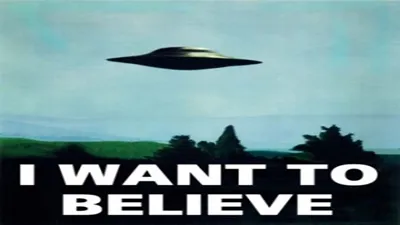
One of the reasons that the illusion of safety is so problematic is that deep down we want to believe! We desire to feel safe and secure, because the reality of an unsafe and unpredictable world scares us and fills us with anxiety, so we naturally gravitate towards anything that helps to alleviate that fear; including an illusion. But my belief is that we shall stand a significantly higher chance of survival when we open our eyes to that harsh truth, because when we accept the world as being unsafe, we actively begin to identify it’s dangers and highlight the threats posed, all of which help us to put in place more effective systems and measures to better help protect against them. While an illusion may feel more inviting, it doesn’t eliminate the risks, it only blinds us to their presence and so puts us at greater risk of catastrophic consequences; as the age old adage states “you can’t solve a problem by burying your head in the sand.”

So in finishing, I will finally answer the question that I asked at the very start: How is it that we can still swim in the water even knowing we could drown? Well I would say that we acknowledge the danger and so find a safer venue (such as a public swimming pool) and learn to swim properly and effectively. Even then we continue to respect the hazards posed by listening to advice and learning when and where not to swim. In short... We learn to manage the risks...
Additional Images courtesy of Pexels Flickr and Pixabay
Thank you so much for taking the time to stop by and view my content, I am most honoured indeed and hope you have a really great day :)
Best wishes
Westley xx
You can also find me here:
YouTube
Facebook
Instagram
Twitter
DeviantArt
Deep Underground Poetry
