
Ich hatte ja vor ca. einem Monat mein letztes frisches Milchstrassenbild gepostet
🌌 Milchstrasse am Mindelsee - 🌠 Milkyway at Mindelsee [scroll down for english]
und anschließend, vor 10 Tagen, ein ausführliches Tutorial zur Milchstrassenfotografie.
Hier kommt nochmals ein kleiner Nachschlag und ein Referenzbild es sind hier einige Punkt verschieden und ich denke man sieht recht deutlich die Unterschiede.
Hier also erstmal das neue Bild. Es ist eine Einzelaufnahme, bei der die Dämmerung schon leicht einsetzte.Die Exifs sind
Canon 6D/ 14mm 2,8 L II / 20 sec / f 3,2 / ISO 8000
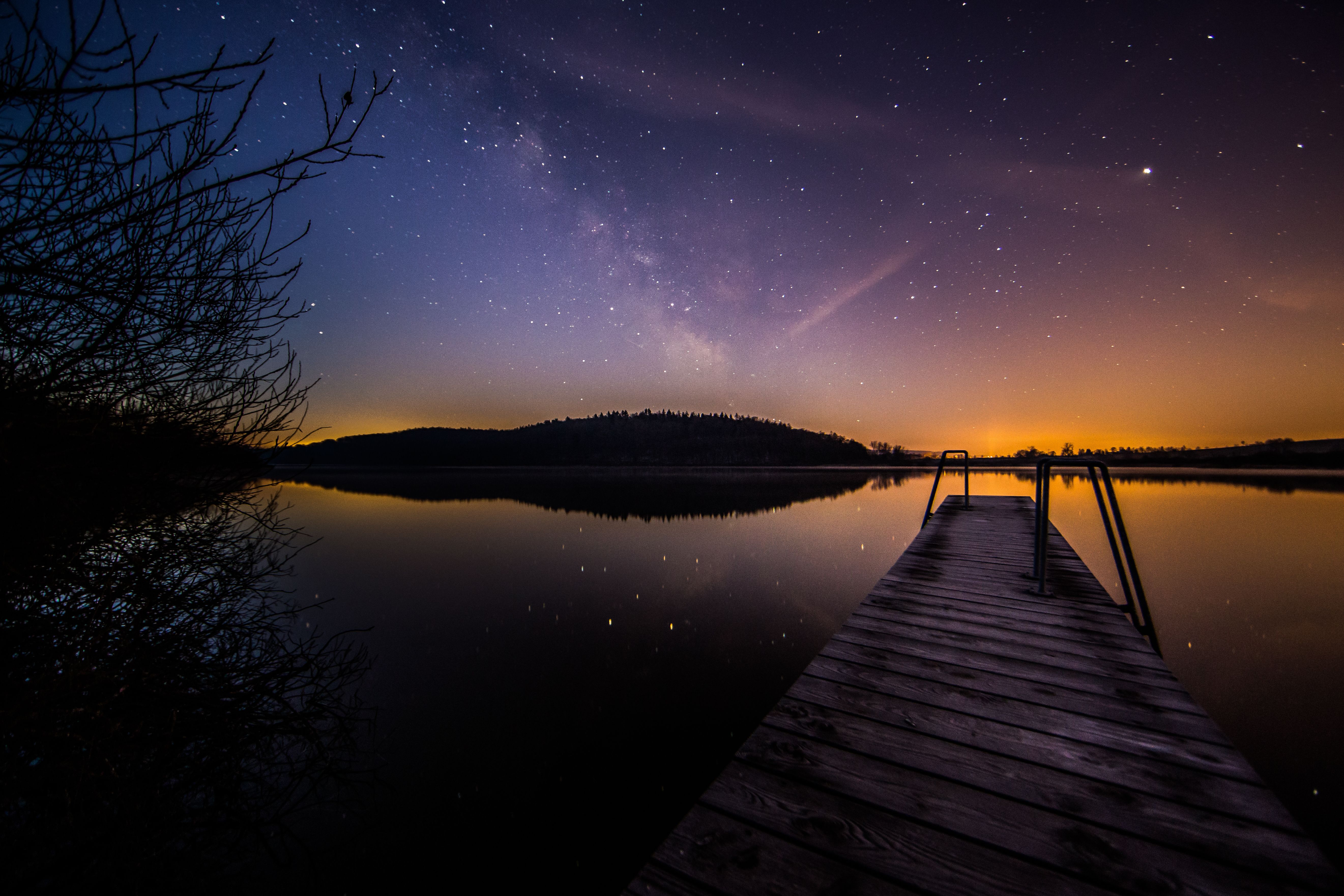
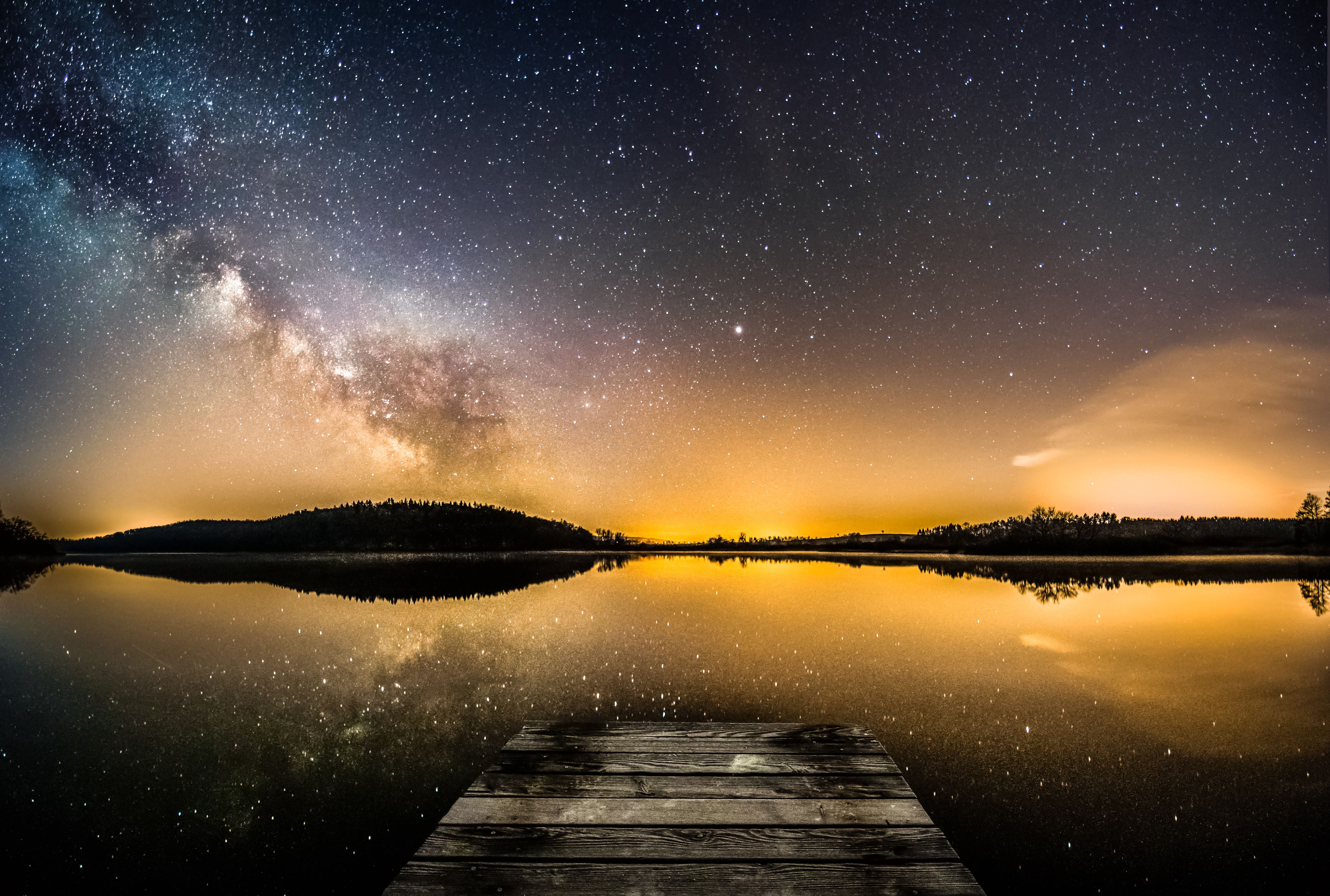
Verglichen mit dem alten Bild, sieht man hier deutlich, dass die Milchstrasse, aufgrund der höheren Umgebungshelligkeit, deutlich weniger in den Vordegrund tritt, ausserdem tritt bei diesem Bild deutlich mehr Rauschen zutage und auch die allgemeine Bildschärfe ist schlechter und das obwohl das zweite mit ISO 10000 gemacht wurde. Das zusammensetzen von 3 Bildern sorg einfach für wesentlich mehr Bildinformation. Die zusammen mit ISO 10000 statt 8000 und Blende 2,8 statt 3,2 und der tieferen Dunkjelheit macht das deutlich schönere Milchstrassenbild, oder was sagt ihr ?
So long
Daniel
About a month ago I posted my last fresh Milky Way picture
🌌 Milchstrasse am Mindelsee - 🌠 Milkyway at Mindelsee [scroll down for english]
and then, 10 days ago, a detailed tutorial on Milky Way photography.
Here comes again a small look up and a reference picture there are here some points different and I think you see quite clearly the differences.
Here is the new picture. It's a single shot, where the twilight started easily. The EXIFs are
Canon 6D/ 14mm 2.8 L II / 20 sec / f 3.2 / ISO 8000
Compared to the old image, you can clearly see here that the Milky Way, due to the higher ambient brightness, enters the foreground much less, moreover, significantly more noise appears in this image and also the general image sharpness is worse and this although the second was made with ISO 10000. The composition of 3 pictures provides simply for substantially more picture information. Together with ISO 10000 instead of 8000 and aperture 2.8 instead of 3.2 and the deeper darkness, this makes the picture of the Milky Way much nicer, or what do you say?
So long
Daniel