

Definition
8-bit music, also known as a chiptune, or chip music, is synthesized electronic music made for programmable sound generator (PSG) sound chips. You often find these in vintage computers, consoles, and arcade machines.
8-bit versus 16-bit

In the simplest of terms, 8-bit music is named so after the 8-bit sound processors that early games consoles like the Atari 2600 and Commodore 64 employed. Rather than being created by traditional instruments being recorded and imported as loops into the game, they were synthesised using the computer chips themselves.
The main difference you need to know about 8-bit and 16-bit music is how natural they sound. Think about it this way: the more bits, the more values represented; the more values represented, the more accurate and natural the sound.
If you want to get technical, 8-bit music can represent around 256 values while 16-bit music can represent around 65,536. That’s a wide range and it accurately shows how much more different the sound turns out.
A Short History

8-bit music began to appear in video games produced during the golden age of video arcade games. One of the first remarkable examples was Tomohiro Nishikado's 1978 Space Invaders which was one of the first games with continuous looping background music. It had four simple chromatic descending bass notes looped together and was dynamic and interacted with the player, increasing pace as the enemies descended on the player.
In the late 1970s, the electronic dance/synthpop group Yellow Magic Orchestra (YMO) were using computers to produce synthesized music. From then, a number of music groups went in the direction of using 8-bit sounds in music so much so that there was a call for the development of synthesizers and FM sound chips.
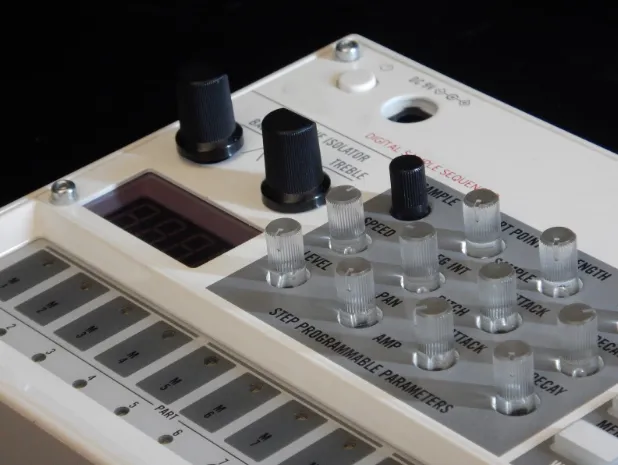
Through of the development of FM synthesis, we eventually got better sound when the shift from 8-bit music to 16-bit music happened.
The heyday of chiptune music was the 1980s. The earliest commercial chiptune records produced entirely from sampling arcade game sounds have existed since the mid-1980s, an early example being Haruomi Hosono's Video Game Music in 1984. Though entirely chiptune records were uncommon at the time, many mainstream musicians in the pop rock, hip, hop, and electronic music genres were sampling arcade game sounds and bleeps.
8-bit in the Music Industry Today
8-bit music is not dead. In fact, there has been an increase of the use of 8-bit sound in the music industry. We hear them as samples in a lot of songs like Tik Tok by Ke$ha, Ayo Technology by 50Cent, and more recently, Season 2 Episode 3 by Glass Animals.
We also hear them in songs wholly centered on 8-bit sounds. Music groups like Circuit Static, Sabrepulse, ComputeHER, Trash80, Dubmood, Unicorn Kid, and Casiokid to name a few who have created their brand centered on 8-bit sound.
It is false to say that 8-bit sound has become irrelevant due to the use of more natural sounding 16-bit, or even better quality 24-bit music. It brings back that sense of nostalgia to the generations of people who lived through the glory days of the NES, and brings vintage quality to those generations who have not. There’s a place for 8-bit music in the world today, and it’s right here in the music industry.
