

August 7th, 2018
Even though the museum's sole focus is to preserve the memory of that horrific day it was a place I felt I needed to visit.
It was a scorching hot day, driving over the mountainous region between Fukuoka and Nagasaki we pulled into a rest stop that flanked an inviting river. Running past the ubiquitous vending machines we hurried to the edge of the river, kicked off our shoes and plunged our feet into the rushing water.


It was probably around 40 C but this is nothing compared to the heat experienced 73 years earlier at Nagasaki.
This was my first time visiting Nagasaki and as we pulled up to the museum I felt an unmistakable sense of sorrow. It was subtle, not overwhelming, but it was there. Dark memories, a part of the land that lingered on through the decades and palpable in the streets. Ever present.

The museum itself, or what I thought was the museum, was a square, faded red brick building nestled on a slope near the city center and the Urakami River. As it turned out, the museum was located underground and I never found out what was housed in the brick building exactly, but it certainly added to a feeling of foreboding. Or at least that's how it felt to me at the time. The pictures i found of the building online later seemed much nicer.

I can't say that I know for sure why I was compelled to go there. To be completely honest there was some sort of morbid fascination with death and destruction to be sure but mostly I wanted to understand the event from the Japanese perspective.
There's no escaping the fact that the museum is heavy with horrors, sorrow and despair. Nevertheless, and it sounds crazy to say this, but this was probably my favorite museum I've ever visited.
I found the whole experience endlessly engrossing and moving. We spent nearly 3 hours at the museum but I could have stayed there all day. There's so much to take in at the exhibit that I can only hope to relate a fraction of what I absorbed.
August 9th, 1945
Hiroshima was was the first city ever to suffer the catostrophic destruction delivered by a nuclear weapon. On August 6th, 1945, a device name "Little Boy" was dropped over Hiroshima and just 3 days later a more powerful bomb named "Fat Man" detonated over Nagasaki.

US Targeting of Japanese Cities

Tokyo Bay
Kawasaki
Yokohama
Nogoya
Osaka
Kobe
Kyoto
Kure
Yahata
Hiroshima
Kokura
Shimonoseki
Yamaguchi
Kumamoto
Fukuoka
Nagasaki
Sasebo
Nagasaki - 11:02 AM

Several clocks comemmorate the exact minute the bomb exploded over the unsuspecting city.


- 10:58 AM the skies break and the crew of the B-29 Bomber "Bock's Car" releases "Fat Man"
- 11:02 AM "Fat Man" detonates at 1,840 feet above Nagasaki
- 500 feet off target from 2 large Mitsubishi war plants
- Estimated force of 22,000 tons of TNT
- A massive fireball and mushroom cloud billow up to 60,000 feet
- The Heat from the blast reached temperatures of nearly 4,000 C / 7,000 F


Total Destruction

According to the Museum
Population: 240,000
74,000 people instantly vaporized (at 1.6 km radius of the hypocenter)
75,000 injuries related to heat, radiation, blast injuries, and fires
(1950)
August 15th 1945 - Japan surrenders - the War is Over


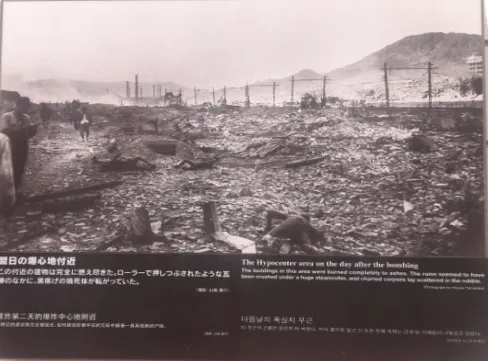


Nagasaki - Before and After


Fat Man


Fat Man was a more complex bomb than Little Boy and the military was eager to see how it would 'perform'. Fat man was designed with a neutron initiator at its core surrounded by plutonium 239. By contrast, Little Boy was a Uranium 235 device armed with a conventional charge and detonator.


Today's Nukes

By today's standards the bombs that decimated Hiroshima and Nagasaki appear minuscule compared to later iterations of nuclear devices such as the Russian Tzar 50,000 Kiloton monster. But when we consider the scale of destruction left by both "Little Boy" and "Fat Man" it is almost impossible to comprehend the catastrophic power of modern nuclear warfare.

Thanks for Reading.
Additional References