
Fractals | Natural or Artificial Structures or Geometric Patterns
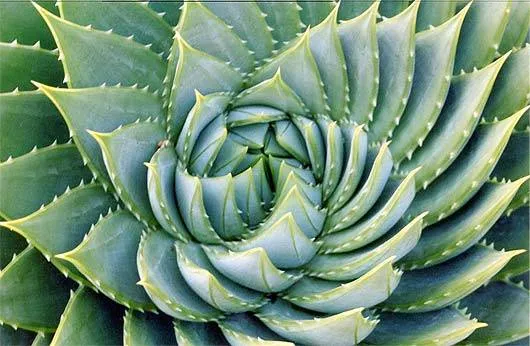
Fractal is a term defined by the mathematician Benoît Mandelbrot 1975 which denotes certain natural or artificial structures or geometric patterns.

These structures or patterns generally do not have an integer Hausdorff dimension, but rather a fractional - hence the name - and also have a high degree of scale invariance or self-similarity. This is, for example, the case when an object consists of several scaled-down copies of itself. Geometrical objects of this kind differ in essential aspects from ordinary smooth figures.
The field of mathematics, in which fractals and their regularities are examined, is called fractal geometry and protrudes into several other areas, such as function theory, computational theory, and dynamic systems. As the name implies, the classical concept of Euclidean geometry is expanded, which is also reflected in the fractional and unnatural dimensions of many fractals.
In traditional geometry, one line is one-dimensional, one surface is two-dimensional, and one spatial entity is three-dimensional. For the fractal sets, the dimensionality can not be specified directly. For example, if a computational operation for a fractal line pattern is carried out thousands of times, the entire drawing surface (such as the computer screen) fills with lines over time, approaching the one-dimensional structure A two-dimensional.
If a fractal consists of a certain number of reduced copies of itself, and if this reduction factor is the same for all copies of the same, use the similarity dimension. The self-similarity does not have to be perfect, as the successful application of the methods of fractal geometry to natural structures such as trees, clouds, coastal lines, etc. shows.

The objects mentioned are more or less strongly self-similar (a tree branch looks like a reduced tree), but the similarity is not strict but stochastic. In contrast to the forms of Euclidean geometry, which are often flattened and thus simpler in a magnification (such as a circle), more complex and new details can appear in fractals.

Due to their wealth of forms and the associated aesthetic appeal, they play a role in digital art and have produced the genre of fractal art. Furthermore, they are used in the computer-assisted simulation of high-dimensional structures, for example realistic landscapes. Fractal antennas are used to receive different frequency ranges in the field of radio technology.

Fractal appearances are also found in nature. However, the number of stages of self-similar structures is limited and is often only three to five. Typical examples from the biology are the fractal structures of the Romanesco coulor and the ferns. The cauliflower also has a fractal structure, which at first sight is often overlooked. These include, for example, trees, blood vessels, river systems and coastal lines.

link to fractal!
Fractals are also found as explanatory models for chemical reactions. Systems such as the oscillators can be used on the one hand as principle, but on the other hand also as fractals. Fractal structures are also found in crystal growth and in the formation of mixtures, For example if you add a drop of color solution to a glass of water. The Lichtenberg figure also shows a fractal structure.

link to fractal!