
I want to have the talk with you. A male and a female have sex, an egg is fertilized and that is where babies come from. You with me so far? Okay, now throw that out the window :)

I want to have another talk with you. There are no males. There is no sex. An unfertilized egg develops into an embryo and that is where babies come from. And that is parthenogenesis, ladies and gentlemen.
But why stop there? Let's have both talks at once. Plus can we have super powers that allow us to control plants?

Oak gall wasps alternate between generations of parthenogenic females, and generations of sexually reproducing males & females. The male/female sexual generation emerges in mid to late summer from galls on the underside of oak leaves. These galls are colorful orange-ish yellow balls with darker orange-brown mottling. These galls are actually quite visually striking and the first time I encountered them I couldn't figure out what was going on!

The mated females from this sexual generation lay their eggs in twigs of the oak tree. These eggs develop into an all-female parthenogenic generation. The larvae somehow (exact mechanism not fully understood) force the oak tree to grow a large woody gall, often called an "oak apple", which serves as the home for the larvae overwinter. In the spring the mature parthenogenic females burrow out of the galls and lay their eggs on the underside of oak leaves.
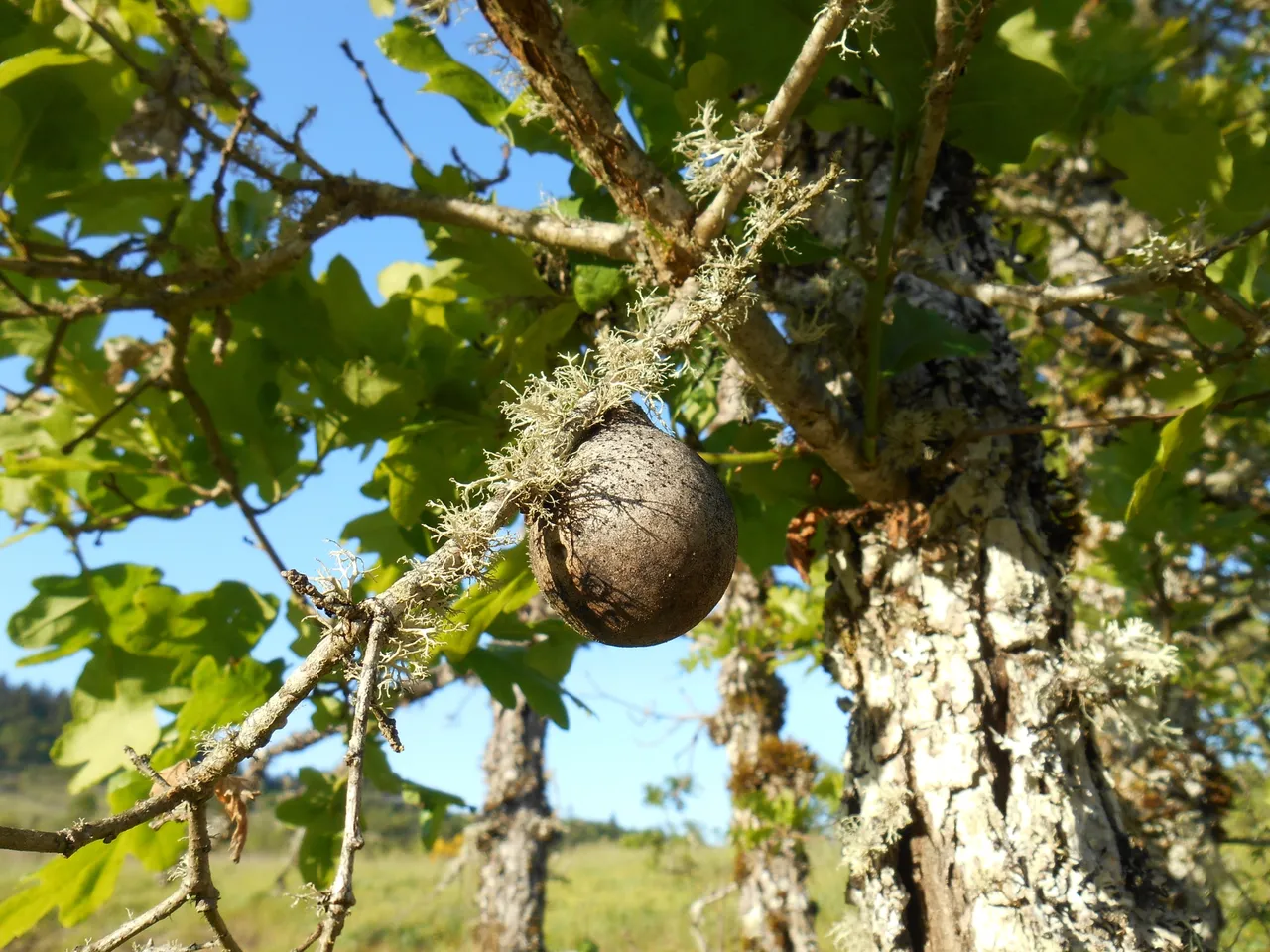
"Oak Apple" (woody gall)
The eggs laid by the parthenogenic females develop into a new sexual generation of males and females. The larval form of the sexual generation somehow (exact mechanism unknown) causes the leaf of the oak tree to grow spotted orange galls for the larvae to live in while maturing, before they exit mid to late summer to start the cycle over again :)

Okay but everyone, this is real life so of course it gets even crazier. Right? There are parasitoid wasps that stick their long ovipositors straight into the gall and lay their own eggs inside or on the larvae of the gall wasps. The parasitic wasp larvae eat the gall wasp larvae and take over the gall.
Parasitoid wasp species - I believe this particular one actually lays its eggs on caterpillars. Note it does not have a long ovipositor that would allow it to lay eggs inside of galls.

Actual gall wasps are quite small (1 - 8 mm) and non-threatening looking (they cannot sting). However the first time I broke open a leaf gall to see what was inside I encountered one of the parasitoid wasp larva, almost fully mature - it was big and scary as hell! Most of the parasitoids around here are shiny black crazy looking wasps.
And of course, let's not forget the hyperparasitical wasps which specifically parasitize the parasitoid wasps! Yes that is right, the hyperparasitical wasps lay their eggs inside the larvae of the parasitoid wasps, inside the galls made by the gall wasps.
Oh you thought we were done? There are other species of wasps that sort of crash the party and lay their eggs inside the galls produced by other wasps, but which are not parasitic. These species are inquilines of the gall wasps - their larvae coexist with the gall wasp larvae inside the gall without harming them. As it turns out, this sort of thing is actually pretty common among ants as well, where a dozen or more species of inquilines may share a colony dug by another species!
Oh and by the way there are tons of different species of gall wasps and they all target different types of plants and tissues and produce different types of galls. Here is a really beautiful wasp-induced gall I found on a rose bush once <3

Wasp on the Water
I filmed this short clip on the Middle Fork of the Willamette River on the flanks of Mount Pisgah a few days ago. Just a stones throw from where I took the pictures of the oak galls, although this is not a gall wasp nor a parasitic wasp. The shores of the river were swarming with these wasps, who thankfully left us alone :) My original guitar music accompanying the video
.

Mount Pisgah Rocks!
I have already extolled the virtues of Mount Pisgah here, and our recent family hike was another awesome string in the bow.
Learn more about oak galls
Oak Galls - Oregon Department of Forestry 2017
A Field Guide to Insects and Diseases of California Oaks - TJ Swiecki 2006