

Common throughout the eastern US and Canada, the spotted salamander Ambystoma maculatum, is named for the bright spots lining its spine. Though they spend most of their time underground, but emerge on spring nights to mate near seasonal ponds of water called vernal pools. After a brief mating encounter, the salamanders return underground, leaving behind gelatinous masses of eggs enclosed in a thick membrane under the water.

These egg sacs are the site of a unique symbiotic relationship that has developed between the salamanders and a special kind of algae that has adapted to live inside the eggs. After several days, the once clear eggs begin turning green from the presence of the algae, which thrive on the carbon dioxide from the developing embryo. In return, the algae provides oxygen, and consumes excreted nitrogen that could become toxic to the baby salamander.
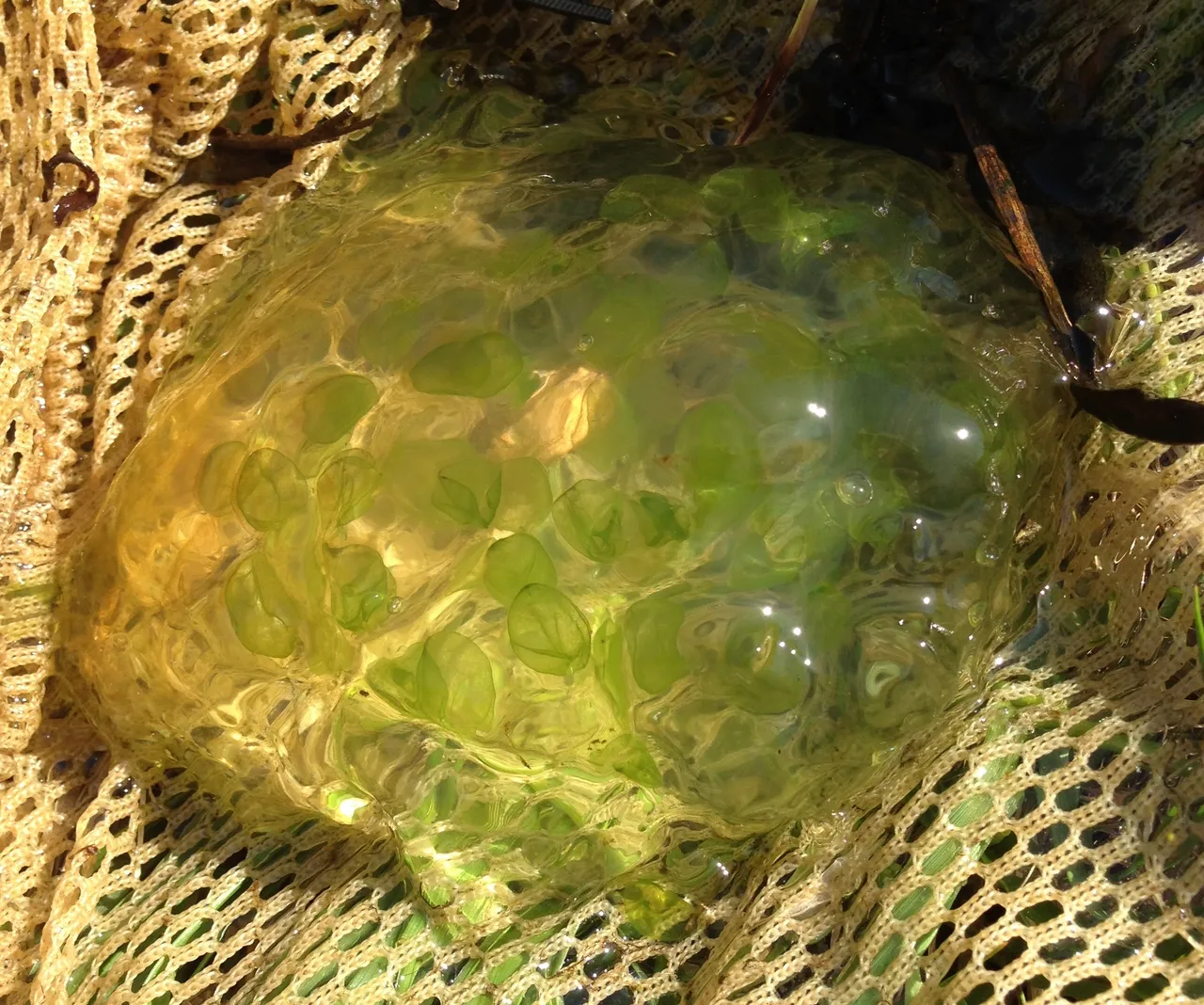
These algae strains may be entering each individual egg from the surrounding water, but scientist have discovered that female spotted salamanders commonly host the species in their oviducts. This means that the algae may be passed from the mother to each egg as it is laid. Either way, plant cells that live and grow benignly inside vertebrate tissue are a novel evolutionary development that has not been previously noted. If you live in the eastern US or Canada, be sure to look out for these amphibians and their emerald green eggs in the coming weeks.