Introduction
Today I bring you a review of the Olympus 75-300mm f/4.8-6.7 II ED M.Zuiko Digital lens, a great lightweight zoom lens designed for the Micro Four Thirds camera system by Olympus.
The reviewed lens attached to an Olympus OMD EM5 body

For people not familiar with the Micro Four Thirds (MFT) system it is a standard that was introduced in 2008 by both Olympus and Panasonic. At the heart of the MFT standard is an image sensor measuring 17.3 x 13 mm, which is smaller than a DSLR sensor, but still large enough to provide excellent image quality even in low light. This design approach in addition to mirrorless operation helps drastically reduce the size of the camera and lenses. There is some loss in image quality, when compared to a DSLR, but it is surprisingly little, at least at ISO’s below 1600. For many people (including myself) the trade-off in less bulk is more than worth a small loss in image quality.
Size comparison. On the left is a Canon 50D and 24-105 f4 Lens, on the right is my Olympus OMD EM5 hiking kit with the 75-300 lens and 14-42 lens

Handling
As expected, with a lens in the price range the construction is mostly plastic construction, but with strength in areas where it matters like the lens mount (which is metal). So even though it might not be “mil-spec” I feel it would stand up to the odd light knock and bang without too much drama. One obvious advantage of the construction however is the low weight. The great thing is I can fit the lens attached to camera body in a compact camera case, with the 14-42 lens in the camera case’s pouch at just on 1 kg total. Perfect for hikes!
Fit and finish are good, with nice firm focusing and zoom action. There was very little mechanical slop in the zooming mechanism and no zoom creep (it’s too light for zoom creep to be much of problem). One thing to be wary of is the lens does not have in built stabilisation. This could be an issue for owners of camera’s without built in image stabilisation.
Optical Quality
Before purchasing I checked out some of the online reviews, and if you want a detailed analysis you can refer to the imaging resource review referenced below. Given the somewhat lukewarm praise for the optical performance of the lens in the referenced review I was not expecting anything too great, I was just happy to have something to allow me a bit of reach when the occasion required it. Luckily, I was pleasantly surprised with the sharpness of the images even at 300mm.
I was also expecting some very significant chromatic aberration (i.e purple fringing) along sharp edges but this was not the case, even at 300mm. One of my more extreme tests is to photograph stars which show lens defects more clearly than normal daytime photo’s. The results were surprisingly good, even towards the corners. As an ultimate test of resolving power I got this image of Venus handheld at 300mm, clearly showing the planet’s crescent phase.
Venus shows an obvious crescent here using the reviewed lens at 300mm. Image has been cropped and upscaled 2x.

There was also certainly no problem using the lens at maximum aperture throughout the range. But as has been noted in some reviews the slow aperture at 300mm (f6.7) could cause problems under some shooting conditions. It’s best to bump up ISO to keep exposures short, particularly if photographing birds as their movements are typically much more rapid than human’s.
Conclusions
For a Micro Four Thirds user I would strongly recommend this as a great travel zoom lens. The fastest aperture is slow, particularly at f6.7 at 300mm, but this is a good compromise for keeping weight and cost down.
References
Sample Images
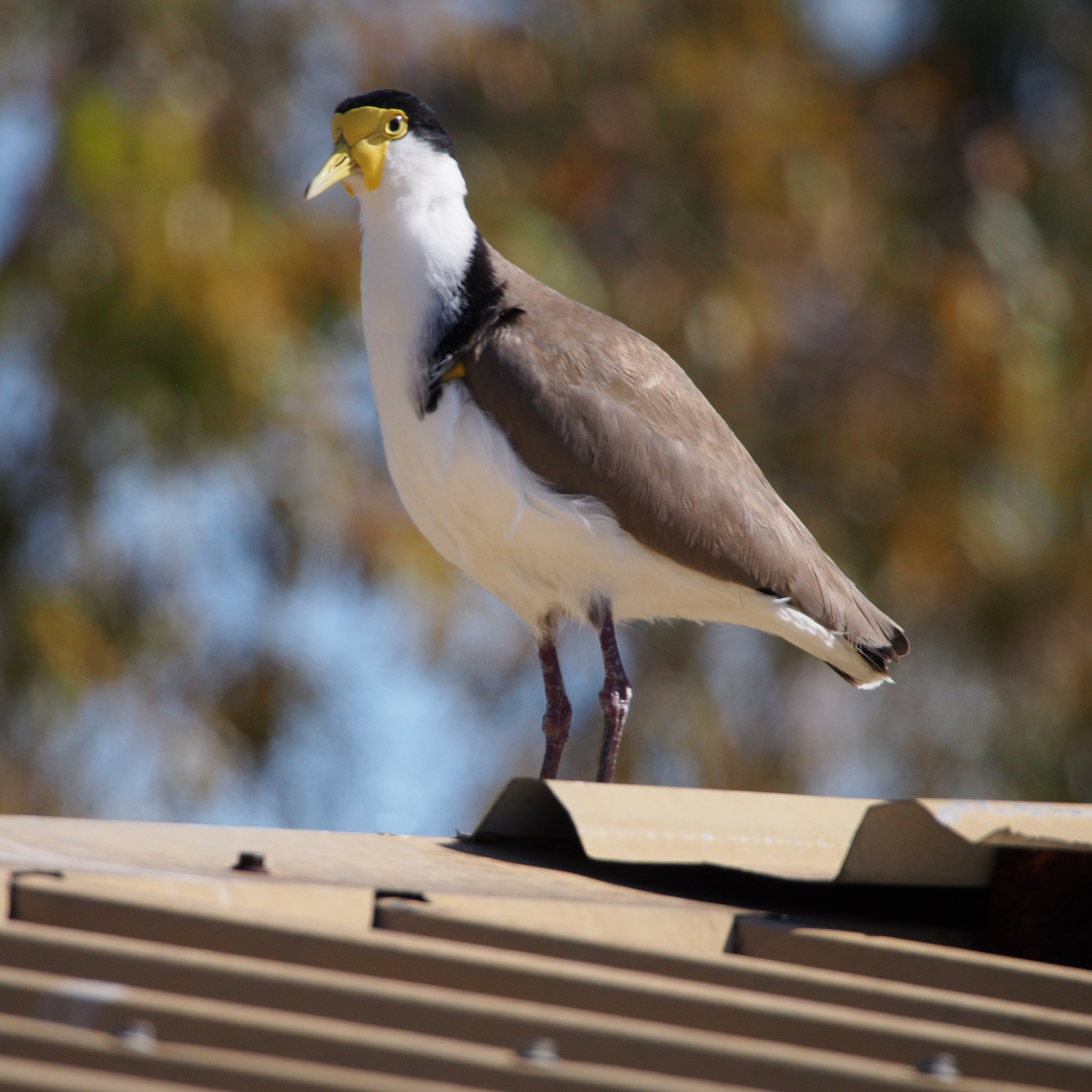
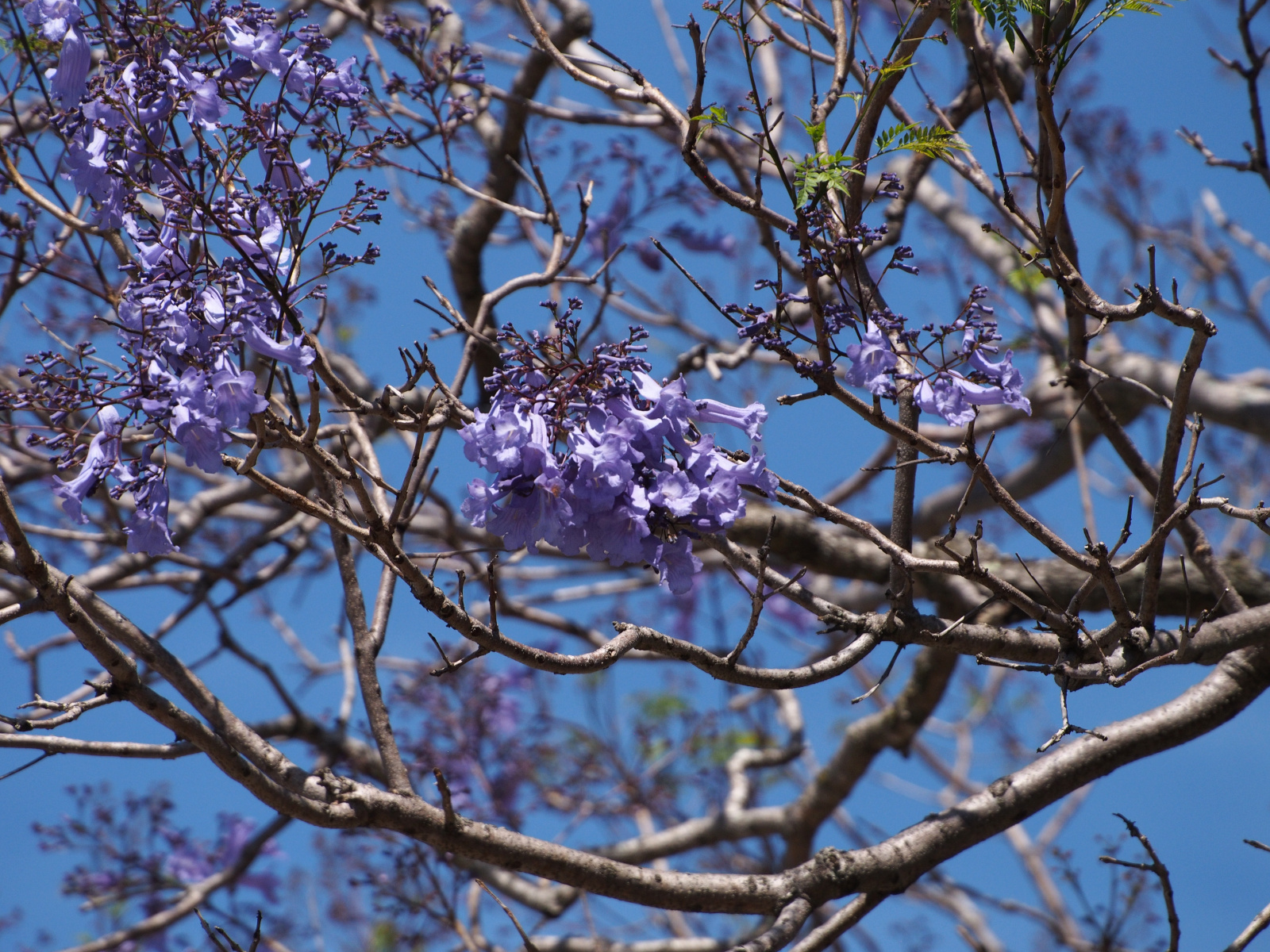
Here are some sample images. Click on the image for a larger version.
Kookaburra. 300mm @ f7.1, ISO400 (pushed about 1 stop in background), 1/800 sec exposure. OMD EM5

Plover. 300mm @ f6.7, ISO400. 1/1250 sec exposure. OMD EM5
Jacaranda tree in bloom. 208mm @ f7.1, ISO400, 1/1600 sec exposure. OMD EM5
Old Brisbane House. 132mm @ f5.5, ISO400, 1/2000 sec exposure. OMD EM5