
Hello friends! Let's continue our journey. For three days we rested on the Bakal Spit (https://steemit.com/photography/@zvezda51/travel-around-crimea-3), but since the weather was very windy, we decided to move further, beyond the mountains, to the southern coast of the Crimea.

A couple of hours . And we are in a valley called Chaban-kale. Here is still preserved ancient tower.

The Chaban-Kale Tower (Choban-Kule) is the ruins of the Genoese castle Tasili, owned by three brothers from the genus di Guasco: Andreolo, Teodoro and Demetrio. The brothers were famous for their cruelty, self-will and conflict with the Genoese authorities of the neighboring Soldai (Sudak).


For their castle, the brothers de Guasco chose a rock overhanging the sea. Today it is known as Cape Tower. From under her oozes a small stream - Chaban-Kale-Chokrak, which provided the garrison of the fortress with fresh water. Due to the fact that the castle Chaban-Kale is on a hill, all of its towers have an excellent view. In clear weather, the watchmen could see not only what was being done on Cape Meganom or near Ayudag, but also the ships that sailed from the pier of the Soldai Genoese fortress.


Unfortunately, from the opposition fortification composition of the brothers de Guasco today there were only fragments of the fortified wall and two third parts of the Donjon. It is the dominant tower in the castle of the Italian feudal lords. Traditionally it was built in the most inaccessible place of the fortress. In the event of a siege she acted as a headquarters, a warehouse and a medical center. The Donjon a-la Chaban-Kale variant is a picturesque cropped "cylinder", built of bricks from the Crimean shell. The entrance hole and small windows-loopholes have been preserved.


To the castle "Chaban-Kale" adjoined the settlement. The pottery furnaces have survived. They were excavated directly in the body of the rock, and then lined with raw brick. Here, the products of local potters were found - amphorae, flasks. First, pottery from under the Chaban-Kale traded throughout the South Coast. Secondly, two-meter amphoras were the container in which most of the goods were transported at that time. These finds allow us to say that the brothers de Guasco managed to take control of part of the flow of wine, grain and fat, directed from the steppe and mountainous Crimea to the Black Sea ports.

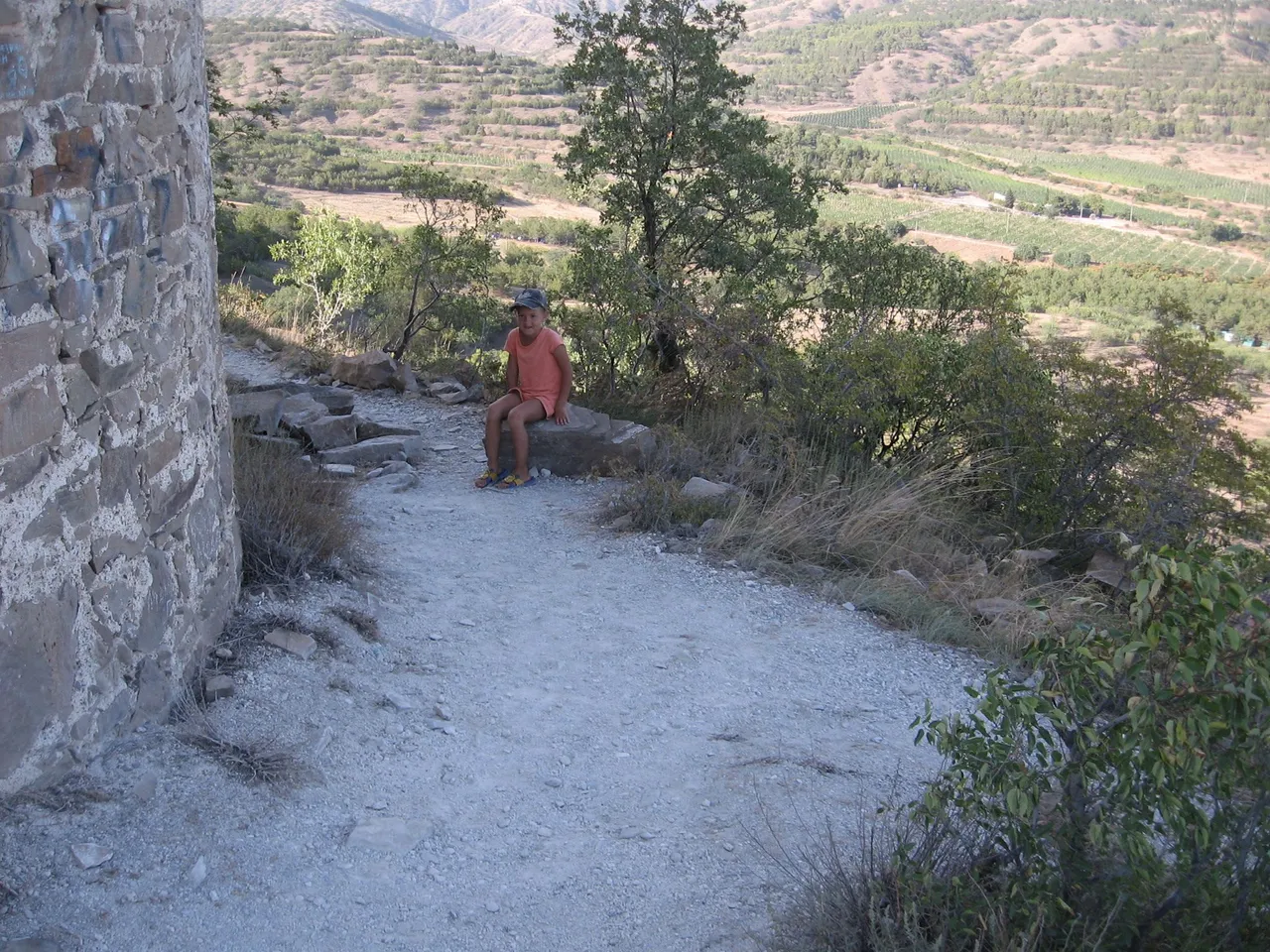

The current state of the tower and fortifications does not allow the museum to be placed here, as it was done in the Sudak fortress, but these attractions look extremely picturesque.

