
Sometimes life offers pleasant surprises when you don't expect them at all... well, that's also one of the definitions of surprise, to have something unexpected happen.
A show, an invitation to the premiere and so I ended up walking again through Sibiu, one of the most attractive cities in Romania. This time the time was short, only two days. So, straight from the hotel to the streets. Necessary walk to get to know the city better. We started right from the center, to reach the Old Town.

The modern part of the city, where the tallest new buildings are. The tallest buildings in the city are the hotels. Sibiu is full of hotels, a sign that it is a very visited city.
An underpass crosses the busy road. There are several such passages and each one offers information about the city and public transport, information so necessary for tourists visiting the city.

The walk continues to the Old Town, where new buildings are almost non-existent. Before reaching the narrow streets and old buildings I have to cross a small park.

It is a very small park, used by locals and tourists more as a passage but it contains something very important, apart from plants, benches, and trees. A toilet. Extremely important when you're on the streets a lot.


At the exit of the park, there is a bust of an important Romanian politician who contributed a lot to the union of Transylvania with Romania in 1918. His name is Alexandru Vaida Voevod and because he is from the same town as my wife and bears the same name as hers, there is a small possibility that they are distantly related...

Narrow city streets (but not the narrowest)!
Sibiu, in Romania, is a place, a city worth visiting dozens of times... and that's really happening. Sibiu is one of the most important places to visit in Romania. It is a city full of history, it is one of the oldest cities inhabited since the eleventh century. The Old Town is surrounded by a defensive wall and includes buildings, permanently inhabited for over eight hundred years. Walking along the narrow, sloping streets makes you think you're in the Middle Ages, only the rather saccharine presence of cars doesn't let you forget what century we're in.
Source-The City Seen (not too) From Above
The main target of those who come to visit the city is the old town. From the small park, we can get there either by the main street, pedestrian, or side streets. The pedestrian street is somewhat too touristy, with lots of restaurants, terraces, cafes, and shops... this time I chose to walk on a side street.

This is the edge of the old town, it's an old town... newer! The houses on this edge were built in the late 19th and early 20th centuries. The further you go towards the middle of the old town the older the houses and other buildings get.
I like the architecture of old houses, I like it better than modern ones. I liked this house very much.
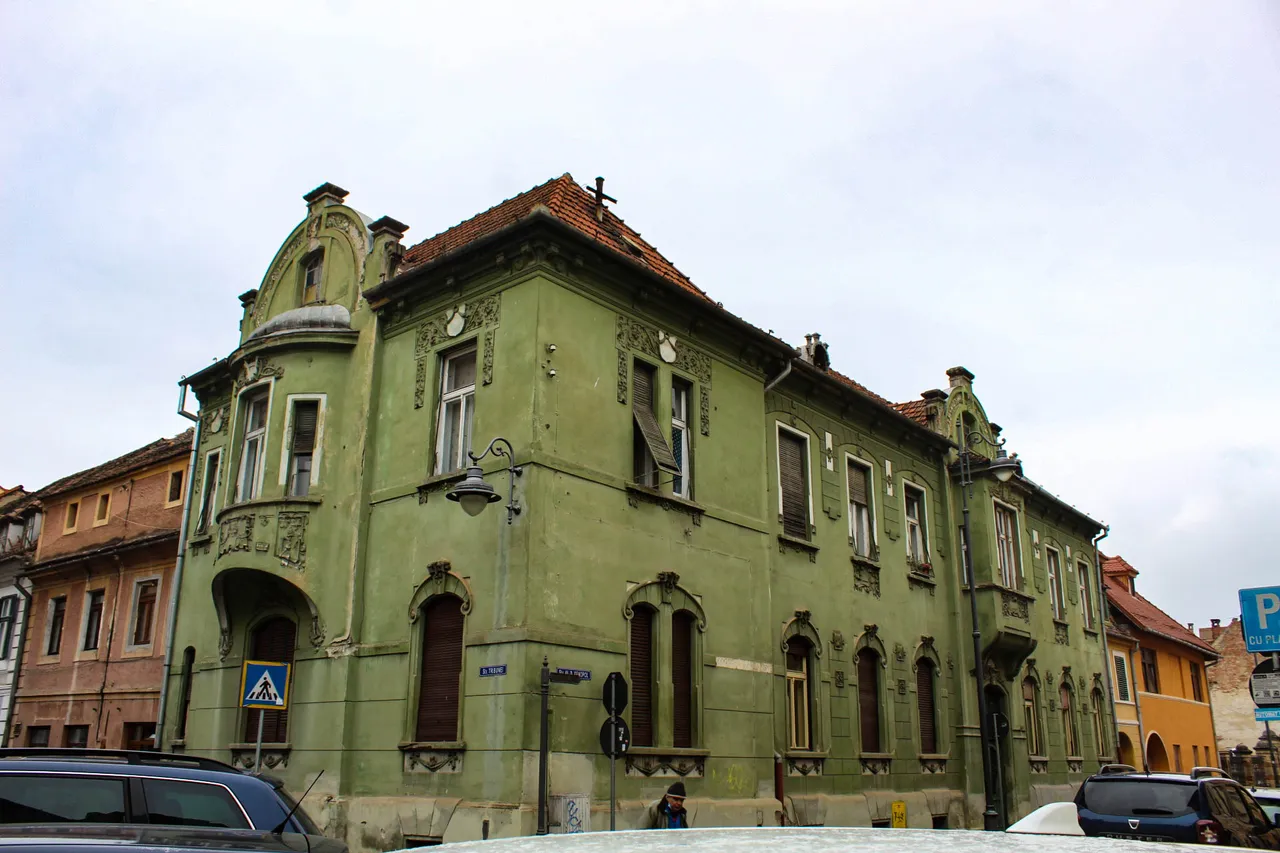
I love the details, I love the old doors and I love this little house that seems to be crushed by its larger neighbors. The explanation is that the spaces are small here, every empty space has been built out.

The town was built by German settlers in the Middle Ages. The Germanic influence is visible in the way the buildings are built, close together, and about the same height. Only the towers of the churches, of different Christian denominations, exceed the height of the other houses.


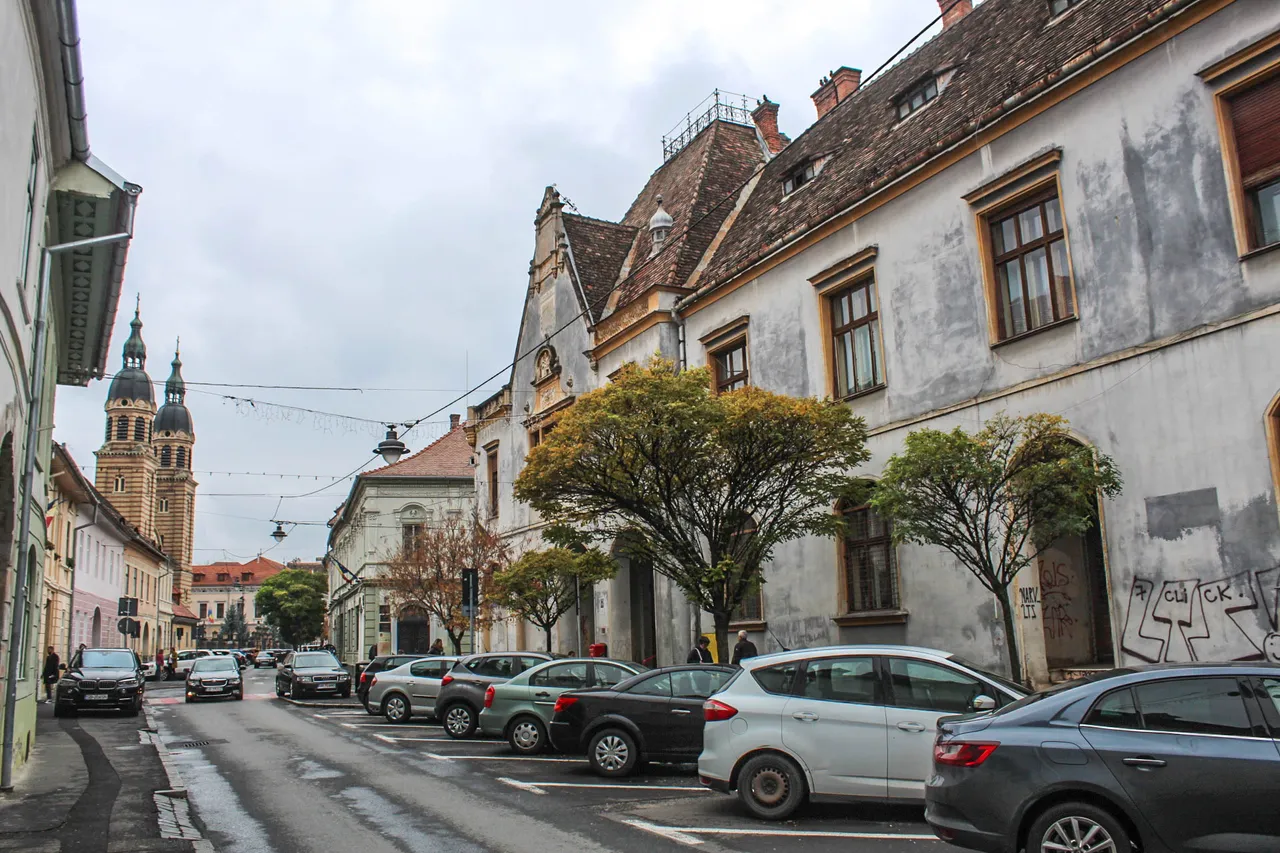
Another building that I really liked. Quite "young", built in 1904. It was the post office building.

This sign designates historical monuments. Most of the buildings in the old town have this sign on them.

This positioning of the buildings, "glued" together along the streets, hides a reality that you can't guess unless you can see beyond the large wooden gates that appear from time to time. The gates themselves are objects of art.

Well, these gates can open the way to the inner courtyards of these buildings. A place that fascinates me, is these inner courtyards. There's no such thing in the town where I live, in southern Romania. In these courtyards, there may be residential houses, or...

...various restaurants or terraces.


The approach of the winter holidays, the approach of Christmas, leads local authorities to start decorating houses and poles.


At the same time, the proximity of the old town center also determines the age of the buildings. The houses are getting older. Like this student boarding school, which has a plaque with the year 1644 on it. Moreover, it has a special entrance with statues.


What else can we learn from this walk? Work is constantly being done to renovate these houses, and there is a permanent desire to improve the image of the city.

The old town consists of two distinct parts, the upper town, and the lower town. Logically, this means that one part of the town is at one level and the other part is at a lower level. In this part, we reached the walk, the place where we can go from the upper town to the lower town.


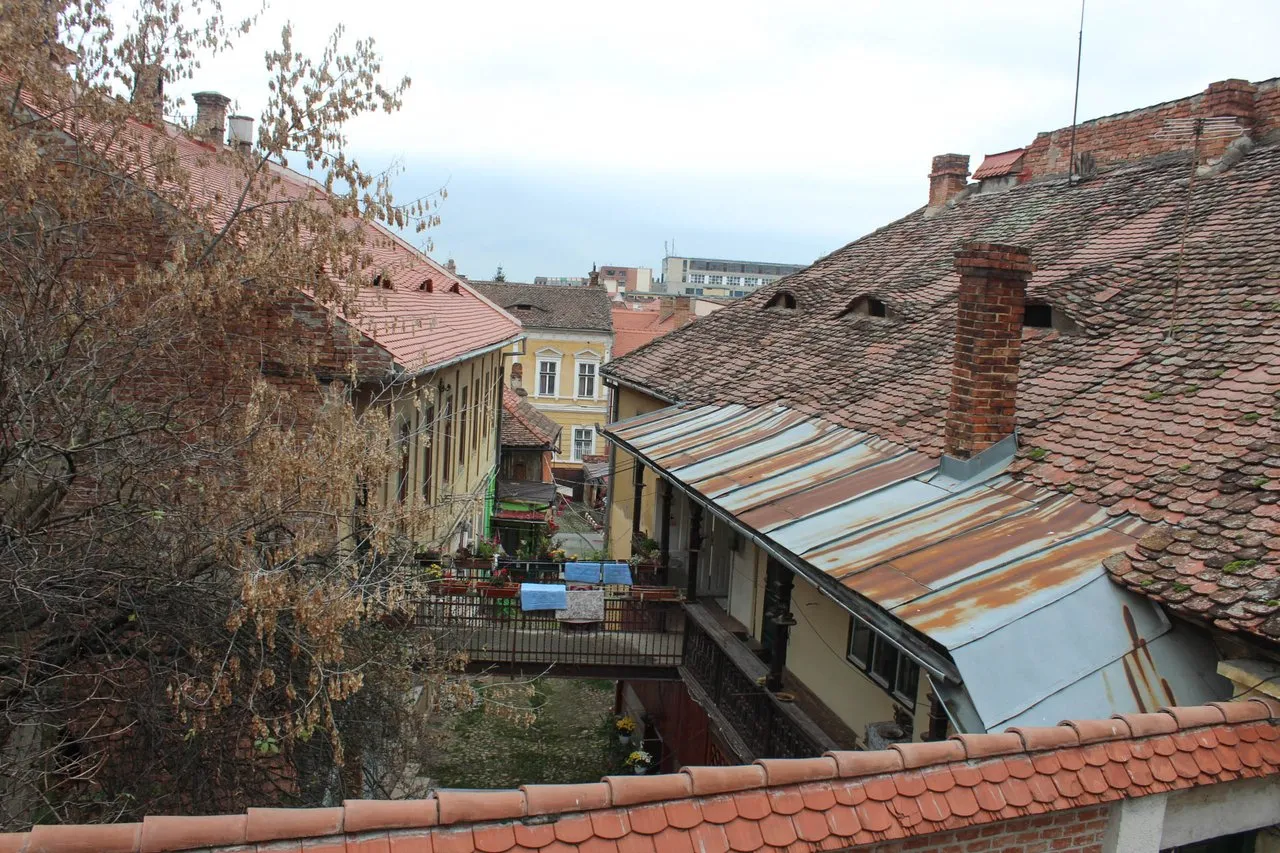
The old town is not very big but it is so concentrated on sights, buildings and interesting places that just walking down a short street take a long time. You're more likely to stay and watch than walk. We arrived at the place where you can see the city's main square, practically the most important and famous place, where all the tourists and locals gather for all kinds of fairs, festivals, and concerts.

Since the main squares, the big one and the small one, also called Huet, will be shown on another occasion, we turned the direction of the walk back to where we started. I mean the little park.


Children and pigeons! Children who live in this town. I think that when they grow up, the city will be even older, but I hope even more special, more beautiful, where the new and the old can mix and complement each other.


During this walkthrough Sibiu, we used more of our eyes than our muscles. We saw and re-seen a few streets, learned about the city, and promised we'd be back. Especially since the Christmas Fair was in preparation, was almost set up, and is a must-visit!
For #WednesdayWalk by 

