


We are a small group who on this day anchored on the western coast of Isabela, at a place called Tagus Cove. This was a"dry landing", so we could walk ashore with dry shoes. This was necessary, as we had to wear good hiking boots. As we approach the landing site, we could see the inscriptions from sailors on the cliffs on both sides. These are names of people and ships that have anchored up here. It was once a popular stopping place for sailors. Quite a sight to see the rocks engraved like this. The guide could tell us that the oldest is from 1836.
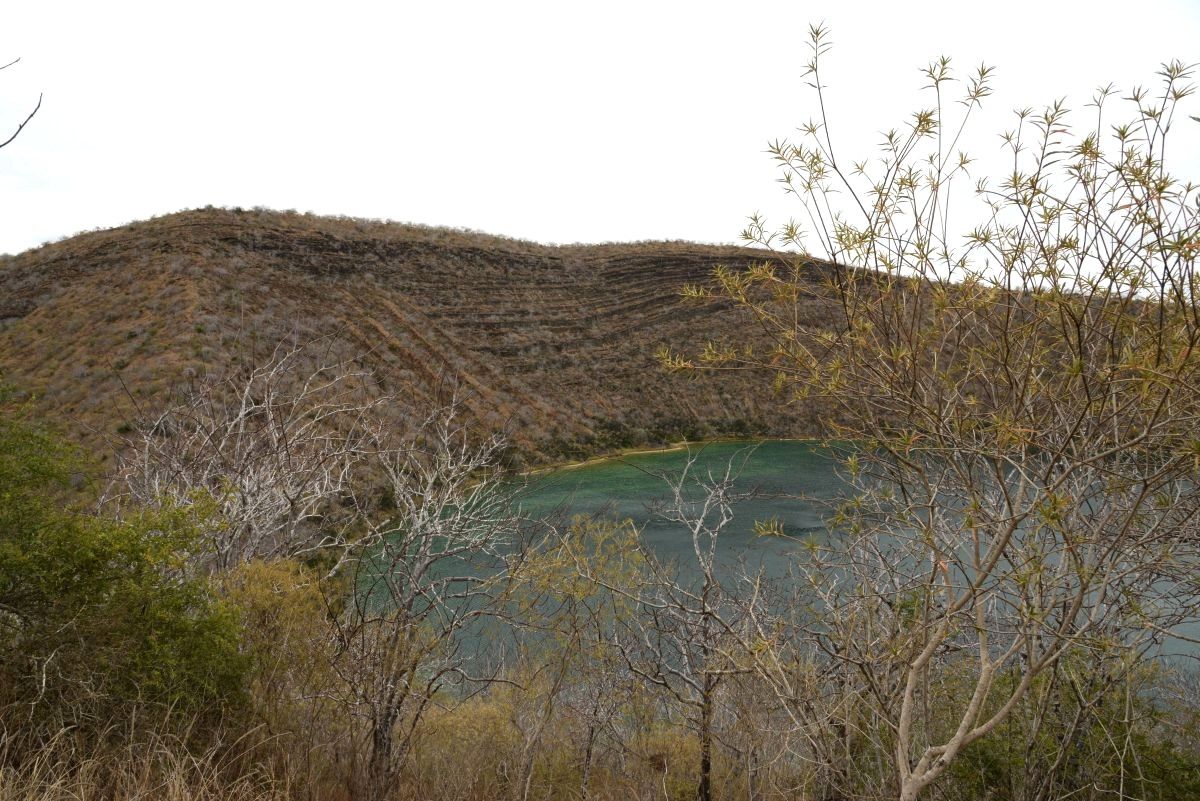


We keep going uphill through forests of Palo Santo trees up to the saltwater lake Darwin. The view keep getting better all the way up. After half and hour we reach the lake. It is located in an extinct crater. We walk a short distance along the edge and enjoy the view. The lake is located on a higher elevation than the sea. Another strange thing is that this lake contains twice as much salt as the ocean. But it was a beautiful sight to stand here by the lake overlooking the sea. The volcanic landscape iso different from what we had seen so far. The lake, like many other places on the islands, has its name after the Charles Darwin who arrived with his ship the Beagle i in 1835.


It was on these islands that Charles Darwin gained an understanding of what has led to the development of the species. Even though the islands were discovered in 1535, it was mostly whalers and pirates who came by during the first couple of hundred years. They were here to collect drinking water and provisions. Especially the giant tortoises because they could stay alive for a long time aboard a boat. The guide told us that it is believed that as many as 100,000 may have gone there for provisions. For this reason, some of the original species are extinct.


This island is interesting because of its geology, flora and fauna. The guide did point out flowers, trees and the cacti for us ( I just don't remember all the names...) The focus on this walk, was on the geology, but we did see some small birds as well as a many small lava lizards. The are small and well camoflaged. There are still giant tortoises here too. Actually this island has more wild tortoises than any of the others. But because the lava flows created an obstacle for these slow creatures, it resultet in the development of several sub-species. They can be seen around Lake Darwin. Only we didn't see any.


When we left the lake, we choose another trail to get up to the point where we are able to see the volcano, Wolf. This is an area where we pass some really huge cacti. The landscape changes and become more barren. We are leaving the lush forrest area.

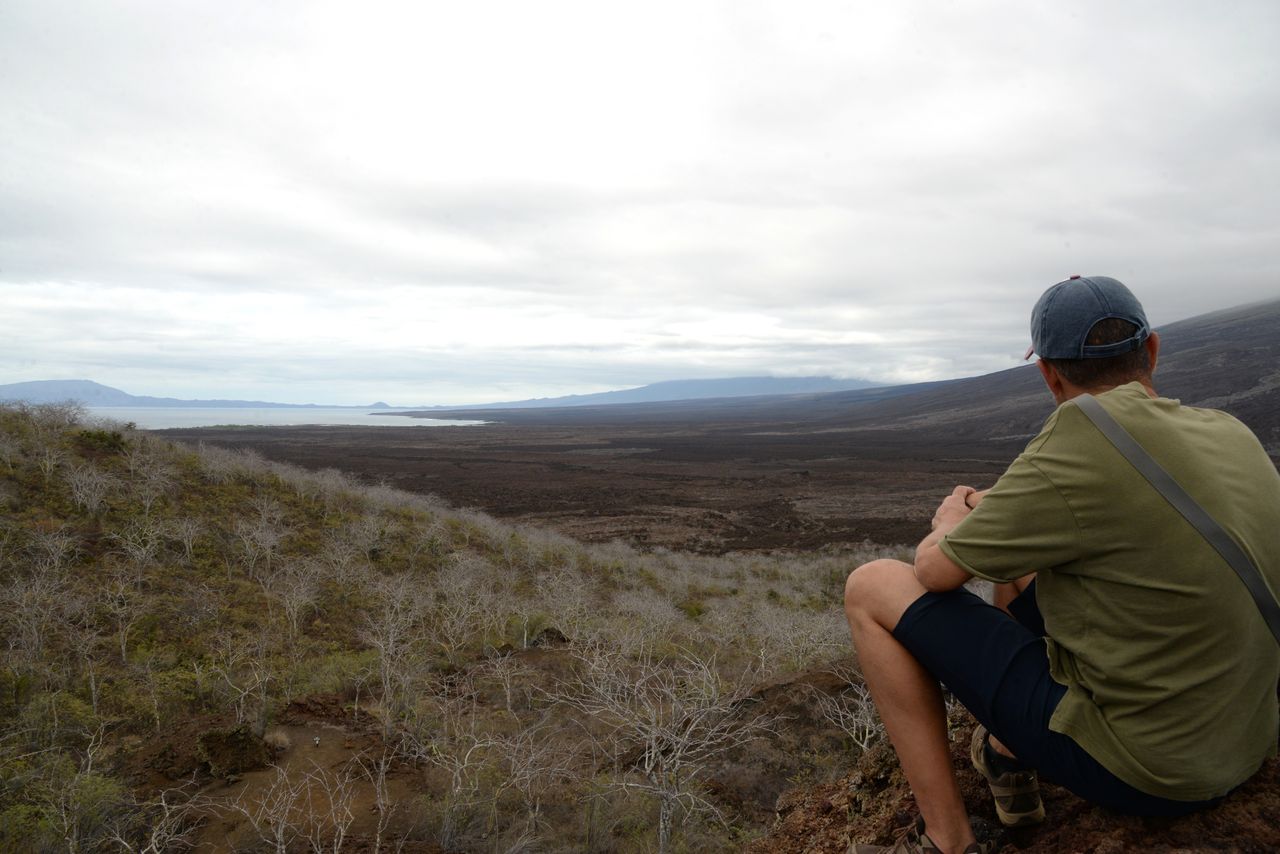
Now we are at the top of a viewing point where we can see Volcan Wolf, which is located directly on equator. The volcano is the highest point on the island, with a hight of 1.707 m. The top is covered in clouds, but we can see the black stripes of lava that is from the latest outbreak 8 years ago. A vast, deserted landscape.


We returned to the starting point. While waiting for our panga, we saw marine iguana and Sally Lightfoot crabs. Just as we got into the panga, we discovered a large group of dolfhins. To see them playfully jump in the water was an amazing way to end this days last excurtion.
Please do follow if you want to keep up with my next travel story. Any upvotes or reblogs are hugely appreciated!
Latest wedensday walk, check out:
Wednesday Walk Challenge : Wildlife and nature walk on Isla Fernandina, Galápagos
U.J
Kristiansand, Norway
All the photoes are mine, Ulla Jensen (flickr, Instagram and facebook)
[//]:# (!worldmappin -0.25970 lat -91.37271 long Wednesday Walk Challenge : Afternoon walk in volcanic landscape on Isla Isabela, Galápagos d3scr)Follow us for our street art contest and blogs about travel, art, photo, crypto & gaming
