

All photographs are my own, taken from various Tarot decks and edited with Gimp. / Todas las fotografías son de mi propiedad tomadas de diferentes barajas del Tarot y editadas con Gimp.
The bibliography consulted can be found at the end of the publication. / La bibliografía consultada se encuentra en el final de la publicación.
As of February 29, 2025
Greetings to all those in love. This is my participation in the Humanitas project initiative: Love in mythology: stories of gods and mortals that have marked our culture.
Although, in some way, in my two previous publications the theme of love has been present, I could not let the month of February pass without addressing the subject in an open way. Being a digression I could not help but remember 
A 29 de febrero de 2025.
Saludos a todos los enamorados. Esta es mi participación en la iniciativa del proyecto Humanitas: El amor en la mitología: historias de dioses y mortales que han marcado nuestra cultura.
Aunque, de alguna manera, en mis dos publicaciones anteriores el tema del amor ha estado presente, no podía dejar pasar el mes febrero sin abordar el tema de forma abierta. Tratándose de una divagación no he podido evitar acordarme de

Greece and mythology
In my opinion, myths are creations built on social realities and which, among other things, contribute to the perpetuation of cultural roles. The same thing happens with the mythology surrounding love.
Note: if you have something better to do than read this publication you can always go directly to the end of this text and see the conclusions.
When mythology is mentioned, out of cultural bias, I cannot help but think of classical Greece. From my memory sprout, without the slightest effort, various love stories that tell us about different ways of loving:
- Maternal/ paternal filial love: the myth tells us that the god Cronus was the master of the universe and ruled over humanity and other beings during the so-called "Golden Age". The myth also tells us that in that time lived the humanity called the “golden race”. A humanity that did not suffer the burden of disease. Joyful and dancing, it is said that it lived without suffering the punishment of work, because nature provided in abundance everything necessary to live.
Grecia y la mitología
En mi opinión los mitos son creaciones construidas sobre realidades sociales y que, entre sus funciones, contribuyen a perpetuar roles culturales. En el caso de la mitología en torno al amor, ocurre lo mismo.
Aviso: si tienes algo mejor que hacer que leer esta publicación siempre puedes acudir directamente al final de este texto y ver las conclusiones.
Cuando se menciona la mitología, por sesgo cultural, no puedo de dejar de pensar en la Grecia clásica. De mi memoria brotan, sin el más mínimo esfuerzo, diversas historias de amor que nos hablan de diversas formas de amar:
- El amor materno/ paterno filial: Cuenta el mito que el dios Cronos fue el amo del universo y gobernó sobre la humanidad y otros seres durante la llamada "Edad de Oro". También nos dice el mito, que en ese tiempo vivió la humanidad llamada la “raza de oro”. Una humanidad que no sufrió el pesar de las enfermedades. Alegre y bailarina, se cuentaque vivió sin padecer el castigo del trabajo, pues la naturaleza abastecía en abundancia de todo lo necesario para vivir.

But, what for that first humanity was a paradisiacal world; for the sons of Cronus it was hell. When Cronus castrated and dethroned his father Uranus, Gaea (mother Earth) and the dethroned and castrated Uranus prophesied that a son of Cronus would dethrone him. Cronus tried to circumvent the prophecy by eating his children. Rea, watching as Cronos eats his children at birth, tricks her husband Cronos by wrapping a stone in a diaper. When Cronos eats the stone he thinks he has swallowed his third child, Zeus. But he hasn't.
Years later, after a long war, Zeus dethrones his father Cronus, becoming the master of the cosmos and the maximum ruler of Olympus.
This story, like the myth of Oedipus, which was so influential in 20th-century culture, shows us that, both in heaven and on earth, the rivalry between parents and children, between the new and the old, is a universal constant. For Freud, the father represents The Law, while the mother represents desire.Unfortunately for humanity, with the fall of Cronus, his “Golden Age” came to an end.
Pero, lo que para esa primera humanidad fue un mundo paradisíaco; para los hijos de Cronos fue el infierno. Cuando Cronos castra y destrona a su padre Urano, Gea (la madre Tierra) y el castrado Urano profetizan que un hijo de Crono le destronará. Cronos trató de sortear la profecía comiéndose a sus hijos. Rea, observando como Cronos se come a sus hijos al nacer, engaña a su esposo Cronos envolviendo una piedra con un pañal. Cuando cronos se come la piedra cree que se ha tragado a su tercer hijo, Zeus. Pero no es así.
Pasados los años, tras una larga guerra, Zeus destrona a su padre Cronos, convirtiéndose en el amo del cosmos y el máximo regente del Olimpo.
Relato que como en el mito de Edipo, tan influyente en la cultura del s.XX, nos muestra que tanto en el cielo como en la Tierra, la rivalidad entre padres e hijos, entre lo nuevo y lo viejo es una constante universal. Tan universal como los mitos sobre el conflicto entre al amor materno y el amor paterno. Para Freud, el Padre representa La Ley, mientras que la madre respresentaría el deseo. Por desgracia para la humanidad con la caída de Cronos finaliza su “Edad de Oro” .

- I will be brief by pointing out other examples of love that appear in Greek mythology:
In the myth of Narcissus we are told the sad story of the nymph Echo who fell in love with an impossible man, Narcissus. A story with a tragic end for both Echo and Narcissus.
Narcissus fell in love with his own reflection in a stream. An impossible love, which made Narcissus so unhappy that he stabbed himself in the chest with a dagger. From the earth watered with blood came a flower, the daffodil. Echo, although, it seems, never forgave Narcissus for rejecting her love, never ceased to repeat sadly: Alas! alas! young beloved in vain, farewell!
I will say no more than that, if the force of love leads you to fall in love with someone with a constant need for self-reference (constantly referring to himself), you know how the love story is going to end. And be careful, they say we live in the age of narcissism.
There are more stories like that of Paris and Helen, one of the most popular, but today I will dedicate the publication to one of the stories from Plato's “The Banquet”.
- Seré breve señalando otros ejemplos de amor que aparecen en la mitología griega:
En el mito de Narciso se nos cuenta la historia triste de la ninfa Eco que se enamoró de un imposible, de Narciso. Una historia con final trágico tanto para Eco como para narciso.
Narciso se enamoró de su propio reflejo en un arroyo. Un amor imposible, que hizo tan desgraciado a Narciso que se clavó una daga en el pecho. De la tierra regada con la sangre surgió una flor, el narciso. Eco, aunque, al parecer, nunca perdonó a Narciso que rechazara su amor, no dejó de repetir con tristeza:
¡Ay!, ¡Ay! ¡Joven amado en vano, adiós!
No voy a decir más que, si la fuerza del amor te lleva a enamorarte de alguien con una necesidad constante de auto-referencia (referirse constantemente a sí mismo), ya sabes como va a acabar la historia de amor. Y ten cuidado, dicen que vivimos en la era del narcisismo.
Hay más historias como la de Paris y Helena, una de las más populares, pero hoy le dedicaré la publicación a una de los relatos de “El banquete” de Platón.

The primordial humanity
In “The Banquet” a series of characters appear, among them Socrates, talking about Eros (love).
The first to give his discourse on love was Phaedrus, who said Love is the oldest and most worthy god. The one who conceived the rest of the gods. It is also the norm that guides the good conduct of honest people. There is no more painful fact for an honest person than to be discovered committing a dishonest act by their family or friends. Furthermore, few things are more generous than the willingness of lovers to give their lives for their beloved.
Pausanias continued, who spoke of the different types of love. The love of Aphrodite would be vulgar, the love of vile people. However, the love of Urania would correspond to the love worthy and full of beauty. He continued, and concluded the subject of the two types of love, Eriximachus who, taking medicine as a model, discussed the existence of a healthy love and a sickly one, with a tendency to love the morbid.
La humanidad primigenia
En “El banquete” aparecen una serie de personajes, entre ellos Sócrates, charlando sobre Eros (el amor).
El primero en dar su discurso sobre el amor fue Fedro que relató el Amor es el dios más antiguo y más digno. El que concibió al resto de los dioses. Siendo además, la norma que guía la buena conducta de las personas honestas. No hay hecho más doloroso para una persona honrada que ser descubierta realizando un acto deshonesto por su familia o amigos. Además, pocas cosas son más generosas que la voluntad de los amantes en dar su vida por su amada/o.
Continuó Pausanias, el cual habló de los diferentes tipos de amor. El amor de Afrodita sería vulgar, el amor de las gentes viles. Sin embargo, el amor de Urania correspondería al amor digno y lleno de belleza. Prosiguió, y concluyó el tema de los dos tipos de amor Erixímaco que, tomando como modelo la medicina, disertó sobre la existencia de un amor sano y otro enfermizo, con tendencia a amar lo morboso.

Finally, it was the turn of Aristophanes, who referred to the need to know human nature in order to understand love.
In ancient times, he explained, human nature was different from what it is today. According to Aristophanes, there were three genders, and not two (male and female), the third being the androgynous. Three genders of different origin. The female descended from the Earth (female-female), the male from the Sun (male-male) and the androgynous, formed by both sexes, descended from the Moon.
That primitive humanity was formed by spherical human beings, they had four arms, four legs and two faces in only one head. The myth says that this humanity was composed of strong and arrogant beings who dared to defy Zeus and the gods of Olympus.
As punishment, and to weaken the humans, Zeus cut them in two with a thunderbolt. Since then, split in half, we human beings walk on two legs and each half longs to meet its other half to form a single being again.That desire to return to the original unity would be what we call love:
What is called love, therefore, is the desire and pursuit of that whole.
Por fin, llegó el turno de Aristófanes, el cual se refirió necesidad de conocer la naturaleza humana para comprender el amor.
En la antigüedad, explicaba, la naturaleza humana era distinta a la actual. Según aristófanes, existieron tres géneros, y nos dos (masculino y femenino), siendo el tercero el del androgino. Tres géneros de origen diferente. La hembra descendía de la Tierra (hembra-hembra), el macho del Sol (macho-macho)y androgino, formado por ambos sexos, descendía de la Luna.
Esa humanidad primitiva estaba formada por seres humanos esféricos, tenían cuatro brazos, cuatro piernas y dos rostros en una sola cabeza. Dice el mito, que eran esa humanidad estaba compuesta por seres fuertes y tan arrogantes que se atrevieron a desafiar a Zeus y a los dioses del Olimpo.
Como castigo, y para debilitar a los seres humanos, Zeus los cortó en dos con un rayo. Desde entonces, partidos por la mitad, los seres humanos caminamos sobre dos piernas y cada mitad anhela encontrarse con su otra mitad para volver a formar un solo ser. Ese deseo de volver a la unidad originaria sería lo que llamamos amor:
Lo que se llama amor, por consiguiente, es el deseo y la persecución de ese todo.

Therefore, the impulse to search for a soul mate would arise from this first wound. The end of love as a couple would thus be a way to return to the original unity, to find the fullness we once had, merging us again with our lost half.
The return to the past, to the origin, even to the source, to the fusion with the primordial unity is a desire that finds its expression beyond the Greece of Socrates and Plato.
Por tanto, el impulso a la búsqueda del alma gemela surgiría de esta primera herida. El fin del amor en pareja sería, pues, una forma de volver a la unidad original, de encontrar la plenitud que una vez se tuvo, fusionándonos de nuevo con nuestra mitad perdida.
La vuelta al pasado, al origen, incluso a la fuente, a la fusión con la unidad primordial es un deseo que encuentra su expresión más allá de la Grecia de Sócrates y Platón.

Mythology and psychotherapy
It is practically certain that in the first phase of life there is no consciousness of the self as distinct from the world. The dissociation of the spirit into conscious and unconscious presents an acquired, not a primitive, situation.
E. Jones, quoted by G. Mauco.
Every myth contains a part of truth. On this occasion, I dare to digress and search for the reality of the Greek myth of the soul mate from the vantage point of contemporary psychotherapy.
The myth raises several points present in the field of knowledge called psychotherapy: the original unity, the fragmentation of the self and the longing for that primitive unity.
We are born without memory, empty of recollections, we have no past, we are still beings without a history. We are not aware that our porous skin separates an internal world from an external one that is already waiting for us with its demands. We hypothesize a past time flooded with feelings of fullness and omnipotence. The universe is magical, that's for sure. A great nurturing mother generously provides us with everything we need. As in the “Golden Age”, no effort is required to survive. Everything is given.
Mitología y psicoterapia
Es prácticamente seguro que en la primera fase de la vida no existe conciencia del yo como algo distinto del mundo. La disociación del espíritu en consciente e inconsciente presenta una situación adquirida, no primitiva.
E. Jones, citado por G. Mauco.
Todo mito contiene una parte de verdad. En este ocasión, me atrevo a divagar y buscar la realidad del mito griego del alma gemela desde la atalaya de la psicoterapia contemporánea.
El mito plantea varios puntos presentes en el campo del saber llamado psicoterapia: la unidad original, la fragmentación del yo y el anhelo de esa unidad primitiva.
Nacemos sin memoria, vacíos de recuerdos, todavía no tenemos pasado, todavía somos seres sin historia. Sin conciencia de que nuestra porosa piel separa un mundo interno de uno externo que ya nos espera con sus demandas. Hipotetizamos un tiempo pasado inundados con sentimientos de plenitud y omnipotencia. El universo es mágico, seguro. Una gran madre nutricia nos suministra con generosidad todo lo que necesitamos. Como en la “Edad de Oro” no es necesario ningún esfuerzo para sobrevivir. Todo viene dado.

From the moment we are born, it doesn't take us long to understand that we are not the center of the universe. We arrive in a world in which, even before we are born, there is already someone waiting for us and expecting something from us. Salvador Dalí was born nine months after the death of his brother Salvador. We can already imagine why the second Salvador was born: to save his parents from grief. To fill a hole, a void.
The encounter with reality, that which is found on the outside of our skin, that wrapping that separates what is inside from what is outside, the self from others, fragments us. Sometimes, we break hopelessly. Negligence, abuse or, sometimes, the inevitable take the place of Zeus and his electrical apparatus.
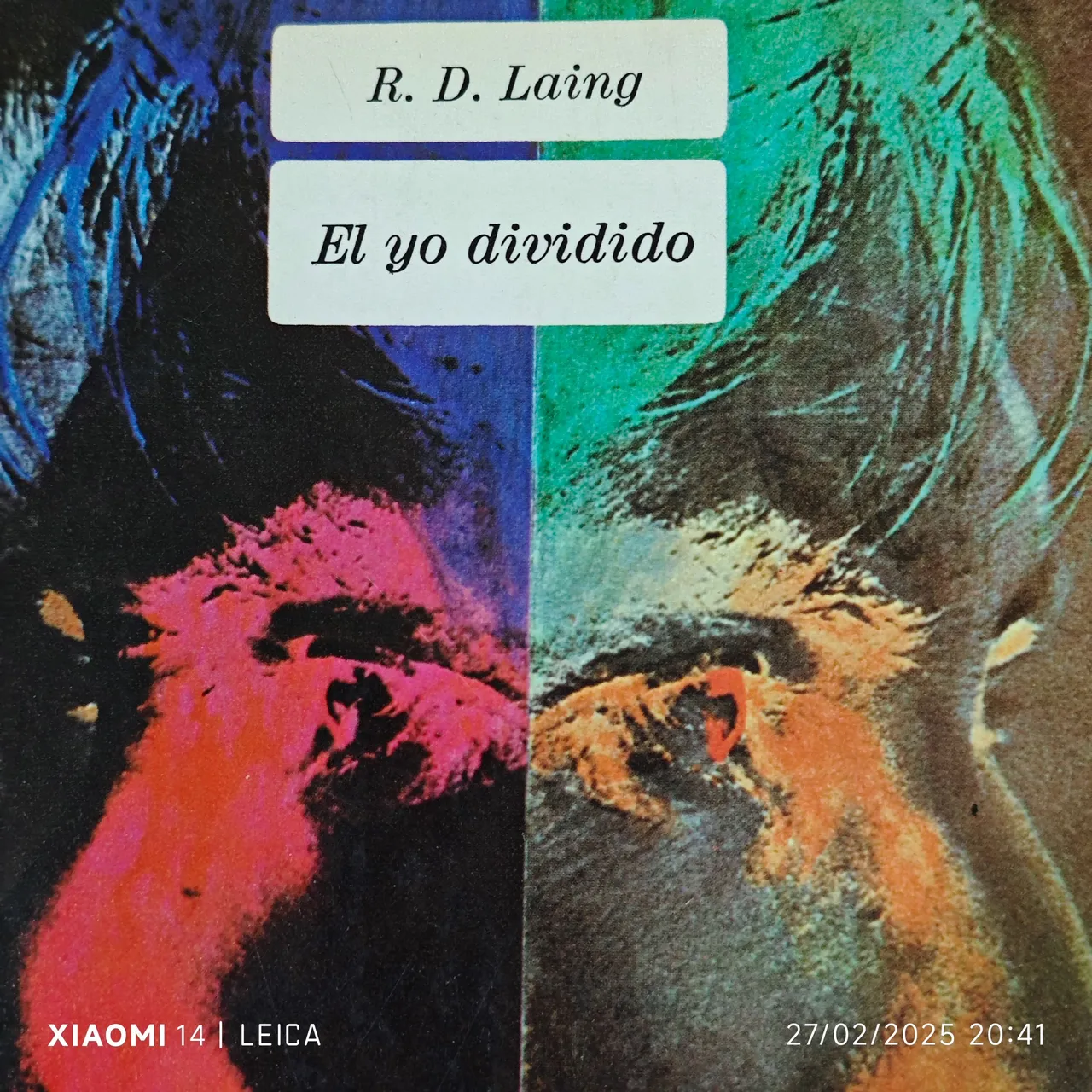
There is no choice but to bow to external demands. This is not a bad thing in itself, as we will see later. However, the price to pay is our division: the conscious and the shadow, the id-ego-superego, Laing's divided self, parent-child-adult, Janet's dissociation, etc. Many theories, many names, for the same phenomenon, the fragmentation of the soul.
Al nacer, no tardamos mucho tiempo en comprender que no somos el centro del universo. Llegamos a un mundo en el que antes de nacer ya alguien espera algo de nosotros. Salvador Dalí nació nueve meses después de la muerte de Salvador, su hermano. Ya podemos imaginarnos a qué vino el segundo Salvador: a salvar el duelo de sus padres. A cubrir un hueco, un vacío.
El encuentro con la realidad, eso que se encuentra en el exterior de nuestra piel, nos fragmenta. En ocasiones, nos rompemos sin remedio. La negligencia, los abusos o, en ocasiones, lo inevitable toman el lugar de Zeus y su aparato eléctrico.
No queda más remedio que plegarse a las demandas externas. Esto no es malo en sí mismo como veremos más adelante. Sin embargo, el precio a pagar es nuestra división: lo consciente y la sombra, yo – ello -superyo, el yo dividido de Laing, padre-niño-adulto, la disociación de Janet etc. Muchas teorías, muchos nombres, para un mismo fenómeno, la fragmentación del alma.

In childhood, not only is the soul fragmented, we also become aware of our vulnerability, we need others. We bend to external demands to keep our loved ones close. The bad boy or girl is not loved. Under normal conditions, the love of one's parents prevails and the child finds his or her place in a livable world.
The reader may well ask, if they have got this far, what all this rambling has to do with love and love between couples. We will soon have an answer to this question.
We have already seen that reality imposes the expulsion from paradise. When love is present, the awareness of our vulnerability, the end of the Golden Age finds a great prize: to be loved.
When fear is the protagonist of childhood, the awareness of one's own fragility has no reward. There remains a void and a certainty: we lack courage.
In all love there is a return to the past, say the Freudians, that all couples have something Oedipal about them. In the other half we look for what once was, conditional love.
In the cases where there wasn't, we try to find a partner who will give us value, a look of admiration, who will fill our void. Someone to heal our old wounds.
When there wasn't in childhood, in couples, clinical practice tells me, the other is often just an instrument at the service of our Ego.
Let's think for a moment about those couples in which one of the partners is looking for a partner to idealize. A partner who, because of their social position or their successes, will provide the self-esteem that is lacking. The mechanism is very childish, it belongs to the field of magical thinking, and we can see it every day. Like that child who thinks he is special because he wears Cristiano Ronaldo's T-shirt.
Without a doubt, this example would be incomplete without addressing the other component of this imaginary duo. The successful partner, like a narcissus, finds in their partner a reflection that confirms what they so badly need to feel: “You are great”. In short, in this type of couple, they are only looking for a gaze that bestows value. That value that once existed, when the other did not exist, only a limitless self. Without skin consciousness.
Based on an evolving reality, myths influence our emotions, cognitions and behaviors, offering acceptable models with the aim of satisfying these longings of which I have spoken.
The nymph Echo offers a model for so-called platonic love. Gaea is a model of maternal love. Narcissus is not only a model we can see on social networks and magazine covers, he has also given his name to a personality disorder: narcissism. The narcissus is an emerging being, always alert to external validation (such as likes on social networks), vulnerable to criticism and rejection from others.
This is as far as we go.
Thank you for joining me here.
En la infancia no sólo se fragmenta el alma, también nos hacemos conscientes de nuestra vulnerabilidad, necesitamos de los otros. Nos plegamos a las demandas externas para mantener a nuestros seres queridos cerca. Al niño o a la niña mala no se los quiere. En condiciones normales, prima el amor de los progenitores y la niña o el niño encuentran su lugar en un mundo habitable.
Se puede preguntar la lectora o lector, si ha llegado hasta aquí, por la relación de toda esta divagación con el amor y con el amor de pareja. Estamos cerca de poder dar esa respuesta.
Ya hemos visto que la realidad impone la expulsión del paraíso. Cuando el amor está presente, la conciencia de nuestra vulnerabilidad, el fin de la Edad de Oro encuentra un gran premio: ser amado.
Cuando el miedo es el protagonista de la infancia, la conciencia de la propia fragilidad no tiene premio. Queda el vacío y una certeza: carecemos de valor.
En todo amor hay un retorno al pasado, dicen los Freudianos, que todas las parejas tienen algo de edípico. En la otra mitad buscamos lo que ya hubo, amor condicional.
En los casos en los que no hubo, tratamos de encontrar una pareja que nos otorgue valor, una mirada de admiración que ocupe nuestro vacío. Alguien que repare nuestras viejas heridas.
Cuando en la infancia no hubo, en las parejas, me lo dice la práctica clínica, el otro suele ser sólo un instrumento al servicio de nuestro Ego.
Pensemos por un momento en aquellas parejas en las que una de las partes busca a una/o compañera/o a quien idealizar. A una pareja que, por su posición social o sus éxitos, otorgue la autoestima de la que se carece. El mecanismo es muy infantil, pertenece al campo del pensamiento mágico y lo podemos contemplar a diario. Como a ese niño que se cree especial porque viste con la camiseta de Cristiano Ronaldo.
Sin duda, quedaría incompleto este ejemplo sin abordar al otro componente de este imaginario dúo. La/el compañera/o exitoso, como narciso, encuentra en su pareja un reflejo que le confirme lo que tanto necesita sentir: “Eres grandioso”. En definitiva, en este tipo de parejas sólo se busca una mirada que otorgue valor. Ese valor que hubo alguna vez, cuando no existía el otro, sólo un yo sin límites. Sin conciencia de piel.
Sobre una realidad evolutiva, los mitos influyen en nuestras emociones, cogniciones y conductas ofreciendo modelos aceptables con el fin de satisfacer estos anhelos de los que he hablado.
La nifa Eco ofrece un modelo al llamado amor platónico. Gea es un modelo de amor maternal. Narciso, no sólo es un modelo que podemos ver en redes sociales y portadas de revista, también ha dado nombre a un trastorno de personalidad: el narcisismo. El narciso es un ser en emergencia, siempre alerta a la validación externa (como los likes de las redes sociales), vunerable a la crítica y al rechazo del otro.
Hasta aquí llegamos.
Gracias por acompañarme hasta aquí.

Banner edited with Canva pro and cropped with ezgif.com.
Avatar created with IA Ideogram.

Bibliography / Bibliografía
 |  |  |
|---|---|---|
 |  |  |
Translated into English from my native language Spanish with DeepL.
All photographs are my own, taken from various Tarot decks and edited with Gimp. / Todas las fotografías son de mi propiedad tomadas de diferentes barajas del Tarot y editadas con Gimp.
🕷️