

Saludos a toda la comunidad de Humanitas y al equipo de INLEO. En esta publicación me sumo a una de las iniciativas de Temas para cada día, mes de Agosto: El cine. En esta ocasión le toca el turno a una de las más grandes películas del cine español de toda su historia, El Cochecito (1960).
Con esta publicación, de nuevo, dedicada al cine y a la psicoterapia, trataré de aproximar los modelos sistémicos al estimado lector, especialmente los influidos por la Escuela de Palo Alto (Gregory Bateson. 1904-1980). ¿En qué consisten los modelos sistémicos en psicoterapia? Allá vamos:
En las intervenciones individuales, en apariencia, la persona que demanda la ayuda llega sola a la consulta. Digo en apariencia, porque no viene sola. Viene acompañada de un montón de gente invisible que habita en su mente. Construcciones mentales de padres, abuelos, hermanos y otras personas significativas.
Representaciones mentales que influyen, yo diría que determinan lo que esperamos en nuestra relación con los otros. Por ejemplo, un adulto que de niño fue abandonado probablemente piense que su pareja, en la que se proyecta las representaciones internas del padre o de la madre, también lo abandonará como ya fue abandonado antes. Probablemente este sujeto, deje a todas sus parejas antes de que se cumpla la “profecía” de quedarse solo de nuevo.
Es decir, en las intervenciones individuales o de pareja, la mente y los objetos son internos. Sin embargo, en los modelos sistémicos la mente está afuera. Se trabaja con las personas “reales”, aunque la vivencia de cada miembro de la familia sobre los otros sea subjetiva y muy particular. Por ejemplo, la misma madre puede ser amada por un hijo y odiada por otro miembro de la familia.
 |
|---|
| Foto de mi propiedad tomada con mi teléfono móvil Xaomi 14 de un libro de mi propiedad |
LOS MODELOS SISTÉMICOS
En los modelos sistémicos de psicoterapia los conceptos de sistema y homeostasis son fundamentales para comprender las dinámicas familiares. La familia sería un sistema que se autorregula con el fin de mantener la homeostasis del propio sistema:
La familia es un sistema autocorrectivo, auto-gobernado por reglas que se constituyen en el tiempo a través de ensayos y errores. […] Por la teoría general de los sistemas sabemos que cada sistema viviente se caracteriza por dos funciones … : la tendencia homeostática y la capacidad de transformación, cuyo interjuego mantiene siempre el sistema en equilibrio, siempre provisorio, garantiza su evolución y creatividad, sin las cuales no hay vida. En los sistemas patológicos… aparece la tendencia cada vez más rígida, a repetir compulsivamente las soluciones memorizadas al servicio de la homeostasis.
M. Selvini palazzoli, et al. Paradoja y Contraparadoja. Paidós. 1988.
Esto lo veremos mejor analizando la película.

EL COCHECITO
La película El Cochecito (1960), sintetizando bastante, trata sobre un señor jubilado que, con el fin de conseguir un triciclo a motor, simula una discapacidad motriz.
La película, como tantas películas rodadas durante el franquismo, sufrió las consecuencias de la censura. Hoy, cuando la censura es de otro tipo, seguramente ni siquiera se hubiera rodado.
El guión fue escrito por Rafael Azcona, retomando un pequeño relato escrito por el propio autor, titulado “Paralítico” e incluido en su libro “Pobre, paralítico y Muerto”. La dirección de la película estuvo a cargo de Marco Ferreri, que supo darle al film un crudo aire de neorrealismo italiano.
Sobre como surgió la idea de la película, nos cuenta Rafael Azcona que estando en el estadio de fútbol Santiago Bernabéu, se encontró con un grupo de personas con discapacidad motriz disfrutando de las “ventajas” de su discapacidad. Personas que insultaban a los jugadores calificándolos como “baldados”:
Me desconcertó que unos ciudadanos en tan precarias condiciones físicas se permitieran hacer irrisión de las facultades atléticas de unos atletas en la flor de la edad, pero no había que ser un lince para deducir que el insultante complejo de superioridad de los impedidos tenía su origen en la autonomía de movimientos que les proporcionaban sus cochecitos. … fui al primer partido que jugó el Madrid en casa … y en efecto, allí estaban, sentaditos en sus coches al borde del terreno de juego …, disfrutando de un placer negado a los hinchas en pleno uso de sus remos: el de ver los goles del Madrid más cerca que nadie (Azcona, 1991, p.11)
De esta experiencia nacerá el relato corto «El señor que quería ser paralítico» (1957). En el cuál un señor aspira a ser “paralítico” por las “ventajas” sociales que conlleva esta condición:
no tendré que ir a trabajar ni nada de eso. … así me reiré de los líos del transporte urbano … me saltaré a la torera las ordenanzas del tráfico… porque para eso la parálisis y la ancianidad son respetabilísimas.
De este relato surgirá el argumento de “El Cochecito”:
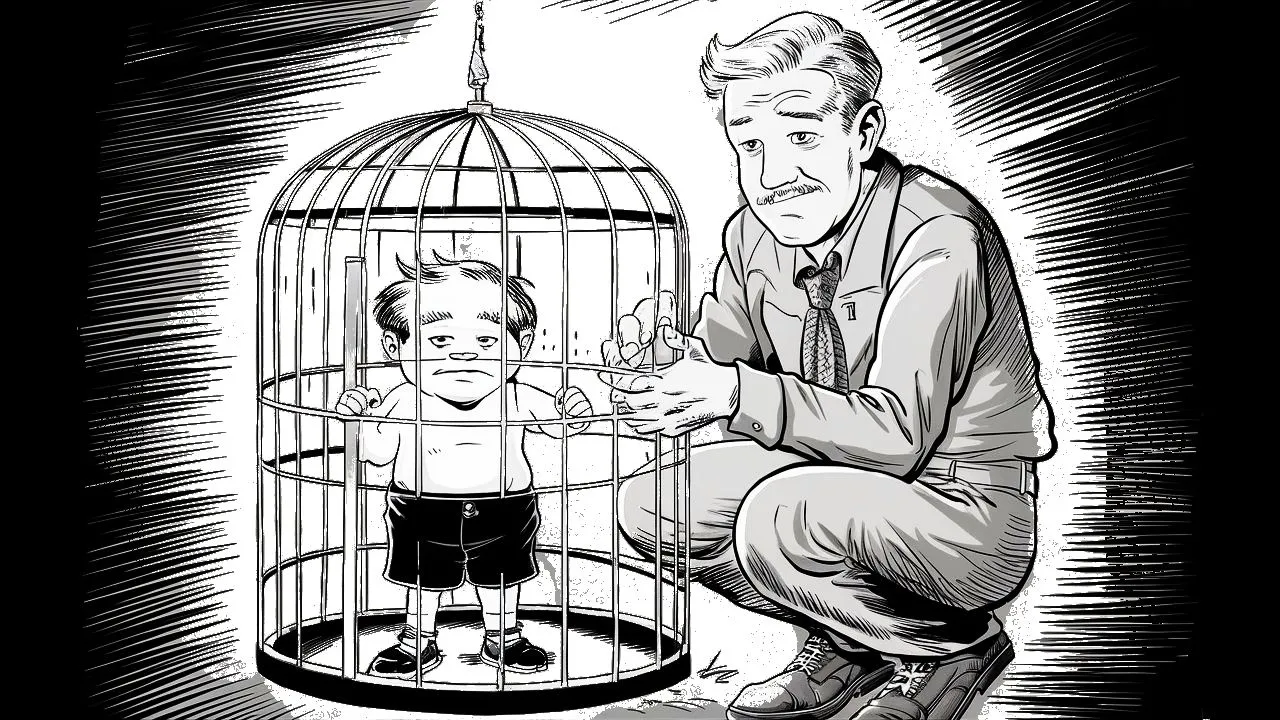
Don Anselmo, un viudo jubilado que vive en la casa de su hijo, convive además con la esposa de su hijo y dos nietos. Un día decide que quiere tener un triciclo a motor como lo tiene su amigo Lucas. La historia daba para road movie, en plan Easy Rider, pero sin drogas. Un canto a la libertad con patillas y melenas blancas mecidas por el viento de cara. También daba para película de humor ligero. Pero en manos de Azcona y Ferreri, se convirtió en un drama brutal cargado de humor negro. El cochecito no es precisamente "Milagro en Milán".
LA FAMILIA DE DON ANSELMO COMO SISTEMA
Don Anselmo es un funcionario jubilado, de unos setenta años de edad, y buena persona. La película comienza con la vista a su amigo Lucas. Lucas, un anciano con una discapacidad motriz, acaba de comprarse un triciclo a motor ante el espanto de su hija y otros familiares:
¡Está como loco con su coche!
¡Mira qué a su edad comprarse una moto!
¡Está como Loco con su cochecito!
¡No sabe lo que nos está haciendo sufrir Lucas!
Todas estas quejas se dirigen a D. Anselmo, que parece que hasta ese momento ha asumido el papel de acompañante y cuidador de su amigo Lucas. Ante el descontento de la familia, D. Anselmo se compromete a acompañar a Lucas en su primer paseo con el triciclo motorizado.
Con respecto a su familia D. Anselmo no tiene ninguna autonomía. Vive en la casa de su hijo, lugar en el que es sólo un ser infantilizado, lo afirma el propio médico de la familia: “los viejos son como los niños”.
D. Anselmo es un ser marginado, un olvidado. No maneja su propio dinero, es su hijo el responsable de su economía. Tampoco disfruta de privacidad, su habitación es ocupada regularmente por su nieta, que ha tomado el cuarto de su abuelo como el lugar preferido para aprender francés mediante unas grabaciones.
En este contexto, hasta que Lucas compra el triciclo, parece que lo que daba sentido a su vida era acompañar a su amigo. Pero todo cambia cuando Lucas se motoriza. Excluido y marginado en casa, pasa a ser un excluido y marginado en su vida social.
Su amigo Lucas ya no le necesita, ahora comparte el tiempo con otros amigos también motorizados. Un grupo de motoristas que se desplaza de un lugar a otro sin que D. Anselmo sea capaz de seguirlos.
La solución que encuentra D. Anselmo a su precaria situación es la compra de un triciclo a motor, con el único fin de viajar con su amigo Lucas y con sus nuevos amigos motoristas. Aquí comienzan los problemas. El deseo de D. Anselmo descubre la naturaleza de la familia. Como enseña la teoría de sistemas, el cambio en una de los elementos afecta a todo el grupo.
En este caso, la familia muestra ser un sistema patriarcal rígido que, ante el deseo de autonomía de D. Anselmo, aumenta la presión para que el abuelo vuelva al lugar que ocupaba antes. Incluso, su hijo lo amenaza con borrar todo rastro de autonomía declarándole irresponsable. Es decir, lo amenaza con arrebatarle todos sus derechos como ciudadano.
Recordando lo que nos decía Selvini:
En los sistemas patológicos… aparece la tendencia cada vez más rígida, a repetir compulsivamente las soluciones memorizadas al servicio de la homeostasis.
Vemos como en este caso, el sistema se mueve, mostrando una mayor rigidez ante el desafío del abuelo a las reglas familiares. En lugar de buscar soluciones nuevas, ante la nueva situación, el sistema recurre al remedio de siempre: presionar al abuelo para que desista de su “locura” (de su autonomía).

POSIBLES SOLUCIONES AL CONFLICTO FAMILIAR
En el mundo llamado desarrollado, en la actualidad este conflicto tiene una solución sencilla, medicar al abuelo o ingresarlo en una residencia para que deje de dar la lata, también se pueden aplicar las dos soluciones al mismo tiempo.
Otra solución del conflicto pasaría por la caída en depresión del abuelo, la “enfermedad” volvería a traer el viejo equilibrio a la familia. D. Anselmo pasaría a ser el “miembro designado”, como lo llaman los psicoterapeutas sistémicos, el familiar que se sacrifica para que la familia recupere su equilibrio anterior.
También cabe la posibilidad de que D. Anselmo, un ser tratado con desprecio, un ser atrapado en una situación sin salida, tome alguna medida desesperada. Quizás, ¿la huida?
Una solución “sana” comenzaría por poner palabras a la verdadera demanda de D. Anselmo, que no es la motocicleta, sino encontrar un lugar, su lugar en el mundo. Salir de la situación de marginación en la que habita.
Por otra parte, su hijo y “pater familias” debería comprender que D. Anselmo no está cuestionando su autoridad, sólo demanda que se le trate como a un adulto. Que la autoridad legítima y verdadera no nace de la imposición y la violencia sino del respeto ganado. Que el autoritarismo no es muestra de fortaleza sino de debilidad.
La película ofrece su propia solución. Si tienes curiosidad por el desenlace, acude a la versión no censurada.
GRACIAS POR LEER HASTA AQUÍ.

Greetings to the entire Humanitas community and the INLEO team. In this publication I join one of the initiatives of Temas para cada día, month of August: The cinema. This time it is the turn of one of the greatest films of Spanish cinema in its history, El Cochecito /"The Little Coach" (1960).
With this publication, again, dedicated to cinema and psychotherapy, I will try to bring systemic models closer to the esteemed reader of this publication, especially those influenced by the Palo Alto School (Gregory Bateson. 1904-1980). What do systemic models in psychotherapy consist of? Here we go:
In individual interventions, in appearance, the person who demands help comes alone to the consultation. I say apparently, because he/she does not come alone. She comes accompanied by a lot of invisible people who live in her mind. Mental constructs of parents, grandparents, siblings and other significant people.
Mental representations that influence, I would say, determine what we expect in our relationship with others. For example, an adult who was abandoned as a child probably thinks that his or her partner, on whom the internal representations of the father or mother are projected, will also abandon him or her as he or she was abandoned before. This subject will probably leave all his or her partners before the “prophecy” of being left alone again is fulfilled.
In other words, in individual or couple interventions, the mind and the objects are internal. In systemic models, however, the mind is outside. We work with the “real” people, although the experience of each member of the family about the others is subjective and very particular. For example, the same mother may be loved by one child and hated by another family member.
|
|---|
| Photo of my property taken with my Xaomi 14 cell phone from a book I own |
SYSTEMIC MODELS
In systemic models of psychotherapy, the concepts of system and homeostasis are fundamental to understanding family dynamics. The family would be a system that self-regulates in order to maintain the homeostasis of the system itself:
The family is a self-correcting system, self-governed by rules that are constituted over time through trial and error. [...] From the general theory of systems we know that every living system is characterized by two functions ... : the homeostatic tendency and the capacity for transformation, whose interplay always keeps the system in equilibrium, always provisional, guarantees its evolution and creativity, without which there is no life. In pathological systems... there is an increasingly rigid tendency to compulsively repeat memorized solutions in the service of homeostasis.
M. Selvini palazzoli, et al. Paradox and Counterparadox. Paidós. 1988.
We will see this better by analyzing the film.
THE LITTLE COACH
The film El Cochecito / The Little Coach (1960), to summarize a lot, is about a retired man who, in order to get a motor tricycle, simulates a motor disability.
The film, like so many films shot during the Franco regime, suffered the consequences of censorship. Today, when censorship is of a different kind, it probably would not even have been shot.
The script was written by Rafael Azcona, based on a short story written by author himself, entitled “Paralítico” ("Paralytic") and included in his book “Pobre, paralítico y Muerto” (Poor, Paralytic and Dead). The film was directed by Marco Ferreri, who knew how to give the film a raw air of Italian neorealism.
About how the idea for the film came about, Rafael Azcona tells us that while he was at the Santiago Bernabeu soccer stadium, he met a group of people with motor disabilities enjoying the “advantages” of their disability. People who even went so far as to insult the players by calling them “baldados” ("crippled"):
I was baffled that citizens in such precarious physical conditions would allow themselves to make fun of the athletic faculties of athletes in their prime, but you didn't have to be a lynx to deduce that the insulting superiority complex of the handicapped had its origin in the autonomy of movement provided by their strollers. ... I went to the first game Madrid played at home ... and indeed, there they were, sitting in their cars at the edge of the field ..., enjoying a pleasure denied to the fans in full use of their paddles: that of seeing Madrid's goals closer than anyone else (Azcona, 1991, p.11).
From this experience was born the short story “El señor que quería ser paralítico” / “The man who wanted to be paralytic” (1957). In which a man aspires to be “paralytic” because of the social “advantages” that this condition entails:
“I will not have to go to work or anything like that ... so I will laugh at the hassles of urban transport ... I will jump over the traffic ordinances ... because for that paralysis and old age are very respectable”.
From this story will emerge the plot of “El Cochecito” / "The Little Coach":
Don Anselmo, a retired widower who lives in his son's house, also lives with his son's wife and two grandchildren. One day he decides he wants to have a motor tricycle like his friend Lucas has. The story could have been a road movie, like Easy Rider, but without drugs. A hymn to freedom with sideburns and white hair swaying in the headwind. It was also suitable for a light-hearted comedy film. But in the hands of Azcona and Ferreri, it became a brutal drama full of black humor. El Cochecito / The Little Coach is not exactly “Miracle in Milan”.
DON ANSELMO'S FAMILY AS A SYSTEM
Don Anselmo is a retired civil servant, in his seventies, and a good person. The film begins with a visit to his friend Lucas. Lucas, an elderly man with a motor disability, has just bought a motor tricycle to the horror of his daughter and other relatives:
He's like crazy with his car!
He's crazy about his car! At his age, he's buying a motorcycle!
He's like crazy with his little car!
He doesn't know what Lucas is making us suffer!
All these complaints are addressed to Mr. Anselmo, who seems to have assumed the role of companion and caretaker of his friend Lucas. In view of the family's discontent, Mr. Anselmo agrees to accompany Lucas on his first ride on the motorized tricycle.
With respect to his family, Mr. Anselmo does not have any autonomy. He lives in his son's house, a place where he is only an infantilized being, as the family doctor himself affirms: “old people are like children”.
D. Anselmo is a marginalized being, a forgotten one. He does not manage his own money; it is his son who is responsible for his economy. Nor does he enjoy any privacy, his room is regularly occupied by his granddaughter, who has taken her grandfather's room as her favorite place to learn French through recordings.
In this context, until Lucas buys the tricycle, it seems that what gave meaning to his life was to accompany his friend. But everything changes when Lucas gets a motorcycle. Excluded and marginalized at home, he becomes excluded and marginalized in his social life.
His friend Lucas no longer needs him, now he shares his time with other friends who are also bikers. A group of bikers who move from one place to another without D. Anselmo being able to follow them.
The solution that D. Anselmo finds to his precarious situation is the purchase of a motor tricycle, with the only purpose of traveling with his friend Lucas and his new biker friends. This is where the problems begin. Anselmo's desire uncovers the nature of the family. As systems theory teaches, a change in one element affects the whole group.
In this case, the family is shown to be a rigid patriarchal system that, in the face of D. Anselmo's desire for autonomy, increases the pressure for the grandfather to return to the place he occupied before. His son even threatens to erase all traces of autonomy by declaring him irresponsible. In other words, he threatens to take away all his rights as a citizen.
Remembering what Selvini told us:
In pathological systems... there is an increasingly rigid tendency to compulsively repeat memorized solutions in the service of homeostasis.
We see how in this case, the system moves, showing a greater rigidity in the face of the grandfather's challenge to the family rules. Instead of looking for new solutions to the new situation, the system resorts to the usual remedy: pressuring the grandfather to give up his “madness” (his autonomy).
POSSIBLE SOLUTIONS TO FAMILY CONFLICT
In the so-called developed world, there is currently a simple solution to this conflict: medicate the grandfather or put him in a nursing home so that he stops being a nuisance; both solutions can also be applied at the same time.
Another solution to the conflict would be for the grandfather to fall into depression, the “illness” would bring back the old balance to the family. Mr. Anselmo would become the “designated member”, as systemic psychotherapists call it, the family member who sacrifices himself so that the family regains its former equilibrium.
It is also possible that D. Anselmo, a being treated with contempt, a being trapped in a no-win situation, takes some desperate measure. Perhaps, flight?
A “healthy” solution would begin by putting words to Mr. Anselmo's real demand, which is not the motorcycle, but to find a place, his place in the world. To get out of the marginalized situation in which he lives.
On the other hand, his son and “pater familias” should understand that Mr. Anselmo is not questioning his authority, he only demands to be treated as an adult. That legitimate and true authority is not born of imposition and violence but of earned respect. That authoritarianism is not a sign of strength but of weakness.
The film offers its own solution. If you are curious about the outcome, go to the uncensored version.
THANKS FOR READING THIS FAR.

Banner editado con Canva pro y recortado con ezgif.com.
Banner edited with Canva pro and cropped with ezgif.com.
Avatar creado con la IA Ideogram.
Avatar created with IA Ideogram.

Translated and formatted with Hive Translator by 
Imágenes creadas con la IA Ideogram y esitadas con GIMP.
Images created with Ideogram AI and edited with GIMP


