

Hola amigos de 
Hoy los invitaré a un potaje de frijoles negros con domplín. Quizás una receta desconocida en algunas zonas de Cuba, porque cada región le da su toque distintivo a las tradiciones.
La palabra domplín es un cubanismo de la palabra dumpling, entendida como una bola de masa hervida.
Los cubanos tenemos un componente haitiano que fluye sobre todo en la religiosidad, la cultura culinaria y el componente genético, con más incidencia en la región oriental de Cuba.
El pototaje de frijol ya sea negro, colorao, blanco o cualquiera es altanente nutritivo por sus altos valores nutritivos. El frijol es una de las plantas mas poderosas por sus nutrientes, rico en hierro, vitaminas, fibras y proteina vegetal. Si bien la tradición española trajo consigo las fabadas, los haitianos y luego los campesinos cubanos enriquecieron este plato.
Como los sabados mi casa es frecuentada por familiares y amigos yo hice potaje para seis personas.
Ingredientes

1 libra de frijol negro
1 cebolla
½ cabeza de ajo
30 ml de aceite de girasol
1 ají
Cilantro
3 tomates cherry
Sal
½ lb de harina de trigo
Preparación
Ponemos los frijoles a ablandar en olla a presión por 90 minutos. Y para no desperdiciar el tiempo podemos poner a hacer arroz blanco y la vianda de su preferencia.

Mientras vamos preparando las especies. Picamos la cebolla, el ajie y los tomates finamente, luego lo ponemos a sofreir con el aceite.

Luego de pasado el tiempo unimos las especies sofritas con los fijoles y apuntamos la sal al gusto.
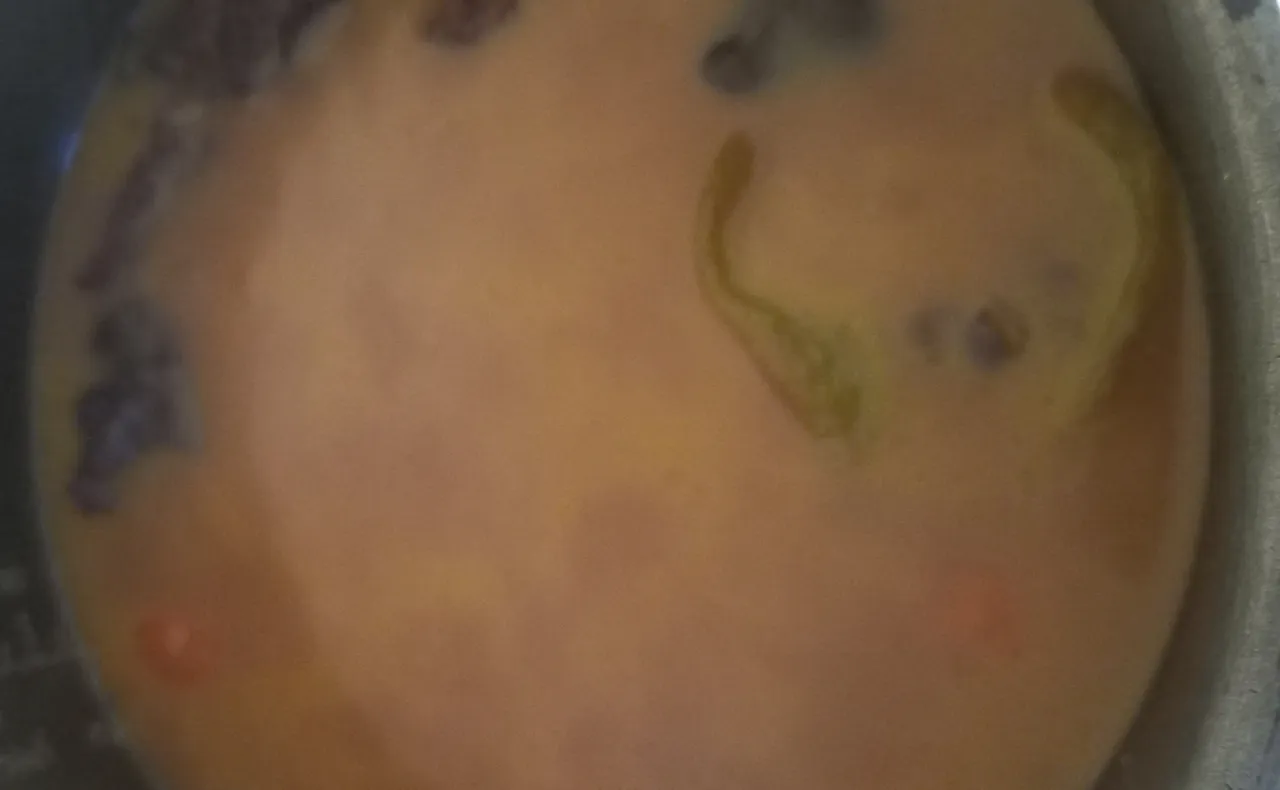
Y mientras los sabores se homogenizan vamos a hacer los domplines. Tomamos la harina de trigo en una cazuela y agregamos una pizca de sal y una cucharada de aceite. Luego agregamos un cucharón de caldo de los frijoles sazonados y vamos revolviendo lentamente.
 |  |  |
|---|
Debemos lavar bien nuestras manos o usar guantillas porque será necesario amazar la harina para lograr la consistencia.
 |  |  |
|---|
Agregamos caldo hasta lograr moldear la harina en pequeñas bolas.Vamos agregándolas al caldo hirviendo sin batir hasta no sellar.
Dejamos hervir por 25 minutos, a presión preferiblemente.
Al destapar agregamos el cilantro para realzar el sabor. Este aroma exquisito del potaje de frijol embriaga el ambiente. Siempre me sugiere a hogar, a familia, a almuerzo de fin de semana.

Y aqui les presento la manera en que los cubanos comen los frijoles, por lo menos los de oriente. Usualmente un solo servicio en un plato donde no puede faltar el arroz y la yuca.

El potage de frijol negro con domplín es un plato que puede consumirse como plato fuerte o como acompañamiento según tu preferencia y la costumbre o modo de alimentacion.

Fue un placer tenerlos en mi mesa para este espectacular almuerzo tradicional. Que lo disfrutes.
🌾
Esta publicación ha sido escrita y documentada por mí y las fotos utilizadas son de mi propiedad. Gracias por visitar mi blog, soy Critica de arte y Investigadora Social, amante de la cocina. Te invito a conocer más de mi, de mi país y de lo que escribo

English
Haitian heritage in our kitchen

Hello friends of
I love cooking, making traditional dishes, desserts, drinks is my passion. Today I will invite you to a black bean stew with dumplings. Perhaps an unknown recipe in some areas of Cuba, because each region gives its distinctive touch to traditions.
The word dumpling is a Cubanism of the word dumpling, understood as a boiled ball of dough. Cubans have a Haitian component that flows mainly in religiosity, culinary culture and the genetic component, with more incidence in the eastern region of Cuba.
Bean stew, whether black, red, white or any other, is highly nutritious due to its high nutritional value. Beans are one of the most powerful plants due to their nutrients, rich in iron, vitamins, fiber and vegetable protein. Although the Spanish tradition brought with it fabadas, the Haitians and later the Cuban farmers enriched this dish. Since my house is frequented by family and friends on Saturdays, I made stew for six people.
Ingredients
1 pound of black beans
1 onion
½ head of garlic
30 ml of sunflower oil
1 chili
Cilantro
3 cherry tomatoes
Salt
½ lb of wheat flour
Preparation
We put the beans to soften in a pressure cooker for 90 minutes. And to not waste time we can make white rice and the food of your choice.
While we prepare the spices. Chop the onion, chili and tomatoes finely, then fry them with the oil.
After the time has passed, add the sautéed spices to the fixoles and add salt to taste.
And while the flavors are homogenizing, we are going to make the dumplings. We take the wheat flour in a saucepan and add a pinch of salt and a tablespoon of oil. Then we add a ladle of broth from the seasoned beans and we stir slowly.
| | |
|---|
We must wash our hands well or use gloves because it will be necessary to knead the flour to achieve consistency.
| | |
|---|
We add broth until we manage to shape the flour into small balls. We add them to the boiling broth without stirring until they seal. We let it boil for 25 minutes, preferably under pressure. When we uncover it, we add the cilantro to enhance the flavor. This exquisite aroma of the bean stew intoxicates the atmosphere. It always reminds me of home, family, and a weekend lunch.
And here I present to you the way Cubans eat beans, at least those from the east. Usually a single serving on a plate that cannot be without rice and yuca.
Black bean stew with dumplings is a dish that can be eaten as a main course or as a side dish, depending on your preference and your eating habits.
It was a pleasure to have you at my table for this spectacular traditional lunch. Enjoy it.
🌾
This post has been written and documented by me and the photos used are my property. Thank you for visiting my blog, I am an art critic and social researcher, a lover of cooking. I invite you to learn more about me, my country and what I write about.