
Nine war cemeteries were built in memory of the Commonwealth soldiers killed during World War II in 1941-1945. Of these, two are in Bangladesh, one in Chittagong and the other in Mainamati, Comilla. Surrounded by serene silence, the nameplate engraved in stone on the green grass seems to tell the story of one of the martyrs' battles.

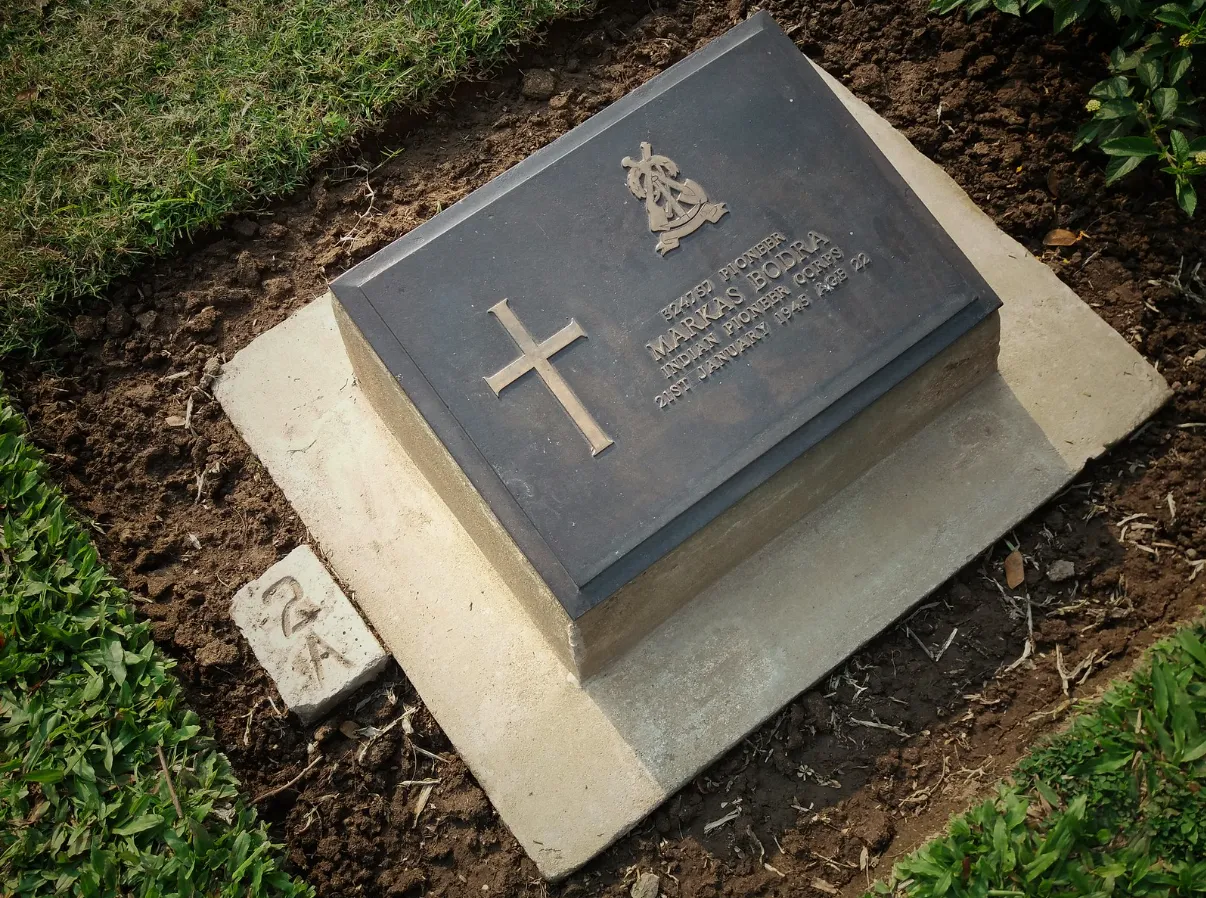 Image Source
Commonwealth War Cemetery Chittagong is a monument of the Commonwealth War Graves Commission. It is known as Chittagong War Cemetery. It is known from history that the tomb was established by the British army after the Second World War. At the beginning, there were about 400 graves of soldiers killed in the Second World War. However, at present there are 731 tombs of which 17 are unknown. There are about 20 (1 Dutchman and 19 Japanese) graves of foreign nationals killed in the Second World War. There is also a monument to the World War II (1939-1945) Chittagong-Bomb.
This forward camp of the Allied Fourteenth Army was set up in Chittagong at the British General Hospital No. 152 due to the training of the Army during the war and the facilities at the British General Hospital. The hospital was active from December 1944 to October 1945. Initially, it was possible to bury about 400 bodies in the cemetery under the supervision of the army. At the end of the war, additional bodies were shifted from Lusai, Dhaka, Khulna, Jessore, Cox's Bazar, Dhoya Palang, Dohazari, Rangamati, Patia and other temporary cemeteries to this cemetery.
The Commonwealth War Cemetery, surrounded by greenery, is now one of the tourist spots in Chittagong. Many travelers flock to see this mausoleum standing in a beautiful setting at the foot of the hill.
As you enter through the main gate of the War Cemetery, you will first see an altar with a beautiful crucifix in the middle of the cemetery. There are forty species of trees in the war tomb built in a beautiful natural environment. There are several hundred local and foreign flowering plants. At the same time another cemetery was built at Mainamati in Comilla.The area was a huge paddy field at the time of the founding of the War Cemetery, although it is now a thriving area and the heart of the city. Built in the first half of the fifties, the cemetery has an open field on the outside. Access is open to visitors daily from 9am to 12pm and from 3pm to 5pm. However, during the winter season, this schedule changes a bit. Although there is open access for visitors to this noise-free mausoleum area, sitting here is prohibited.
Although I visited Chittagong war cemeteries, I never visited Comilla war cemeteries.