Ukraine is a country of castles. From time immemorial, there has been a struggle between different tribes and peoples for this fertile land. And the struggle continues to this day! Once upon a time, high walls and thick ramparts and deep moats protected us from enemies. And who will protect us now?
Some of the castles have been perfectly preserved and are pearls of world architecture, while some others are in ruins and will probably soon disappear from the face of the earth. Developed nations even protect ruins and "preserve" them from further destruction, we should take an example from them. There is no future without the past!
So, I offer you a series of virtual walks through the castles and fortresses of my region, that is, the western part of Ukraine.
I visited these places over the past few years.

Introduction
Well, today we will travel to a castle that always remains in the shadow of its brighter "brothers". Why? Because it was built in times, when the main thing for protection from the enemy was not high thick walls, but a smart design of bastions, moats, ramparts, to protect against heavy enemy artillery and strike back. That is why it is invisible from afar, but very interesting for architecture lovers!
So, I invite you to Zolochiv. This is a small town 60 km from Lviv and about 30 km from my farm, where I live in the warm season.
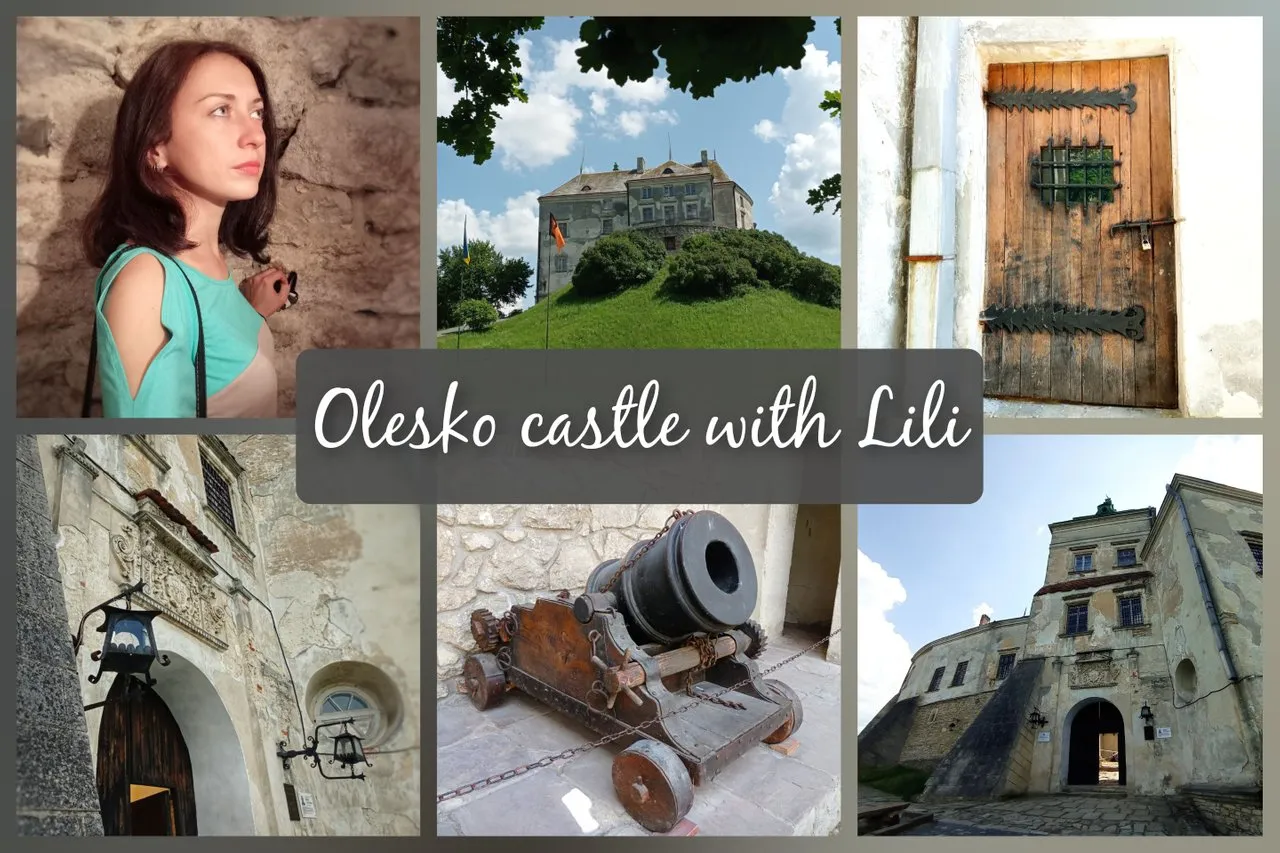
The castle is part of the Golden Horseshoe route, next to Oleskо and Pidhirtsi castles (I've already written about them and will leave a link below). They are all located at a distance of 30 km from each other. This was done for better defense of the territory and to quickly transmit information in the event of an attack!


My mini-trip started quite late! I left home only after lunch, trying to predict the weather.
My eternal question is, will it rain? And weather forecasters don't always know the right answer!


The first small stop was at the monument to Taras Shevchenko, the famous Ukrainian writer. I really liked these flower beds with almost autumn flowers... (It was the end of summer).


This castle is truly unique! It's not visible from afar! It is not surprising that I drove past it, and then decided to return on foot, leaving the car in the parking lot.
Since ancient times, there have been defensive buildings on this hill. The area here is quite swampy. People came here in the era of the Mongol invasion to hide from enemies among the swamps and forests. It is amazing how they survived here!
Of course, now this territory has been drained.


The first defensive buildings were on this site back in the 12-13th centuries. In those days they were built of wood.
But unfortunately, wood in a humid climate is not a durable material. Therefore, now we will go through a wooden bridge and gate, which have been restored in our time!


It was a wonderful time of the evening, when tourists are already going home...
Well, there are advantages to this! Especially if you are an introvert!:) Having bought a ticket, I found myself in the courtyard.
So, a stone castle was built in place of a wooden one. When?
The first mention of a wooden fortress is in 1532. And the construction of a stone castle began in 1634, unfortunately the name of the Italian architect is unknown.
The castle was built by the magnate Jakub Sobieski, the father of King Jan III. I remind you, at that time the western part of my country belonged to the great multinational state of the Polish-Lithuanian Commonwealth.
"The castle is an example of a defensive structure of the Neo-Dutch type and belongs to the monuments of the "palazzo in fortezzo" type, that is, it combines the functions of defense and housing. The defensive structures of the Zolochiv Castle are ramparts, four bastions, a gate tower, a bridge and a ravelin."
SOURCE

A model reconstruction of the defense complex is in the museum.
And we will find ourselves "inside the model."
In the yard and in the museum


Behind us is the gatehouse. In front is the Chinese Palace and on the right is the residential Grand Palace. The beautiful French-style park creates a special atmosphere of festivity and comfort.


However, it’s already late on the clock! The exhibition in the palace-museum can be viewed until 6:00 PM, so first of all we go inside. So let’s hurry.
On the first floor there are several halls dedicated to different stages of the history of this area from ancient times to the present day. On the stands you can read about certain exhibits.

Elements of knightly armor.
Hunting hall.

For some reason, in any museum I "hang" near the tools of primitive people...
We have moved so far from them in terms of development that we probably cannot imagine with our minds what a difficult life it was! But if it weren't for them, there would be no us.


The first printed books (late 16th century)

In another hall there are exhibits dedicated to a very tragic page of our history.
This is the time of the Second World War, when the Soviet army came here, defeating the fascists ( June, 1944)!
In the castle, which by that time no longer had owners, a prison and a place for shootings were made. Thousands of people from the area were brought here for torture and executions. These people were not criminals, but simply peasants or intelligentsia. Their only "crime" was belonging to Ukrainians.
Unfortunately, after decades, nothing has changed. We live next to Mordor and our current enemies are the descendants of those murderers.


I was particularly struck by the story of a young girl who was sent to Siberia with her family. To give you an idea, people traveled in freight trains, without any conditions, not even normal warm clothing that would protect them in the harsh climate. Many people died right on the train or died in hard labor.
This girl died at the age of 16. All that remained of her were these boots.

During the Soviet era, the castle was completely destroyed, only the walls remained. It was restored during the independence period (1900-2000). Since 2009, there has been an exhibition in this palace.

Borys Voznytskyi is a hero of Ukraine! He raised from the ruins three castles that I mentioned at the beginning, including this one. World culture is based on such people.

Well, on the second floor, sad thoughts were dispelled a little. Beauty reigns here. Although the furniture and paintings of the 18th-19th centuries do not belong specifically to this castle (the interiors here were completely destroyed!), we can assume that there was something similar here.


Beautiful, exquisite wooden furniture with generous carvings really transports you to some other reality. It's beautiful. Would you like to live in such a room?
By the way, toilets from the early 18th century were found in this castle, there was a sewage system here. (Unfortunately, due to lack of time, I forgot to take a photo).


Unfortunately, the authors of the paintings are not listed here. I especially like this painting, which shows a biblical story. The victory of the young David over the giant Goliath.


And this is the throne room. This room, like the entire castle, was rebuilt from ruins.

In the park and on the ramparts
After leaving the museum, I took a short walk through the park. Beautiful sculptures in the antique style, well-groomed roses, neatly trimmed bushes transport me somewhere to France.
This is not surprising, because the most famous owner of the castle was the King of the Polish-Lithuanian Commonwealth, Jan III Sobieski, who improved this space and did everything for the comfort of his French wife, Maria Casimira (Marysenka).


The Chinese Palace is the most familiar location for tourists, which can be seen in the photos of guidebooks. Initially, it consisted only of the central part, that is, it was a round tower, and later two wings were added.
Inside is a museum of oriental art. Tea ceremonies were also held on the second floor of the tower in the past.
I managed to get inside for literally 10 minutes, because unfortunately the museum was already closing.
So friends, I still want to come back here someday and see the interesting exhibits. Then I will share it with you.


A few more beautiful details of the castle grounds...


Well... Although the palaces were closed to tourists, we could still walk around the grounds.
Let's get to the most mysterious exhibit in the castle.
These are several-ton stones, accidentally discovered in a nearby forest and brought here. There was once a monastery in that forest. There is also information that the Templars were there.
The inscriptions on the stones date back to the end of the 14th century and are still undeciphered...


So, lovers of legends believe that this is a message from the Templars and an indication of hidden treasures. Some historians suggest that this is just a myth and someone made these inscriptions "for fun" somewhere in the 19th century, during the era of Romanticism, when people were interested in Gothic and exoticism.


Meanwhile, we continue our walk, climbing the ramparts. I have a dream to sit here and drink hot tea from a thermos.
The last group of tourists left the castle grounds and I was left alone. Such an interesting feeling when you are alone with history!


From here you can see the whole city. In the distance there are old churches and buildings from the 19th and early 20th centuries. On the horizon we see hills.


I am surrounded by cannons that once protected the city from enemies. Below, to my right, there is an interesting part of the defensive structure, namely the ravelin. It was rebuilt from scratch and now there is a shop and a cafe there.


Meanwhile, the wind on the ramparts was getting stronger, and the clouds on the horizon were turning gray and purple. Somewhere quite far away I could hear thunder...
Why do I always travel in a thunderstorm? Oh, I had to forget about having tea on the ramparts and go down faster.
I planned a walk around the town. It will be easier to hide there in case of a thunderstorm.

The castle gates were already closed, and the guards were not on the ramparts, like the ancient watchmen, but in the gatehouse room. Perhaps they confused me with a ghost, but they still let me out...
Goodbye, dear castle!
I hope, I'll return!


Chapel in the castle moat.


Other castles in this route