
Hello Hive travelers!
The last week of November is ticking by at the relentless speed of time. I just left a meeting at work. One of those meetings where nothing gets resolved and nothing is said, but which I have to attend to hand out paperwork that justifies the time. So, I need to recharge, take a deep breath, smile, and set off down the paths on the wind.
I let my legs move as they please, without any apparent destination. The faces of a city fracturing pass by like inert ghosts, unmoved by the flutter of a butterfly or the gaze of a girl who dreams of being loved someday by the same boy who dreams of being able to love her someday. Those children aren't ghosts; they are perhaps the latent desire of my own steps (as I watch them, The Sound of Silence by Disturbed plays in my mind).

The same steps that suddenly lead me to Beatles Park, I observe them as someone who also crosses the Abbey Road zebra crossing and, after a pause, I find myself at the entrance to Santa Clara Boulevard, my city that is no longer so holy or so clear, but retains an inexplicable magic.

I remember I had a task pending: to invite you to walk these cobblestones that cross part of the city from East to West.
We'll do the walk in two parts. Today we'll only see two blocks. Not because I decided it that way, but because of circumstances. You'll understand why I say that.
The Santa Clara Boulevard was built in 1989 in a historical context of the beginning of the island's socioeconomic decline, but where it was necessary to project a contrary image.
 |  |
|---|
If we pay attention, we will see an obvious contrast that reflects, it seems to me, the same social divergence of the country that tries to hide it.

On one side, decaying, destroyed buildings, barely painted with the intention of covering up their cracks.

The first building that greets visitors to the boulevard, in its glory days at the beginning of the 20th century, was a hotel. I look at its name, still resisting crumbling into the ground, like a footprint that once embraced everyone with its colors lost in time.
 |  |  |  |
|---|
Across the street, well-maintained homes with a more modern look and a vibrant, functional layout, housing a thriving business that generates income, jobs, and options—not cheap for the average person, but options nonetheless.
One can stroll along in slow motion, oblivious to the faces around them, or quicken their pace. Either way, their gaze will be drawn to the contrasting realities at every turn.

On one side, another ruined building, closed, hoping that someone will have an idea to give it back its reason for being.
 |  |  |
|---|
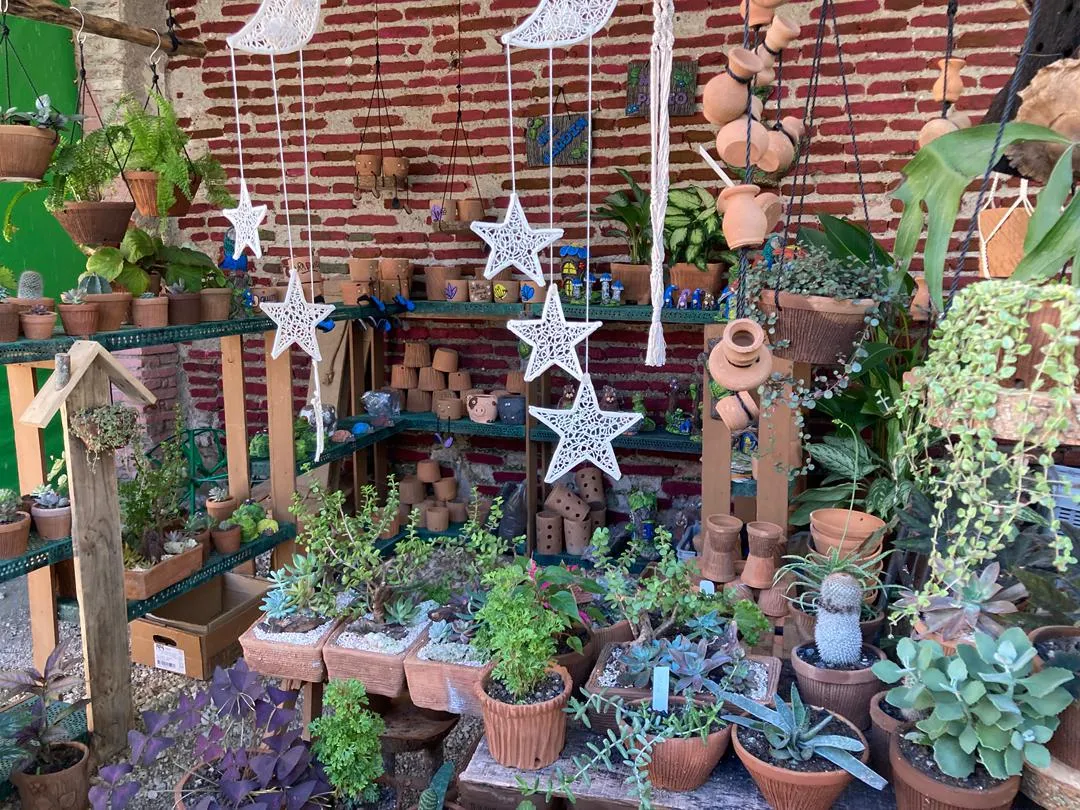
In front, there is also another building that suffered its loss, but it was embraced by ideas where flowers and colors were planted to welcome passersby and turn them into satisfied customers, at least in appearance or temporarily.
 |  |  |  |  |
|---|
 |  |  |
|---|
Fortunately, they have given the area a welcome boost of activity, making it a place where several entrepreneurs have room for their varied and attractive offerings.

I kiss a flower and continue on my way.
 |  |  |
|---|

Upon leaving what was once a house, now roofless and converted into a market square, one's gaze falls upon a painted but uninhabitable building; across the street, there is a so-called "boulevard bakery," the only option that still provides bread to customers whose economy allows them to enjoy it.
 |  |
|---|
In front, in inverted contrast, an empty shop, a useless space, lost with the sole mission of returning everyone's reflections through its glass.

And among open spaces and others without roofs, a store closed for fumigation, something they've finally started doing in the city in response to the epidemic that's hitting us hard. But, look at the logic of the illogical… Does it really make sense to fumigate a place when everything around it continues as usual? Anyway… let's continue.
Well, that's what I thought at first, but the cause, as I mentioned when I started writing this, became clear.

I stumbled upon the Pórtico Gallery and found a new art exhibition whose title immediately captivated me, precisely because of its connection to what I'd been showing and discussing. So, we stopped here and went inside...

Fractures, a photographic exhibition by Andrés Castellanos, is presented to us as evidence of someone observing a silent island environment, a heartbreaking and poetic visual testimony of contemporary Cuba according to Ginley Durán Castellón, curator of the exhibition.


The use of black and white photography, austere yet rich in textures and contrasts, transcends the documentary, immersing us in the symbolic. A universe where each image is a map of tensions, where the subject disappears, where silence screams, where permanence is emptiness, absence.
 |  |  |
|---|
A journey to the margins of humanity: sealed balconies, broken walls, cracks, fading bodies; but also an exploration of narratives hidden in plain sight, in the interstices of that same uninhabited humanity where the artist perpetuates the anatomy of wear and tear, apathy as landscape, loneliness and isolation as condition or choice.
 |  |  |  |
|---|
His framing transforms the vulgar, the everyday, into the sublime, revealing the harshness of an environment that, although hostile, retains its humanity; reminding us that, behind every crack, there is a story of survival and that, perhaps, it is there, in the fracture, where the future is best glimpsed.
 |  |  |
|---|
What is extraordinary is its capacity to subvert our perspective: what is broken is not merely ruin, but a trace of resistance.
Between the cracks, minimal yet powerful gestures emerge, reminding us that even in dystopia there is room for hope.
Andrés's lens, that of a young photographer already forging his own path with such conviction, is as relentless as it is compassionate, forcing us to confront the pain, but also to recognize within that pain the flower that still lives in the seed.
There is something sacred in this violence frozen in time. Something reminiscent of an altar where the images are islands within the Island: fragments of vertigo and tenderness. To contemplate them is to hear the murmur of our own anguish, and to find in it a strange solace.
 |  |  |
|---|
Fractures is not only a mirror reflecting social, spatial, and temporal fragmentation; it is a dialogue with the universal from a local perspective, in which the artist challenges the viewer to consider the meaning, or meanings, of inhabiting a body, a house, a homeland in a world that homogenizes and excludes.
Fractures is an act of faith in art as a trench where Castellanos portrays not the Cuba that is fading away, but the one that persists, with its open wounds and its light shining through the shadows.
And for now, not with the intention of disappearing, but rather pausing along the way, we bid you farewell until our next article, where we'll continue walking these streets of ours together.
As I always say, never stop smiling!
To all, a hug of light!

Thank you very much for your visit!
Thank you very much for your visit!
©Copyright 2025 Roswel Borges Castellanos. All rights reserved.


¡Hola viajeros de Hive!
Última semana de noviembre que va avanzando a la velocidad del tiempo implacable. Acabo de salir de una reunión en el trabajo. Una reunión de esas donde nada se resuelve y nada se dice, pero a la que hay que asistir para entregar papeles que justifiquen al tiempo. Entonces hay que recargar energías, respirar hondo, sonreír y echar a andar por los caminos sobre el viento.
Permito que mis piernas avancen como les plazca, sin destino aparente. Los rostros de una ciudad que se fractura transitan de un lado a otro como fantasmas inertes, insensibles al revolotear de una mariposa o la mirada de una niña que sueña con ser amada algún día por el mismo niño que sueña poderla amar algún día. Esos niños no son fantasmas, son tal vez el deseo latente de mis propios pasos (mientras les observo, en mi mente se reproduce The sound of silence, interpretada por Disturbed).
Los mismos pasos que de pronto me llevan al Parque de los Beatles, les observo como quien también cruza la cebra de Abbey Road y, luego de una pausa me descubro en la entrada al Boulevard de Santa Clara, mi ciudad que ya no es tan santa ni tan clara, pero conserva una magia inexplicable.
Recuerdo que yo tenía una tarea pendiente: invitarles a ustedes a transitar estos adoquines que atraviesan parte de la urbe de Este a Oeste.
Haremos el recorrido en dos partes. Hoy veremos apenas dos cuadras. No porque así lo decida yo, sino lo causal. Ya comprenderán por qué lo digo.
El Boulevard de Santa Clara fue construido en 1989 en un contexto histórico de inicios de la decadencia socio económica de la isla, pero donde era preciso dar una imagen contraria.
| |
|---|
Si prestamos atención, veremos un contraste evidente que plasma, se me antoja así, la misma divergencia social del país que intenta ocultarlo.
A un lado, construcciones en decadencia, destruidas, apenas pintadas con la intención de solapar sus grietas.
El primer edificio que da la bienvenida al boulevard, en sus tiempos de gloria a inicios del siglo XX, fue un hotel. Miro su nombre aún resistiéndose a quebrarse en el suelo, como huella que algún día abrazó a todos con sus colores perdidos en el tiempo.
| | | |
|---|
En frente, bien conservadas, viviendas con un toque más moderno en su apariencia, con una vitalidad en su utilidad, prestadas para un activo comercio que genera ingresos y puestos de trabajo y opciones, no baratas para el bolsillo común, pero opciones al fin.
Uno puede ir caminando en cámara lenta, olvidarse de los rostros que le rodean o apretar el paso. La mirada será igualmente interpelada por lo antagónico a cada paso.
A un lado, otro edificio en ruinas, cerrado, con la esperanza de que alguien tenga alguna idea para devolverle su razón de ser.
| | |
|---|
Al frente, también hay otro edificio que sufrió su pérdida, pero sí le abrazaron ideas donde plantar flores y colores para abrazar a los transeúntes y convertirlos en clientes satisfechos, al menos en apariencia o temporalmente.
| | | | |
|---|
| | |
|---|
Por fortuna, le han dotado de una vitalidad al terreno que se agradece de algún modo. convirtiéndolo en un lugar donde varios emprendedores tienen sitio para sus ofertas variadas y atractivas.
Beso a una flor y continúo el camino.
| | |
|---|
Al salir de lo que fuere una casa, ahora sin techo, convertida en plaza de ventas, la mirada se detiene en un edificio pintado, pero inhabitable; al cruzar la calle, una llamada “panadería del boulevard”, única opción que brinda el servicio de aún expenderle pan a los clientes cuya economía les permita degustarlo.
| |
|---|
Al frente, en contraste invertido, una tienda vacía, un espacio sin utilidad, perdiéndose con la sola misión de devolverle a todos sus reflejos a través de sus cristales.
Y entre sitios abiertos y otros sin techos, una tienda cerrada por fumigación, algo que al fin comenzaron a hacer en la ciudad ante la epidemia que nos golpea. Pero, vean la lógica de la antilógica… ¿Realmente tiene lógica fumigar un sitio cuando a su alrededor todo continúa igual? En fin… continuemos.
Bueno, eso pensaba en un inicio, pero lo causal, como les dije cuando comencé a escribir estas letras, se hizo evidente.
Tropiezo con la Galería Pórtico y encuentro una nueva exposición de arte cuyo título ya me atrapó, precisamente por la consonancia que tiene en función de lo que les venía mostrando y comentando. Así que acá nos detenemos y entramos...
Fracturas, exposición fotográfica de Andrés Castellanos, se nos muestra como evidencia de quien observa un entorno de isla silente, un testimonio visual desgarrador y poético de la Cuba contemporánea según Ginley Durán Castellón, curador de muestra.
El empleo de la fotografía en blanco y negro, de forma austera, cargada de texturas y contrastes, trasciende lo documental para sumergirnos en lo simbólico. Un universo en el que cada imagen es un mapa de tensiones donde el sujeto desaparece, donde el silencio grita, donde la permanencia es vacío, ausencia.
| | |
|---|
Viaje a las márgenes de lo humano: balcones sellados, paredes quebradas, agrietas, cuerpos que se desvanecen; pero también una exploración de narrativas ocultas a plena vista, en los intersticios de esa misma deshabitada humanidad donde el artista perpetúa la anatomía del desgaste, la desidia como paisaje, la soledad y el aislamiento como condición o elección.
| | | |
|---|
Sus encuadres convierten lo vulgar, lo cotidiano, en sublime, revelando la crudeza de un entorno que, aunque hostil, conserva su humanidad; recordando que, detrás de cada fisura, hay un relato de supervivencia y que, quizás, es allí, en la fractura, donde mejor se vislumbra el futuro.
| | |
|---|
Lo extraordinario reside en su capacidad para subvertir la mirada: lo roto no es solo ruina, sino huella de resistencia.
Entre las grietas asoman gestos mínimos, pero poderosos, recordándonos que incluso en la distopía hay espacio para la esperanza.
El lente de Andrés, joven fotógrafo que ya va labrando su camino de forma sólida, tan implacable como compasivo, obliga a detenernos en lo que duele, pero también a reconocer en ese dolor la flor que aún vive en la semilla.
Hay algo sagrado en esta violencia detenida en el tiempo. Algo que recuerda a un altar donde las imágenes son islas dentro de la Isla: pedazos de vértigo y ternura. Contemplarlas es escuchar el rumor de nuestro propio desgarro, y encontrar en él un extraño consuelo.
| | |
|---|
Fracturas no es solo un espejo de fragmentación social, espacial y temporal, es un diálogo con lo universal desde lo local en el que al autor interpela al espectador sobre el significado, o los significados, de habitar un cuerpo, una casa, una patria en un mundo que homogeniza y excluye.
Fracturas es un acto de fe en el arte como trinchera donde Castellanos no retrata la Cuba que se desvanece, sino la que persiste, con sus heridas abiertas y su luz entre las sombras.
Y por ahora, no con la idea de desvanecernos, sino de hacer una pausa en el camino, nos vamos despidiendo hasta un próximo artículo donde continuaremos transitando estas calles nuestras con todos ustedes.
Como siempre les digo, ¡nunca dejen de sonreír!
A todos, ¡un abrazo de luz!
¡Muchas gracias por tu visita!
¡Muchas gracias por tu visita!
©Copyright 2025 Roswel Borges Castellanos. Todos los derechos reservados.
Esta publicación fue traducida parcialmente con Google Translate y cada fotografía fue realizada con un iPhone SE con el consentimiento de los implicados.


Te invito a visitar el proyecto. DRIP - WITNESS NODE - BPUD

Apoya al testigo y vota por TheBbhProject! Proyecto realizado por 
Si aún les quedan votos de testigos, consideren votar también por el testigo que dirige


