


In August of 2023, a regional museum was opened to the public for local and tourists who want to bring themselves to the past of Cebu City and delve on the history that lies on artifacts, documents, coins, and photographs. Under the National Museum of the Philippines, the National Museum-Cebu operates up until the present to preserve and honor the cultural heritage, archaeological discoveries, traditions, and past maritime years of Cebu. In the early 20th century, the building of National Museum-Cebu was originally the Cebu Customs House used for port operations and immigration office. This old building was historically called the Aduana.


Aside from preserving and showcasing these hidden historic gems of Cebu, the museum does its purpose beyond it, bending the accustomed display of artifacts or documents, and bringing people together in cultural and historical awareness of the city. Its significance stretches to educating the people about the importance of learning the heritage of Visayas and Cebu and promoting awareness among the concerned people through partnerships with universities and other programs with the goal of teaching relevant facts that regard the history of Cebu. One thing I really learned during my stop was that the National Museum-Cebu is an important learning hub for the visitors, especially the Cebuanos themselves, to dive into the long years of warred efforts for freedom and equality that have happened before us.


Entering the National Museum-Cebu means experiencing the past, exploring old collections that carry the city's past and inherited culture, and feeling the poignant history in a sensational way. It has an exhibit that features the pre-colonial weapons, galleon models, shipwreck artifacts and fragments of it that roamed the surrounding sea of Cebu in the past years. I also found galleries featuring the works of Visayan artists who contributed to the island's artistic character, dedicated to showcase arts about the birth of religion, historical events, ethnography, practices of Cebuano, ancestors, and celebrations honoring relevant people and religious images. Pottery, porcelains, coins, sculptures and items from archaeological sites, maritime finds, and even donations from private collectors in foreign countries. Taxidermy specimens or simply preserved dead animals are also displayed. From pre colonial to modern times, the inside of the museum offers an engaging and most of all not only interesting but surprising experience of knowing the identity of Cebu in its deepest secret.


I really enjoyed witnessing historical finds from big artifacts to the smallest shipwreck pieces that hold significance and different stories that make up the whole story of the founding of Cebu. I cannot get to these preserved museum finds but I will share my best finds during my passionate visit to this museum.
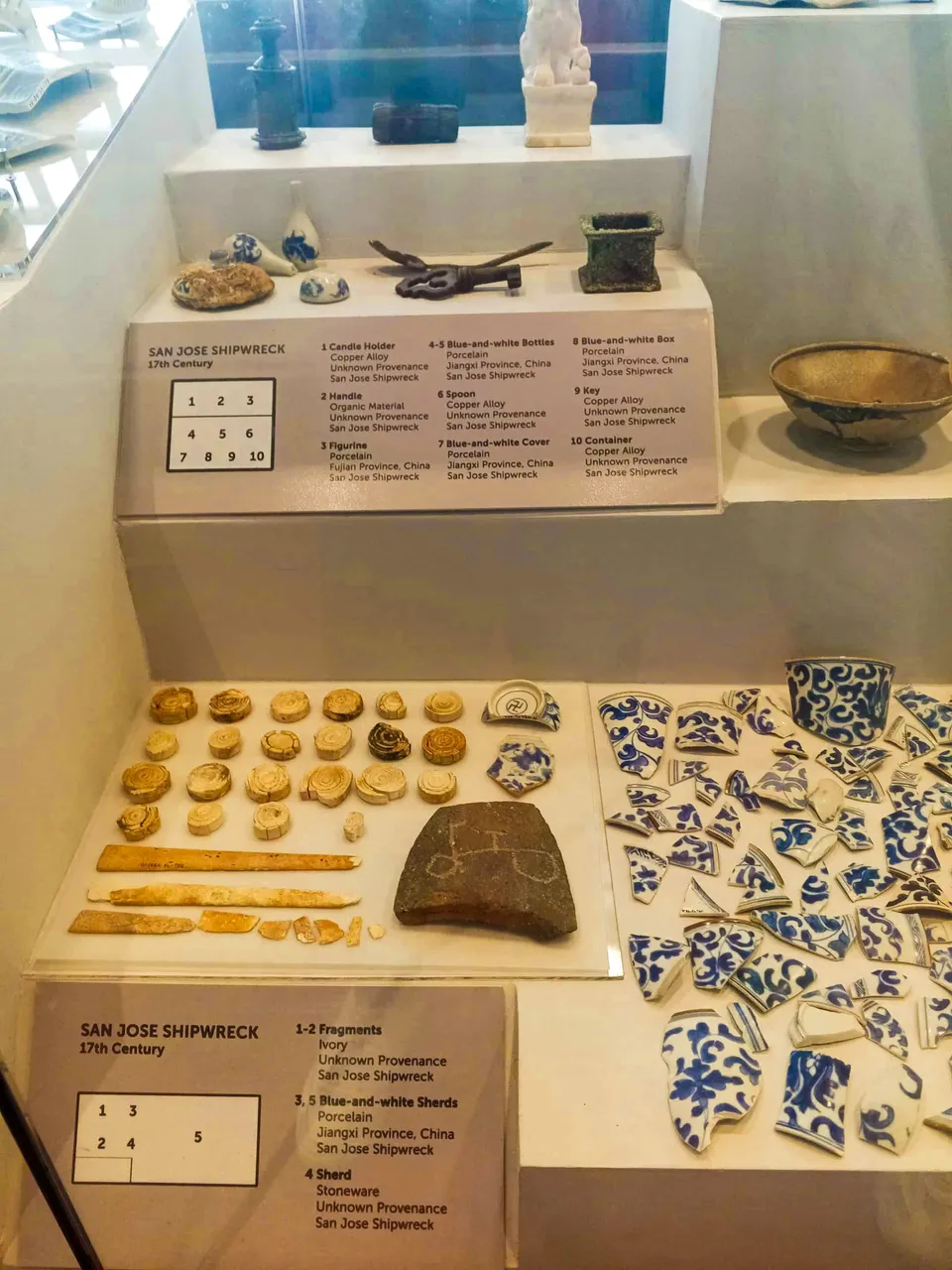

My most favorite among my finds inside is this interesting displayed recovered pieces from a historical vessel called San Jose Shipwreck. These small fragments of porcelain bowls, jars in white and blue colors, some ivory pieces, and broken jars carry the story of the ship’s journey in the 17th century. From one of my friends who loves history, he shared that these pieces of porcelain actually came from China, when the Chinese trader during this old maritime trade delivered porcelain from Jiangxi Province to the Philippines.

Moving on the other area of the museum I stumbled upon these early guns used during the Spanish period. These early matchlock-style weapons used iron barrels and a lighted wick for firing. Looking at them, they are already rusted and worn, of course, but these firearms give tourists a peek of the battle that sailors and soldiers faced during those years.

This one is a galleon model of San Diego which really caught my attention surprisingly because I am not into ships but I like fragments and pieces of it. Yesterday, I shared this in my snap to give some glimpse of my museum experience which surprised me because a lot of folks here like ships. According to a history site I read, this ship was not supposed to embark on a journey to war but unexpectedly, this one rushed into a battle and was destroyed. San Diego was a merchant ship not a war ship so imagine the horror it experienced in the war. This model shows the tall masts, wide sails, and big cargo area of old ships, helping visitors picture how these large vessels once traveled across the Pacific carrying goods and passengers. Looking at it gives me a good view of the ship's model only to realize these sea voyages also shaped our history.



That is all about my finds and experience of Cebu National Museum which was a good wrap after visiting Fort San Pedro. Visiting the city for these historical sites was very worthwhile, because I got home with history pieces in me as well as awareness of the island's origin. I also delved on the emotional turmoil and emotions I can sense in the walls and artifacts of the sites, which are very overwhelming to think about. Anyway, the experience was so good and one for the books. History really has this way of surprising me and I know a lot of historical learning will soon take place as I travel to some sites. For now this is just my museum story and I hope you enjoyed it.
How did you find the National Museum-Cebu? Is it amazing and overwhelming too? Let's discuss it in the comment section.