

Children are not property. That is a ghastly idea. If a person owns another person, that is called slavery. That person is chattel. If children are considered chattel, they become vulnerable to spanking, abuse, manipulation, neglect, and maltreatment, which can psychologically and physically harm them.
Thus, when adults view children as slaves, they see them as disdainful and disgusting creatures. It lowers the child to a nonentity, who must obey parental dictates without question and accept irrational rules because the parent "said so."
And tragically, children have been considered property since time immemorial. This has been the unspoken rule of society. They have had few rights and little freedom.
Parents feel authorized to hit and beat them when they "step out of line," or simply as an outlet for underlying rage. Some cultures even view children with such low esteem that the adults brutalize them to the point of inculcating them with a propensity for violence and an endless love affair with mass murder called warfare.
The founder of psychohistory, Loyld DeMause has elaborated on this:
"The source of most human violence and suffering has been a hidden children's holocaust throughout history, whereby billions of innocent human beings have been routinely murdered, bound, starved, raped, mutilated, battered, and tortured by their parents and other caregivers, so that they grow up as emotionally crippled adults and become vengeful time bombs who periodically restage their early traumas in sacrificial rites called wars."
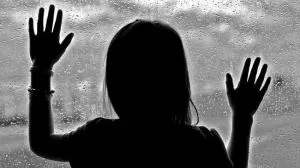
Churning out Violent Children Props up Mass bloodshed, but Times may Change
People ought to be ashamed at the the state of life for children. If children aren't treated as humans, with dignity and decency, no one can expect to have a decent and dignified world.This is why people can continue to expect mass bloodshed and violence, because they taught their children that abusing, enslaving, and harming others is the norm. But sadly, everyone pretends that violence and debauchery are just facets of "human nature." In truth, this is a collective delusion, wielded to brush off responsibility.
Things have to change. A world built on the edifice of harming children is no world anyone really wants to live in.
I am just glad that more people are starting to value safety and affection for kids. They are starting to see that treating children with love and individuality are the only ways to raise them with respect and appreciation for others. Harming and enslaving children is a recipe for planetary disaster.
It is the formulation for life that will make ghosts of everyone, sooner rather than later.
The history of childhood is a nightmare from which we have only recently begun to awaken. The further back in history one goes, the lower the level of child care, and the more likely children are to be killed, abandoned, beaten, terrorized, and sexually abused. It is our task here to see how much of this childhood history can be recaptured from the evidence that remains to us. That this pattern has not previously been noticed by historians is because serious history has long been considered a record of public not private events. Historians have concentrated so much on the noisy sand-box of history, with its fantastic castles and magnificent battles, that they have generally ignored what is going on in the homes around the playground. And where historians usually look to the sandbox battles of yesterday for the causes of those of today, we instead ask how each generation of parents and children creates those issues which are later acted out in the arena of public life.
-
Ch. 1, The Evolution of Childrearing, opening paragraph.

My name is Sterlin. Follow me @ Psychologic-Anarchist. I also run the Psychologic-Anarchist Facebook page and produce many YouTube videos. My interests lie in the intersection of counseling psychology and anarchism. I write about the depredations of psychiatry, and also the new philosophy of compassionate anarchism. We have a large community devoted to discussing psychology and relational voluntaryism.
