
GIS turns up nothing

Certainly there’s a time and a place for anticlerical polemic. Thanksgiving with Grandma and Grandpa isn’t it. Nor are funerals, weddings or birthday parties. We’ve all heard anecdotes about atheist teenagers being insufferable at times like this, though oddly enough, footage is never forthcoming.
The average Christian, Muslim, Mormon, Jehovah’s Witness or even Scientologist is probably a fine enough person who keeps to him or herself, too. Perhaps, assuming they’re representative of their brethren, they sometimes wonder how anybody could have a problem with their religion. After all, simply holding a set of beliefs in your mind affects nobody.
If that were all it ever amounted to, nobody would have any complaints about religion. But as it turns out, beliefs do not exist in a vacuum, people act on them. While many harms commonly attributed to religion have multiple other causes, a few harms are unique to religious belief, and often needless (such as faith healers allowing children to die from medical neglect).
But then, opponents of religion are just as bad as the religious, right? Surely that’s a commonly heard complaint/defense these days. When you point out that opponents of religion are much less prolifically homophobic, misogynistic, anti-science, etc. they sigh loudly before clarifying that what they really meant by “just as bad” was, in fact, “just as irritating to me personally”.
Fair enough. But then, the moderate isn’t an unbiased judge. Evangelists annoy him because they’re an embarrassment to be associated with. Apostates annoy him because he’s worried they may be right, so he masks these concerns with aggression rather than confront and explore them.
Either way, two groups being equally annoying doesn’t make them just as bad as each other; Even if we set aside differences in their deeds, it matters very much who is correct.
Creationists undoubtedly find the defense of evolution to be very annoying, for example, but they’re wrong to feel that way, and evolution proponents are justified in their opposition to creationism. Not because creationism causes any significant social harms, but because it’s false, and spreads if not opposed.
In my opinion, whether actively opposing an ideology is justified depends on whether it’s true or false, harmful or harmless, and contagious or contained. (As well as different combinations of these qualities):
- Is it false, but not contagious or harmful? Many things are false, we don’t go around opposing fiction as a genre of literature or film solely on the basis that it’s untrue.
- Is it contagious, but not false or harmful? Then it’s beneficial, because it’s propagating true information.
- Is it harmful, but not false or contagious? Then it is effectively benign, because it won’t spread itself, thus the harms stay contained. Likewise if it’s false and harmful but not contagious.
- Is it false and contagious, but not harmful? Then we should still oppose it if we value truth, because the contagious qualities will cause it to swallow up and replace truth with falsehood if nothing is done.
- Is it harmful and contagious, but not false? This is a tricky one and comes down to whether you value truth above human wellbeing or vice versa.
- Is it harmful and false, but not contagious? Then it’s not a serious threat because it won’t spread. The harms it inflicts will be on a very small scale. It may be worth disrupting for the sake of individuals afflicted by it but it’s not as urgent as it would be if it were contagious.
- Is it harmful, false, and contagious? Then it’s urgent to actively oppose it if you value truth, human wellbeing or both. If left alone it will spread because it’s contagious and the harms it causes will be spread along with it. Likewise those truths which contradict it will be suppressed or compromised to suit the group’s teachings and goals.

Based on these criteria, antitheists are justified in opposing Christianity, Mormonism, Islam, Jehovah’s Witnesses and Scientology in the interests of truth and human wellbeing. Even in the case of denominations which cause no harms, if they teach falsehoods and seek converts, opposition is justified if one values truth.
Opposition to antitheism isn’t justified, on the other hand, as antitheism is contagious (in that it recruits) but it is not false or harmful. The fact that some people personally find efforts to defend truth irritating isn’t a reasonable objection.
It is interesting to note that while I’ve not seen members of any of the religions listed in this article expressing this idea in an explicit way, we’ve seen implicit recognition of the validity of this standard in the form of attempts at characterizing apostasy as being false, harmful, contagious or a combination of these attributes.
Examples include Ken Ham, Kent Hovind and Ted Haggard characterizing atheism as a religion, or godless people as a danger to their communities (and godlessness in general as a danger to the moral fabric of the United States). That’s some high definition projection if ever I saw it.
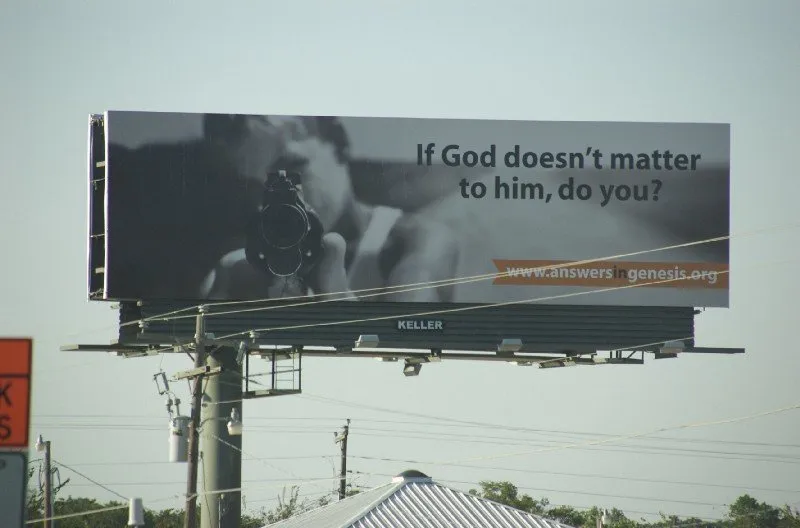
Ted Haggard was later revealed to have engaged in gay sex with male prostitutes while high on meth. Kent Hovind was revealed to be a firearm stockpiling tax dodger with a fake degree from a diploma mill. So far to my knowledge, Ken Ham and his Ark Experience theme park are guilty of nothing besides miseducating children, but Matt Gaetz and Roy Moore are picking up his slack.