
in every way do the job of paving block installation there are two ways

Mortar is a building material made from mixing between sand and other fine aggregates with binder and water in hard conditions having properties such as rocks.
Paving blocks have a good aesthetic value, because in addition to having a rectangular shape or even a lot can also be colored as the original or given a dye in the composition of manufacture. Paving block itself works for floor that is widely used outside the building and should not be cracked and disabled.
Paving Block is the best solution for infiltration during rain and flood. Installation is not difficult and easy maintenance, when Installation with a good motif will add to the beauty of the surrounding buildings. Paving block types are produced in natural, regular colors (red, black) and special colors (green, yellow, blue). There are various models, colors and sizes Paving Block With good pattern and installation, Paving Block quality will be more interesting and neat. Many interesting paving block designs are available.

This allows repair work to be done beneath the paving surface without leaving scars that survive once the paving bricks are replaced. Common use areas are for driveways, sidewalks, terraces, downtown, the surrounding area and more generally on the road surface.
Bricks are usually made of cast concrete or clay, so even though other composite materials are also used. Each has its own construction facilities. The biggest difference is the way they are ready to use.
A brick made of clay must be inserted in the kiln to burn bricks hard. Concrete bricks should be allowed to be installed. Concrete paving brick is a form of brick porous formed by mixing small stones, dyes, cement and sand and other materials in various shape models.
Many methods of making paving blocks now allow the use of recyclable materials in the construction of paving bricks such as crushed glass and ruined old ruined buildings.

Terms for Quality of stone paving block:
As for some things that need to be considered in determining the quality of paving block which must meet the requirements of SNI 03-0691-1996 are as follows
• a. Visible Properties
Has a perfect shape, and the corner is not easily braided with the strength of the hand
• b. Shape and Size
In this case the shape and size for the floor depends on the agreement between the user and the manufacturer. Where manufacturers will provide an explanation of the shape, size, and construction of the installation.
• c. Physical Properties
Paving blocks for floors should have the following physical strengths:
1). Classification Based on Thickness
Generally produced having a thickness of 60 mm, 80 mm, and 100 mm in use from each thickness can be adjusted to the following requirements:
- Paving blocks with a thickness of 6 cm, intended for light traffic loads whose frequency is limited to pedestrians, also for parking at home or shops.
- Paving block with a thickness of 8 cm, intended for medium traffic loads that frequency is limited to pick ups, trucks, and buses.
- Paving blocks with a thickness of 10 cm, intended for heavy traffic loads such as: tronton vehicles, cranes, loaders, and other heavy equipment. Paving blocks with a thickness of 10 cm is often used in indrustri and port areas.
2). Classification by Color
In addition to a variety of shapes also have a color, which can reveal the beauty is also used as a barrier as in the parking lot. The colors on the market are red, black and gray
Here are two ways to do the job of installing a paving block.
for the method 2 ways to do the job of installing paving block that is:
1}. * the method by using the paving block installed on the sand only, with the way the sand is spread to the ground surface and then paving blocks are in pairs neatly and in align with the reference yarn level of paving block.


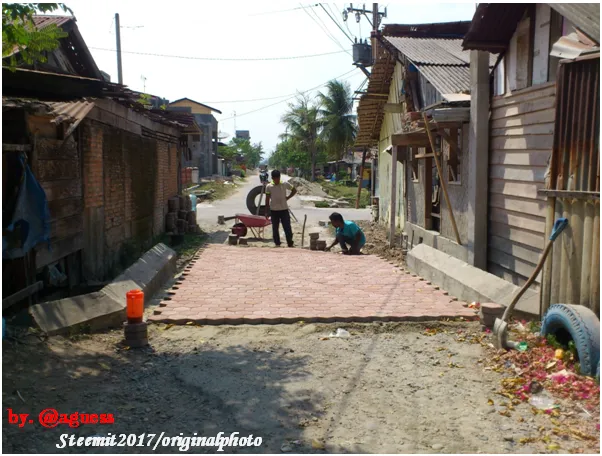


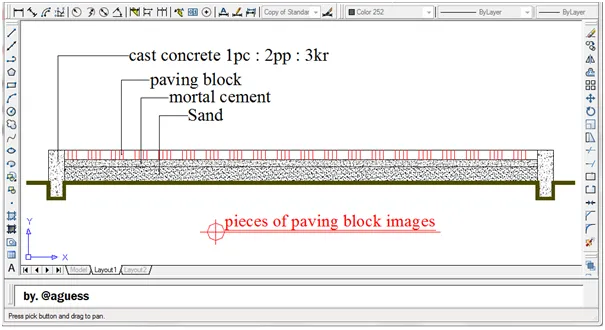
2}. * The second method is by using cement mixing (mixed cement mortar and mixed with sand and cement mixture), after which it is spread over the sand as a base, then the paving block attached above the mortal and in a way it is denser and safer and more robust, but the way it is prone to paving blocks is broken and broken because there is no elasticity in the movement of the loads that occur above it.


| NO | as for material material need for paving block work in this method 1 that is: | - |
|---|---|---|
| a | tidal sand | - |
| b | sement | - |
| c | stone paving block | - |
| d | yarn | - |
| d | water | - |
| d | and pairs | - |
| - | in the stages of this one method by way of paving blocks are set and in pairs directly on the sand | - |
| NO | as for material material need for paving block work in this method 2 that is: | - |
|---|---|---|
| a | tidal sand | - |
| b | sement | - |
| c | stone paving block | - |
| d | yarn | - |
| d | water | - |
| d | and pairs | - |
| - | in this method stage two by means of paving block in pairs using mortar under its mortar and directly above mortal | - |
a little bit of resources I took for basic theory, but the images and photos are original from 
source:
[https://www.google.com/search?q=paving+block&client]
[https://www.google.co.id/search?q=paving+block&tbm=isch&tbs]
[http://pavingblockindonesia.com/paving-bloc]
thank you for everything and hopefully useful for everything I have written here
by.
I am from copy
thanks to the #steemstem

