
There it is :
131 pages, written in LaTeX, which was a pretty good decision! I enjoyed learning and the results looks just as I wanted it to look like.

and that's me:
(I guess it must have been a windy day on that 10th of April Xb)

Oxidation of ferrous iron in thermal installations
Resources are scarce on earth. Processing (raw) materials usually requires massive amounts of energy and poses severe negative environmental and social impacts. However, estimates of the losses of steel due to corrosion run as high as one quarter of the world's annual steel production. This corresponds to about 150 million tons per year, or 5 tons per second [Landolt 2007]!
In the building sector, corrosion may undermine the performance of (eco-efficient) systems for heating and cooling. I won't go into detail here, but the problem is more severe than you would imagine! The worst case is that the whole building must be renovated after just 3-5y of use. To avoid costs linked to production stop and constructive measures, the responsibles often use corrosion inhibitors e.g. biocides (against corrosion influenced by bacteria). These products are often misapplied and may have counter-productive effects. Also, some are harmful to fresh water organisms. Thus, it's better not to use those!
In my work, I carried out long-term investigations of the running-in phases, metal dissolution
and alkalisation of different systems. I mostly used elemental analysis and sensor data as well as information on the microbial community. The aim was to contribute to the understanding of the new failure patterns so that metal resources and energy don't get wasted and the use of dubious products is kept to a minimum. Please ask for more information if you are interested.
The following picture shows the metabolic processes of the bacteria living in one of the investigated systems (unfortunately it's in German. Light red: dehalogenation; puple: degradation of complex organic compounds; cyan: reduction of nitrate; orange: Iron oxidation; blue: iron reduction):

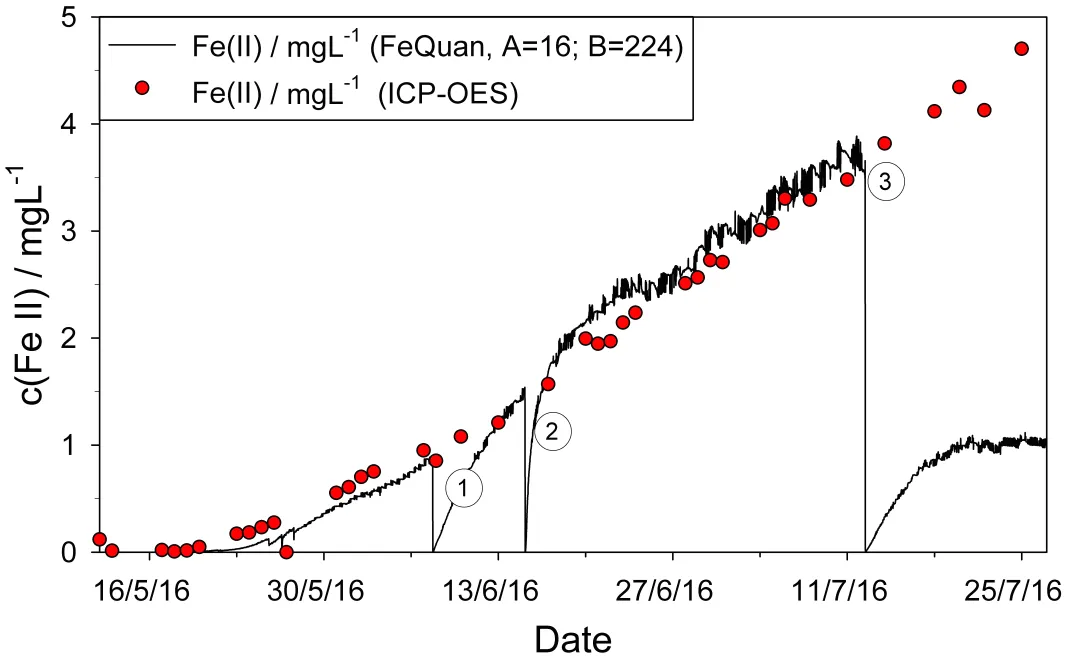
The next graphic depicts the concentrations of ferrous iron which I calculated (black line) using sensor data (redox potential, pH, dissolved oxygen, conductivity and temperature). The red points are the concentrations that I determined in water samples. 1-3 are disturbances.
Outlook
For the future I hope that I will have more time for the PeVO project. To illustrate two aspects of the problem field that PeVO aims to solve with recent personal experiences:
While carrying out literature review for my thesis, I realized that I only have access to one important source via an Iranian web site
Today, a paper of one of my colleagues was rejected from the journal not because of quality but merely due to a MS Office problem. True story! For some reason, the change tracking tool did not work properly in her document, so that it was argued, not all changes that she implemented after the first review are transparent. The reviewers didn't want to read the whole text a second time although they accepted 'with minor revisions' in the first place. Imagine how such stories can hinder individual careers. Knowledge productions is artificially delayed.
I am curious to read your comments :)