
Polar bears are a highly specialized species of bears, which survive mainly on seals. Polar bears spend most of their time on sea ice that is why they are called sea mammals. Their body has thick fat and water resistant coat that protects them from cold water and air. The polar bears are considered as brilliant divers and they can travel at six miles per hour by walking with their front paws.

They spend most of their time in hunting for food. It might able to catch one or two seals and their diet mostly consists of bearded seals to get enough amount of fat which is necessary for their survival. Melting of ice also reduces the population of seals which are main source of food for polar bears.
Due to climate change, their sea ice habitat is suffering. In 2008, polar bears were classified as threatened species in US under Endangered Species Act. The main habitat of polar bears is Arctic Ocean. Sea ice in Arctic has decreased by 13% per decade since 1979.

Polar bears play crucial role in overall growth of aquatic environment because they are at the top of our food chain. They depend on sea ice for their survival and thus they are directly affected by change in climate.
Climate change, human-polar interaction, unjustifiable hunting and industrial effects are biggest threat to polar bears existence.
Sea ice acts as platform for polar bears because they hunt, breed and rest on ice. Due to global warming, sea ice is melting and decreasing in size. When ice melts, they come on shore and survive on stored ice and wait for the ice to refreeze. In extreme cases, they suffer from starvation, especially females having cubs they may face from malnutrition. When ice melts, shipping activities are increased and there is rise in oil and gas development resulting in disintegration of their habitat.
Human – polar interaction is also threat to polar bear existence. Due to melting of ice, polar bears come to the shore in search of food and interact with Arctic seaside populations. Sometimes, these interactions have negative impact on both bears and humans.
There are many industrial activities which are affecting Arctic polar bears. Offshore petroleum operations are increasing and their habitat is being destroyed in search of oil and gas.
Most of the Arctic areas have solid polar bear management which monitor the polar bear populations. But there are some places where there is unmanageable and un-reported hunting.
WWF is working hard to address this issue by preventing fatal encounters between people and bears in Russia and Alaska. They are constantly monitoring the population and movement of polar bears in USA and Canada.
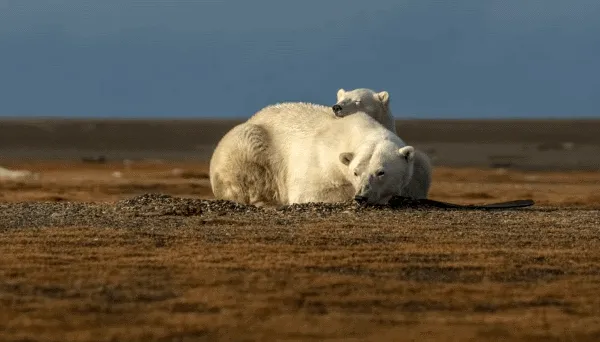
US government has listed polar bears as threatened species but no effective measures have been done to save them. Trump administration has done nothing to tackle climate change.
“I hope we will have an awakening, but we haven’t really done much to save polar bears over the past decade,” said Dr. Steven Amstrup who is a researcher on polar bears. “With this administration, I’m not exactly confident we’ll see a major switch in that.”
Scientists say that if sea ice melting continues at this rate, two-third of its population will become vanished by 2050 and we shall lose all polar bears by 2075.
