

Artificial intelligence is making this era exciting, but it is also causing a lot of worry. Michael I.Jordan, a professor at Berkeley who is credited with being the father of machine learning, published his first article on Medium, a well-known American technology media, yesterday. The main theme of this article is to reflect on the problems in the current AI research. Professor Michael i.j. oardan is the mentor of ng, who has built a deep foundation in machine learning and artificial intelligence.
This paper entitled "far from coming the revolution in artificial intelligence:" the long from 14 years ago professor Jordan own a story about life and death choice, this paper reviewed the development of AI, more importantly, the proposed data and machine learning in the present study is how to deviate from the original intention, and how great threat. He believes that we still have a chance to construct a new discipline -- a truly human-centered engineering discipline.

The following is the full text of the Michael I.Jordan blog:
As a synonym for this era, artificial intelligence is being recited by technologists, academics, journalists and venture capitalists.
Like other professional nouns, this noun is accompanied by a variety of misconceptions in the process of being used. It's not that the public doesn't understand scientists, but that scientists are sometimes as confused as the public.
"Silicon based intelligence, comparable to human intelligence, is being born in our time." Such thoughts excite us, and bring about the same level of shock and distraction.
And there are different voices about the current era.
Let me start with a story about humans, computers, data and life and death decisions.
Ultrasonic testing data and down syndrome

When my wife got pregnant 14 years ago, we had an ultrasound. A geneticist has pointed out that there are some white spots around the fetal heart.
"These are signs of down syndrome," she said. "the risk is up to 5 percent." She also told us that we can understand the actual condition of the fetus through amniocentesis, but the amniocentesis is dangerous, and the probability of death is about one in 300.
As a statistician, I decided to identify these sources.
To make a long story short, I found that a statistical analysis had been done in the UK ten years ago, which said that these white dots reflected the accumulation of calcium, which is indeed a predictor of down syndrome.
But I also noticed that the imagers used in our tests were hundreds of pixels per square inch larger than those used in British studies. I went back and told the geneticists that I believe these white spots are probably false positives and they are actually "white noise". "Well, that's why the diagnosis of down syndrome has been rising since we started using new machines," she said.
We didn't do amniocentesis, and a few months later, a healthy girl was born.
This incident made me very distress, especially after a rough calculation, I found that every day, tens of thousands of people around the world is under this kind of diagnosis, and many parents choose the amniocentesis, resulted in the death of some baby unnecessarily.
This happens day after day, and I don't know when to stop.
The problem in this story has nothing to do with my personal health care; It is about the health care system, measuring variables and results of different locations and times, doing statistical analysis, and using results elsewhere and in time.
The problem in this story is related to the data analysis itself, and to the data source.
In a broad sense, where does the data come from, and what is the inferences from the data, and how relevant are these inferences to the current situation?
A trained specialist may be able to case-by-case solve all these problems, but the question is whether design solutions that global health care system, so that no human supervision can solve these problems.
I also am a computer scientist, wants to set up the global reasoning and decision making principles required by the system, combining the computer science and statistics, and considering the welfare of human beings, I learned knowledge and I couldn't help me to solve these problems.
Not only in the medical field, but also in areas such as business, transportation and education, the development of these principles and build at least play games can make us dazzling and motion perception is just as important as the AI system.
Whether or not we will soon understand "intelligence", we all face a major challenge, which will bring convenience to human life through the friendly interaction between computers and humans.
Although some see it as "subservient to artificial intelligence", it can also be viewed more generally, as in creating a new branch of engineering.
Just like in the past few decades the rise of civil engineering and chemical engineering, the goal of this new subject is the strength of aggregate several core idea, in a secure way for people to bring new resources and capabilities.
Civil engineering based on physics and chemistry and chemical engineering, and the new engineering discipline will fall to the ground more than a century of thought, on the basis of these ideas, including "information", "algorithm", "data" and "uncertainty" and "computing", "inference" and "optimization" and so on.
In addition, since this new discipline is based on human data, its development needs to be analyzed from the perspective of social science and humanities.
Although the building blocks of artificial intelligence are already in place, the principles of putting these blocks together have not yet appeared, so the combinations of these blocks exist only in a special way.
Like building houses and Bridges before the advent of civil engineering, humans began to build large-scale reasoning and decision-making systems involving machines, humans and the environment.
As early buildings and Bridges collapse in unforeseen ways and sometimes disastrous consequences, at present a lot of the early large-scale reasoning and decision making system has exposed the concept of serious defects.
Unfortunately, we are not good at predicting the next serious flaw. What we lack is an engineering discipline with analytical and design principles.
When the public talks about this topic, they use "AI" too often, as if it were a wildcard, which makes it difficult to reason about the scope and consequences of AI's new technology.
So we need to think carefully about what the term AI means in terms of history and today.
What can be called AI?

Most of today's "AI" refers to what has been known as "machine learning" (ML) over the past few decades. ML is an algorithmic category that combines ideas from statistics, computer science, and many other disciplines to design algorithms to process data, make predictions, and help make decisions.
ML really has an impact on the world, and its impact is not recent. In fact, it was clear in the early 1990s that ML would have a massive impact on industry.
At the beginning of this century, forward-looking companies such as amazon has been used in all business ML, solved the fraud detection and the key problems of supply chain to predict, made innovation and service for consumer, such as recommendation system.
In the next 20 years, with the rapid growth of the data set size and computing resources, obviously, ML will not only for amazon, and will make a decision on any one can associated with large-scale data of the company.
New business models will emerge. The term "data science" began to be used to refer to this kind of phenomenon, reflecting the ML algorithm experts need to work with database and distributed system experts to develop stronger ML system, also reflect the inference system in the potential social and environmental aspects.
This convergence of ideas and technological trends has been renamed "AI" in the past few years. This remodeling deserves careful scrutiny.
Historically, the word AI was coined in the late 1950s to express a strong desire to achieve human intelligence in software and hardware. We will use the word "type of person AI" to refer to this desire, it emphasizes that artificial intelligence entity seems to be one of us, even if not physically, but at least in spirit (whatever that may mean).
Such research mainly exists in the academic field. Although the relevant academic area, such as operational research, statistics, pattern recognition, information theory and cybernetics already exists, and are often inspired by human intelligence (and animal intelligence), but these areas can be said to be concentrated on the "lower" signal and decision-making.
For example, a squirrel can sense the three-dimensional structure of the forest it lives in and jump between branches, which gives us a lot of inspiration.

The focus of "artificial intelligence" should be different from that, and AI should focus on the advanced cognitive abilities of human "reason" and "thinking".
Sixty years on, however, high-level reasoning and ideas remain elusive. Now known as the development of "artificial intelligence" mainly appear in the associated with low levels of pattern recognition and motion control system of the engineering field, and statistics - focus on find the data model and make a according to the forecast, hypothesis testing, and decision making.
The famous "reverse propagation" algorithm was rediscovered by David Rumelhart in the early 1980s and is now regarded as the core of the so-called "artificial intelligence revolution". In fact, back propagation first appeared in the field of control theory in the 1950s and 1960s, and one of its early applications was to optimize the propulsion of the Apollo spacecraft to the moon.
Since the 1960s, we have made great progress, but it is not the pursuit of humanoid AI.
Instead, the engineers' masterpieces are often hidden behind the scenes, like the Apollo missions. Although the public is not easy to detect, but in the document retrieval, text classification, fraud detection, recommendation system, personalized search, social network analysis, planning, diagnosis, and A/B testing in areas such as research and system construction has achieved great success, pushing Google, Netflix, Facebook, and the progress of the amazon and other companies.
One can simply all the known as the "AI", but such labels may be surprised optimization or researchers in the field of statistics, they woke up to find themselves suddenly became "artificial intelligence researchers". But aside from the researchers' labels, the bigger problem is that using this single, undefined acronym will prevent a clear understanding of technology and business change.
Two key issues: smart enhancements and smart infrastructure.
In the past two decades, "intelligent enhancement" (IA) has made significant progress in industry and academia, complementing the "humanoid AI". In IA, computing and data are used to enhance human intelligence and creativity. Search engines can be seen as an example of IA (it enhances human memory and knowledge), as well as natural language translation (it enhances human communication).
Computation-based sound and image generation can be used as an artist's palette and creative enhancer. Although such projects may involve high levels of reasoning and thought, but now they don't involve so - most of them perform a variety of string matching and digital operation, capture the human can use pattern.

The last acronym for this article is "smart infrastructure" (II). Let's imagine a network of computing, data, and physical entities that make human environments more friendly, interesting, and safe. This infrastructure has begun to appear in areas such as transport, medicine, commerce and finance, and has a huge impact on individuals and societies.
Sometimes appear in the subject of "Internet of things", but the Internet of things generally refers to the "content" on the Internet, not involved in these can analyze the data and the discovery of truth, at a higher abstract level to interact with the "content" facing greater challenges.
Back to my personal anecdotes, for example, we can imagine in a "scale of social medical system" in life, it has established the doctor and the patient's body outside equipment between data flow and data analysis process, so as to help mankind to diagnose and provide care.
The system will incorporate information from human cells, DNA, blood tests, the environment, population genetics, and a host of drugs and treatments. It focuses not only on individual patients and doctors, but on all humans. Just as the current medical tests allow for experiments on a group of people (or animals), then a wide range of applications can be applied. This will help to maintain relevance, provenance and reliability, just as the financial industry is working on the credibility of finance and payment.
Of course, it is foreseeable that there will be many problems with this system, such as privacy, responsibility, security issues, etc., but these problems should be seen as challenges rather than obstacles.
We now have a key problem: is the "humanoid AI" study the best, or the only way, to address these larger challenges?
Some of the most popular success stories in machine learning are related to humanoid AI, such as computer vision, speech recognition, human-computer interaction, and robotics. So maybe we should wait for further developments in these areas.
Two things need to be said here. First of all, the newspaper won't tell you that our success in human-like AI is actually very limited, and our desire to achieve humanoid AI is still far away.
Unfortunately, despite little progress, the excitement and fear it brings has brought an excessive amount of attention to the field, which has never been seen in other engineering fields.
Second, and more importantly, the success of these fields is not enough to solve the important problems of IA and II. Why aren't they enough to solve the IA and II problems? Look at the autopilot.
To achieve such a technology, a series of engineering problems may be needed, and these problems may have little to do with human ability (or, to be exact, the ability of people). The whole traffic system (II) may be more like the air traffic control system, simulation instead of the present road: a group of dispersed, facing forward, attention is not centralized human drivers.
It will be much more complex than the current air traffic control system, especially with a lot of data and adaptive statistical modeling to make decisions on a more detailed level. These challenges are the ones that need to be prioritized, and focusing on human-like AI can be a distraction in trying to address these challenges.
, of course, also somebody thinks, AI included IA and II class people, because people like AI system can not only solve the problems of classical AI (such as the Turing test), is also the best choice to solve the problem of IA and II.
But there are few precedents to support such an argument. In this way, is it necessary to develop civil engineering through artificial carpenters or masons? Should the development of chemical engineering be preceded by the creation of a synthetic chemist? Or, if our goal is to build a chemical plant, should we first build a synthetic chemist and then study how to build a chemical plant?
There is a similar view that human intelligence is the only wisdom we can now know, and we should imitate it first. But humans are not very good at certain reasoning -- we have mistakes, biases, and limitations.
And crucially, humans have not yet evolved the ability to make large-scale decisions that modern II systems must have. Humans are also inadequate to deal with the uncertainties of the II system scenario.
One might argue that AI systems not only mimic human intelligence, but "correct" it and extend it to large-scale problems.
But this is science fiction, and this speculative argument is entertaining in the novel, but it should not be the main strategy we have in the case of IA and II. We need to study the problems of IA and II itself, not just waiting for the humanoid AI to solve the problem.
The algorithm and infrastructure challenges of the II system are not difficult to solve, and this is not the core of the humanoid AI research. The II system needs to manage distributed repositories, which are rapidly changing and are likely to differ internationally.
These systems must consider the interaction with the clouds, to make timely distributed decision-making, and they must be able to deal with the long tail phenomenon (i.e., a small amount of users huge volume of data, and most of the user's data less phenomenon). They have to solve the problem of sharing data between different administrations and competitors.
Finally, it is particularly important to bring economic concepts such as incentives and pricing into the field of statistics and computing infrastructure that connect people, people and goods. In this way, the II system is not merely providing services, it is creating markets.
Such areas as music, literature and journalism are in desperate need of a market where data can be used to link producers and consumers. All this must be done in the context of evolving social, moral and legal norms.
Looking to the future

Of course, the classic problem of humanoid AI still deserves attention.
The AI of the recent research focus, however, still collect data, the deployment of "deep learning" infrastructure, display can imitate some narrow sense of human skills (that is, almost no new interpretation principle) of the system.
Such research focus away from the classical AI research in the main open questions, including, in natural language processing system is introduced in the reasoning and the significance, the inference and calculation on the necessity of causality, development easy to deal with the uncertainty of the necessity of the said, and the necessity of developing and the pursuit of long-term target system.
These are the classic targets of humanoid AI research, but in the current "AI bubble" noise, it is easy to forget the problems that need to be solved.
IA will also keep the quite important position, because in the foreseeable future, in the abstract understanding of the real world situation, on the ability of computer couldn't catch up with the human, we still need to deliberate human-computer interaction through to solve our most pressing problem.
We want computers to inspire a higher level of human creativity than to replace human creativity (whatever that might mean).
John McCarthy (at that time also worked as a professor at Dartmouth college, but soon went to the office at the Massachusetts institute of technology) has created the word "AI", apparently to his early research and Norbert Wiener, was a old professor at the Massachusetts institute of technology) research. Wiener coined the term "cybernetics" to refer to his own vision of a smart system, which is closely related to operations research, statistics, pattern recognition, information theory and control theory.
Mr McCarthy's vision emphasises the link to logic. There's an interesting twist here, though "AI" is the term that McCarthy came up with, and today's dominant position is Wiener's theory of intelligence. (however, the situation must be temporary. The AI pendulum is bigger than most.)
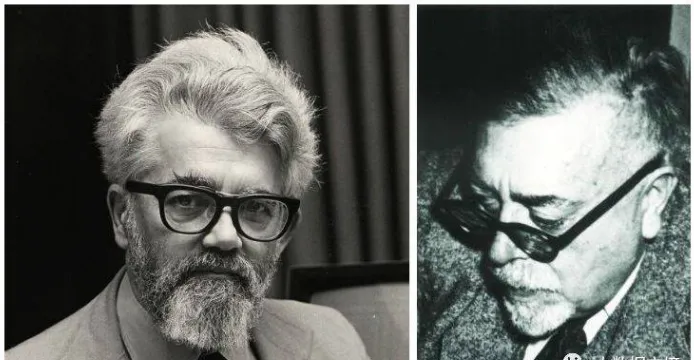
But we need to go beyond McCarthy and Wiener.
We should recognize that the current open dialogue about the AI content mainly concentrated in the field of industry and academia is very small, it may make us face by AI, IA and II all-round challenges and opportunities.
This is not about science fiction dreams or machines going beyond human nightmares, but more about human understanding and the need to shape technology. This need becomes more realistic and powerful in everyday life. Moreover, the process of understanding and molding requires different voices from all walks of life, not just technical ones.
Paying too much attention to human-like AI makes people block a lot of sounds.
The progress of the industry will continue to promote the development of academic circles also will continue to play an important role, the role of academia is not only to provide innovative technology concept, and to researchers from different fields: computer science and statistics, from the social sciences, the researchers in the field of cognitive science and the humanities together, their value and perspective is very important.
On the other hand, while humanities and science is the key to our progress, but we discuss the category of creation - is still the engineering society: create new products, these products should be able to work in the way we want.
We don't want to in the established can help us to get health, transport and business opportunities of system, found that the system doesn't really work, from this perspective, the central position in machine learning and data science fields, as well as a subject to appear. These known areas are exciting, but they can't be seen as new engineering disciplines.
And we should accept the fact that we are witnessing the birth of a new branch of engineering. In academia and other fields, the term "engineering" is often narrowly reference, used to refer to ruthless machine, or a negative connotation of human out of control, but engineering disciplines can be what we want is really like.
At present, we have the opportunity to construct a new field of discipline -- the truly human-centered engineering discipline.
I won't name this new discipline, but in the future, if the word "AI" continues to be abused, it will bring us a lot of restrictions. Let us broaden our horizon, play down the hype and realize the serious challenges ahead.