

Describing Cost Benefit Jr.™ on the Library for Economics and Liberty website, economics professor Art Carden highlighted the fact that our curriculum “teaches economics through stories to which small kids should be able to relate, and the end of each section has some exercises that will help kids master the concepts. It's a really great little book; one of its major strengths is periodic side boxes featuring a cigar-chomping jerk named Mr. Greedy L. McMeanie that show how even though Greedy L. McMeanie is a jerk who doesn't care at all for his customers and who only seeks profit, he is forced by competition to provide them with what they want at prices they are willing to pay.”

We thought it was important that Cost Benefit Jr.™ engage young kids in a literature-based format. Students as young as eight can learn complex concepts like supply & demand, opportunity cost, and diminishing marginal utility when they’re presented in simple stories. Each weekly story and quiz will take the average 4th grade student 20 to 30 minutes to read and complete. The curriculum is meant to cover a normal school year and is ideal for homeschoolers or as a quick & easy supplement to classroom learning.
Section 5: Face Off: A Little Friendly Competition
In the fifth section of Cost Benefit Jr.™, students are introduced to some entrepreneurial kids. In one story, two boys compete for business opportunities. And in another, parents compete for the ability to consume the service of their neighborhood's best babysitter. It's important that kids realize that competition doesn't just affect producers and suppliers. As consumers, we compete with other people every day in our attempts to procure the things we need.

But maybe the best way to illustrate competition between consumers is with an auction. Lesson 22 in the book focuses on a red canoe and a man making bids to buy it. When the bidding is over and one bidder has won the canoe, the story points out an important takeaway: “Just because they had been competing against one another for the boat didn't mean they had bad feelings. Competition is a naturall way for people to sort out life's highest bidders – those who value the world's various limited resources the most.” In other words, competition is how we allocate resources. If kids learn this early, imagine all the mistakes our world could avoid in trying to allocate resources in less decentralized way!
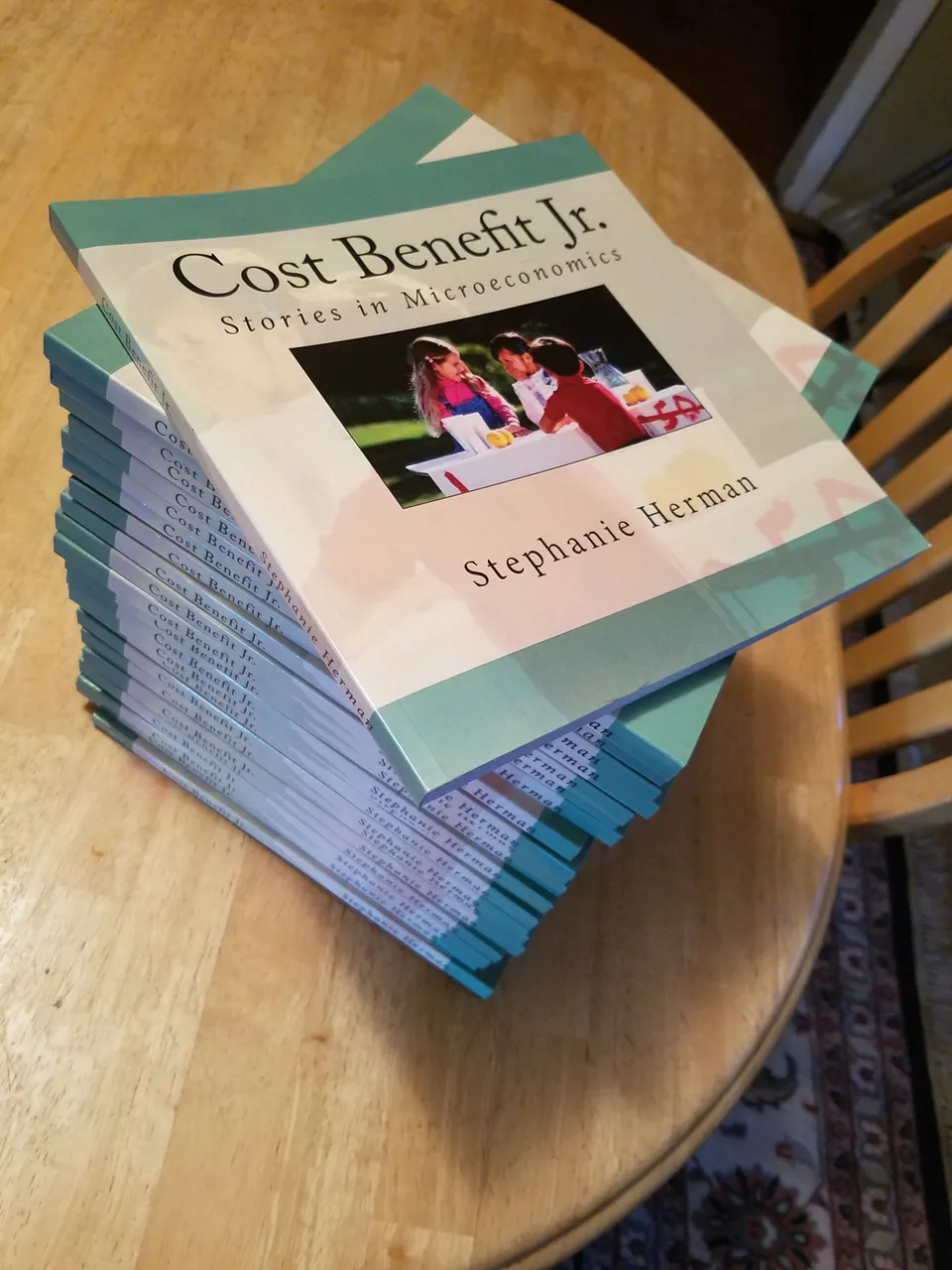
Remember that once these summaries are complete, we'll be holding a contest for five free copies of Cost Benefit Jr.™!
Entries will be in the form of a comment, so be thinking about something you can submit (in the contest announcement post) explaining what you'd like to teach your kids, your grandkids, or yourself about economics and decision making.
Or, and this is a new idea -- tell us about your favorite section of the book, based on the summaries, and why you'd like to teach your student the lessons contained in whatever section you end up choosing. Again, these comments will be submitted at the very end, in the contest announcement post.
Thanks for reading along!

