
As the first societies of the world began to form, key rivers and religious leaders played a significant role in the development of many ancient cultures. Amongst ancient societies, one of the best examples of this trait is ancient Egypt. There are two religious poems that originated in ancient Egypt that help solidify this argument. They are called Hymn to the Nile and Hymn to the Pharaoh. Within these two hymns there is an abundance of information supporting the theory that the Nile River and the pharaoh played an integral role in the continuity of the Egyptian kingdom over the course of millennia.

Like the Tigris and Euphrates rivers of ancient Mesopotamia, the Nile River played a key role in the development of ancient Egypt. Along with providing Egyptians with shelter from the desert and foreign invaders, the Nile River gave them the means to build a civilization. In the Hymn to the Nile, there is a clear example of its significance which states “Hail to you O Nile, that issues from the earth and comes to keep Egypt alive!” (Duiker and Spielvogel 18) Due to this strong attachment, ancient Egyptians worshipped the Nile and saw it as a god as well. More importantly, it was a god that fulfilled its duty in the “cosmic order.”

Rather than having to focus on ways to survive in the desert, the continuity of the Nile enabled Egyptians to focus more on cultural ventures such as art, philosophy, architecture, fashion, religion, education and government. (1) In doing so, Egyptians were allowed to modernize their society for thousands of years, practically undisturbed. It’s no wonder why ancient Egypt put so much emphasis on the Nile and what appeared to be an infinite resource of life. Besides the cultural impact of the Nile River, the pharaoh, who was also considered a god, had a duty to maintain the cosmic order as well.
In ancient Egypt, a pharaoh’s most important duty was to preserve Ma’at. (2) Essentially, Ma’at was the balance and harmony of the cosmos that tied everything together and is the closest thing to religion ancient Egyptians had. The importance of the pharaoh and Ma’at is signified in the Hymn to the Pharaoh which states “He has come to and taken the Two Lands under his protection; he has given peace to the Two Riverbanks.” (Duiker and Spielvogel 18) It is well known that it was considered a sacred duty of the pharaoh to protect the land. This was achieved through means of warfare, but it wasn’t limited to only defensive tactics. If additional resources were needed, Ma’at could be fulfilled by attacking neighboring countries to preserve harmony as well. (3)

Besides the fact both the Nile River and the pharaoh were considered gods, they helped unify ancient Egypt in many ways. Under the rule of a pharaoh, Upper and Lower Egypt were united. Likewise, the Nile united Upper and Lower Egypt through commerce and travel. Not only that, they both provided life to the region. The reasons the Nile provided life to the region is obvious, but the pharaoh brought life to the region by preserving Ma’at. To back this claim, we need to refer to the Hymn to the Pharaoh again, which states “He who has come to us and brought the Black Land under his sway.” (Duiker and Spielvogel 18) The “Black Land” is referring to the annual flooding of the Nile River and the silt deposits that came along with it. For this and many other reasons, the Nile and the pharaoh helped maintain the cosmic order, which in turn unified the region.
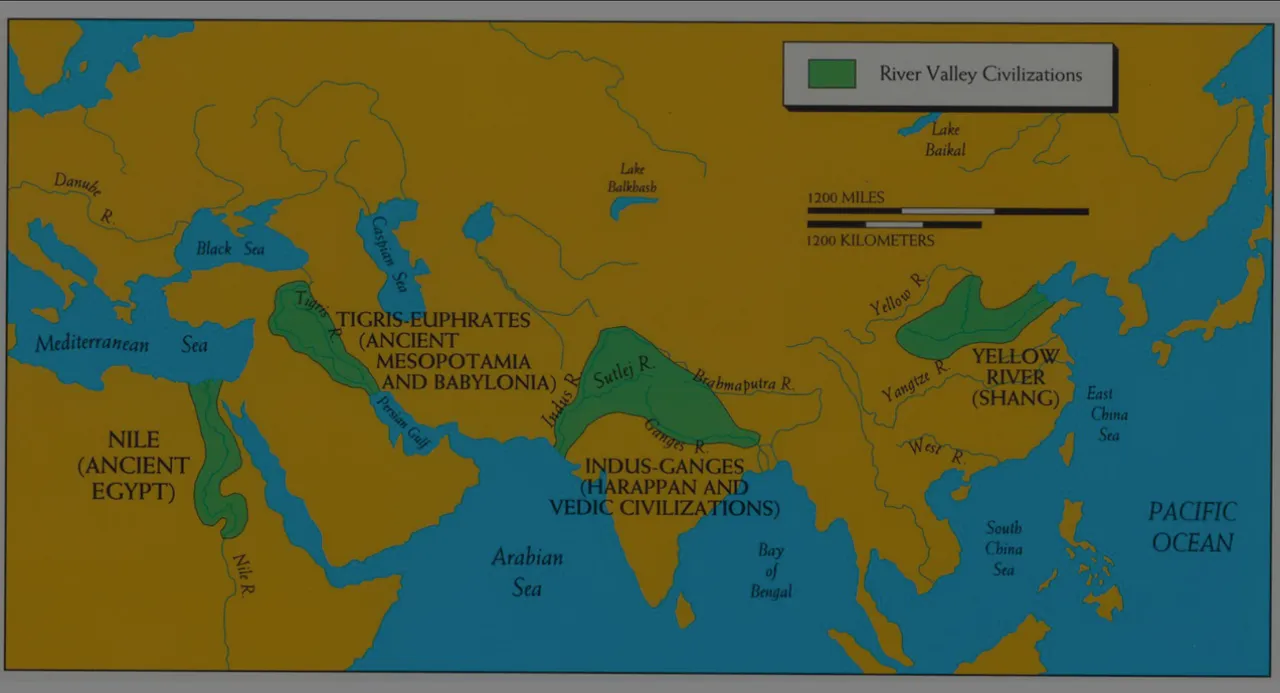
Looking over the two poems Hymn to the Nile and Hymn to the Pharaoh, the evidence provided reveals that the Nile River and the institution of the pharaoh played integral roles in the development of ancient Egypt. Unlike other ancient valley river civilizations— Indus, Yangtze, Tigris and Euphrates Rivers— Egyptians were allowed to hone their practices over the course of millennia, giving birth to a vibrant and rich society.
If you enjoyed reading this post, be sure to give me a follow and check out the rest of my blog. Overall, my blog consists of scientific topics dealing with geology, meteorology, geography, food and history. The goal of this blog isn’t to earn money per se. While that is a nice benefit, I’m more interested in networking, learning, informing and helping the Steemit community grow to new heights. Thanks for all your support!
Bibliography:
- Tucker, Kristine. Synonym. Demand Media. 27 Feb 2016
http://classroom.synonym.com/significance-nile-valley-ancient-egyptian-societies-15694.html - Mark, Joshua. Pharaoh. Ancient History Encyclopedia. 02 September 2009
http://www.ancient.eu/pharaoh/ - Mark, Joshua. Pharaoh. Ancient History Encyclopedia. 02 September 2009
http://www.ancient.eu/pharaoh/
Duiker, Spielvogel. World History Vol. 1 1800 7th edition. Boston, MA. 2013
