
This is a follow-up article to the one, where I provided a first introduction to organic specific requirements and interorgan pathways essential for the Human Energy Metabolism (see Part #1). Today I will continue with the:
Respiratory Quotient
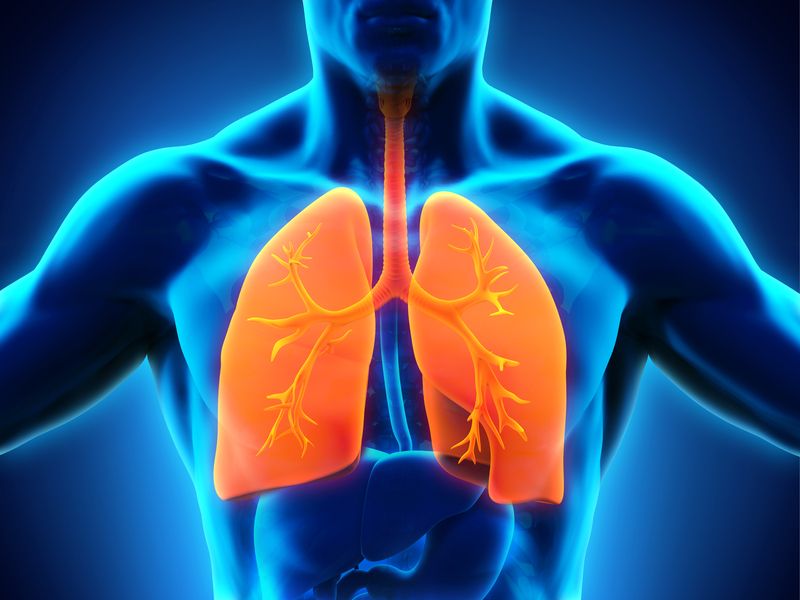
Image Source
Let's get started with a definition of the Respiratory Quotient (short RQ):

As we established in the last article, the human body depends on a variety of different fuels like lipids (or fatty acids), carbohydrates or amino acids. The metabolic use, ie the combustion of these fuels has a very specific effect on the RQ:
- Combustion of Carbohydrates gives a RQ = 1
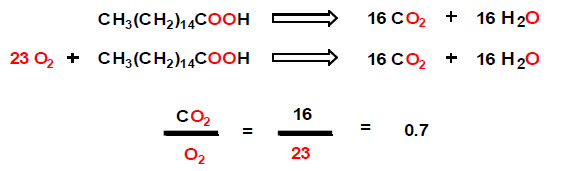
- Combustion of fat yields a RQ = 0.7
- Combustion of a mixture of amino acids has an average RQ = 0.8
Respiratory gases can be measured quite easily and hence the RQ can be experimentally determined. These measurements can be used to calculate the amount of CO2 produced and O2 used by the body over any given period. With this information it is possible to determine the metabolic fuels that are used under resting conditions or various physical activities.
In order to explain where the mentioned characteristic RQ values come from, I provide you with some exemplary calculations:
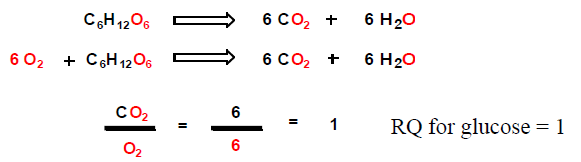
Since carbohydrats are broken down to monosaccharides (C6H12O6) before they enter glycolysis, it is legit to do the calculation with glucose.
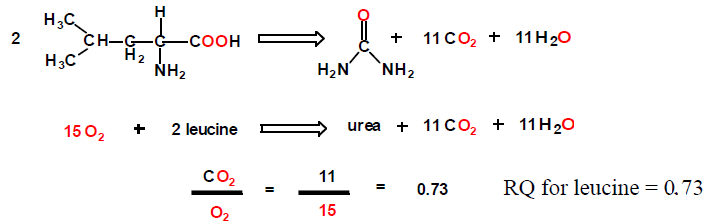
The calculation of the RQ for amino acids is less straightforward since we also have to consider the fate of nitrogen. Furthermore the side chains of the amino acids vary considerable and with them also the RQ.
RQ measurements on a resting human

Under resting conditions the RQ trend indicates a shift away from carbohydrate use toward fat oxidation. The data, that lead to this conclusion are shown in the graph to the right. Periodic RQ-measurements during rest after a one night fast (subject was in bed). However, even after prolonged resting fat is never the sole source of energy.
RQ measurements show shifts upon exercise

RQ-measurement were done prior to exercise, during a 45 min period of bicycling and also in the recovery period. RQ at rest shows that fat is the major source of energy. Exercising increases the RQ sharply, indicating that glycogen, stored in the skeletal muscles, is used as energy source. During recovery the energy metabolism obivously shifts back to fat oxidation.
On the use of macronutrients
The following graphic is taken from Ref.3 and shows the generalized relative contributions of macronutrients used in the catabolism to fuel an exercising human individual. All values are related to the oxygen consumption.
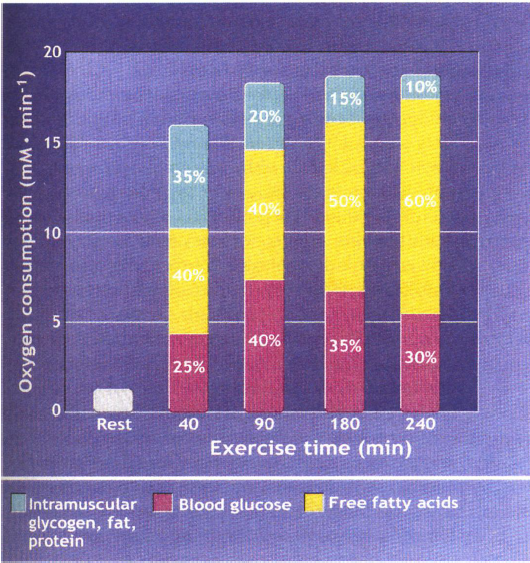
This set of data reflects the previously stated characteristics very well: Upon the start of physical activity the initial source of energy is glucose, first in form of intramusculary stored glycogen, second as blood glucose. Only after extended physical stress the body activates mechanisms to run on fat as major energy source.
Fatty acid biosynthesis influences the RQ
The RQ is not only influenced by the current active catabolic mode but also by anabolism. Under conditions of a positive energy balance, hence uptake of a "high-energy diet", net biosynthesis of fatty acids occurs. In other words, oxidation of fatty acids is overcompensated by fatty acid biosynthesis from acetyl-CoA. This leads to an observable RQ > 1!
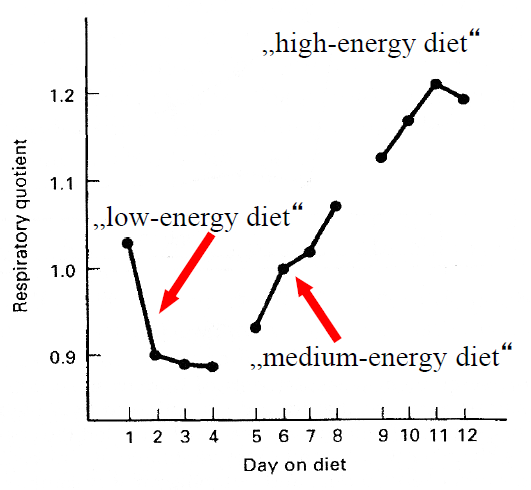
The data above show the measured RQ's for humans, which were given a low-, medium- and high-energy diet for a 4-day period each. It was found that the RQ increases with the energy uptake in the diet. This indicates net fatty acid biosynthesis. But how can this be explained?
Fatty acid biosynthesis requires NADPH, which is mainly provided by the following two reactions:
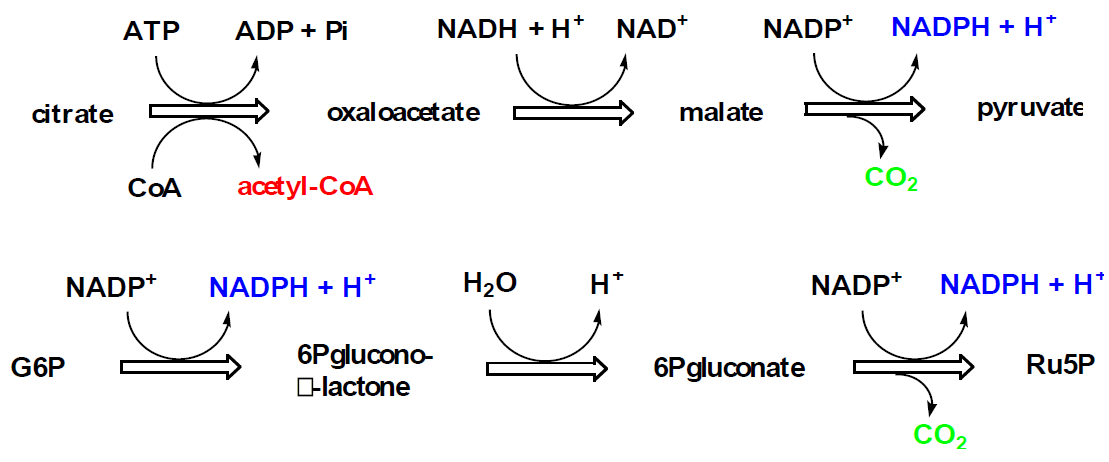
As you can see, these processes are coupled with a release of carbon dioxide, which leads to an increased RQ under a high calory regime.
Conclusions from RQ studies
- At rest, β-oxidation of fatty acids is the major source of energy.
- When exercising, the body starts utilizing glucose.
- However, with prolonged exercising, glycogen stores run out and the body resumes β-oxidation of fatty acids as a prime energy source.
I hope you enjoyed the insight I provided with my second post on the Human Energy Metabolism. I will continue with this topic with one of my next articles again. Then I will turn towards some quite specific aspects like metabolic diseases and obesity. - So stay tuned!
mountain.phil28
References:
- A Science Direct Review Collection
- A Wikipedia Article
- McArdle, Katch & Katch: Exercise physiology
- Further information and non-direct-cited images are taken from
"Molecular Physiology" lectures at the TU Graz.