
G'day Team,
Thanks for dropping by again, and welcome to another installment of my series on women in science. Today's contribution was brought to my attention by 
Women in Science
Mary Anning
Elizabeth Blackburn
Lise Meitner
Hypatia
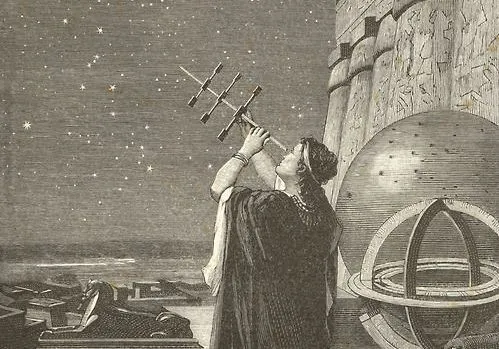
To say Hypatia was a woman of great achievements would be a massive understatement. Not only was she an exquisite mathematician, astronomer and philosopher, but she also held a massive amount of political influence during her time. While she produced none of her own groundbreaking works Hypatia was well considered one of the greatest mathematical and scientific minds of the time. She made commentaries on the works of other great minds in science and was a well respected and renowned educator, who scholars would travel for years to learn from.
Life
At a time when Egypt and the Roman empire were heavily interlaced a Roman mathematician named Theon of Alexandria had a daughter in Alexandria, Egypt. Raised alongside the scholars of her father's school, the young girl came to love the intertwined topics of mathematics and philosophy that were so popular at the time.
Hypatia soon joined her father in being not only a student of the school but also a teacher. She was particularly fond of the teachings of Plato and Aristotle, though rejected some of the 'newer' ideas in philosophy that were taking root at the time. Over time Hypatia's lectures and teachings began to outshine her fathers, and the world at large began to take notice. She was well admired by the magistrate and her male colleagues of the time, having won their respect through a "self-possession and ease of manner".
While Hypatia worked in an era where commentary on previous pioneering work was more the norm than the development of one's own groundbreaking hypothesis, she's still a well respected thinker. Her works included commentaries on famous mathematical works such as Arithmetica and Apollonius' conic sections as well as editing books such as Ptolmey's Almagest.
Perhaps more importantly Hypatia was a respected female member of the upper echelons of thoughts. Among the first women in history to be able to make such a claim. Beyond this Hypatia pagan, and a problem for the growing church of Christianity. While she made no attempts to actively oppose Christianity, her mere existance was a problem for a religious cult which actively preached opression of women and sought complete power. Hypatia was a regular advisor to many of the governments top officials, and it was percieved that her paganism was one of the driving forces behind their refusal to bow to the church.
In 414, a power struggle broke out between a new bishop of Alexandria, Cyril, and... well almost everyone else of influence in the city. Acting against the more popular rhetoric of morality and udnerstanding that pervailed at the time, Cyril ejected all Jews from the city and seized all their property. Disgusted by his behavior several sects rose to oppose him. While Hypatia was not a direct supporter of any of these movements, she was philosophically aligned with their cause. Accordingly, the bishop Cyril sought to dismantle her influence and reputation
A year after the conflict broke out, Hypatia was violently abducted while traveling home and bought to a church where she was gruesomely murdered. Her body was dismantled and publicly burned. Hypatia's death was not well received by the masses, as philosophers were generally considered above the conflicts of religion and politics. Cyril briefly lost much of his political influence in Alexandria in the fall-out, however, the death of Hypatia and the loss of her influence soon ran its course. Cyril soon overthrew all other political influences in the city within the next five years gained the majority of political influence in Alexandria.

While her death was but a drop in the ocean of blood spilled by Christians and the Church over the ensuing millennia, it's a key example of the dangers of opposing religious zealots. Hypatia paid with her life, for nothing more than living a life of thought and education. While her death was a tragedy, the ripples of its aftermath were catastrophic. Philosophers of the age increasingly saw Christianity as incompatible with their moral codes and the Neoplatonism philosophy that underpinned their lifestyles. The philosophers of the future would be pagans, and firmly opposed to the Church, but they would suffer and for centuries by slaughtered for this opposition. Hypatia became a martyr for the philosophical movement.
Thanks
Thanks for reading another installment on women in science. I've had a great time writing this series and I hope everyone has had a great time reading it! As always if anyone would like to contribute to the series, please feel free to do so using the tag #womeninscience.
Thanks
-tfc
Note: The #christianity is in hope that someone will read this and get a more realistic idea of the origins of their religion, which to the indoctrinated is always painted in a glorious light, also has some very dark moments.
Resources
Encyclopaedia Britannica
Smithsonian
Wiki
Uchicago
Hypatia.com
steemstem
