
As the title suggests, these plants aren't found in semi-desert areas but in grasslands along the interior and Eastern part of South Africa where there is higher rainfall but drought is common and they are thus adapted to be drought resistant, but cannot thrive in semi-desert environments. Many are also termed nursery plants, meaning that they grow in the shade of grass clumps, bushes or trees.
A common mistake with growing Delosperma is under watering, not over watering, so it really pays to research the origins of mesemb species that you want to try and grow instead of using a one-size-fits-all approach based on the assumption that all mesembs are semi-desert plants. If the grassland mesembs are underwatered, the stems become woody and die and then the whole plant dies off.
Pickle plant, Delosperma echinatum, looks like it needs a shave

The largest genus of grassland mesembs are the Delosperma and any plant you acquire labelled delosperma likes morning sun only. All succulents need bright light, but most do not thrive if they are exposed to full sun the whole day.
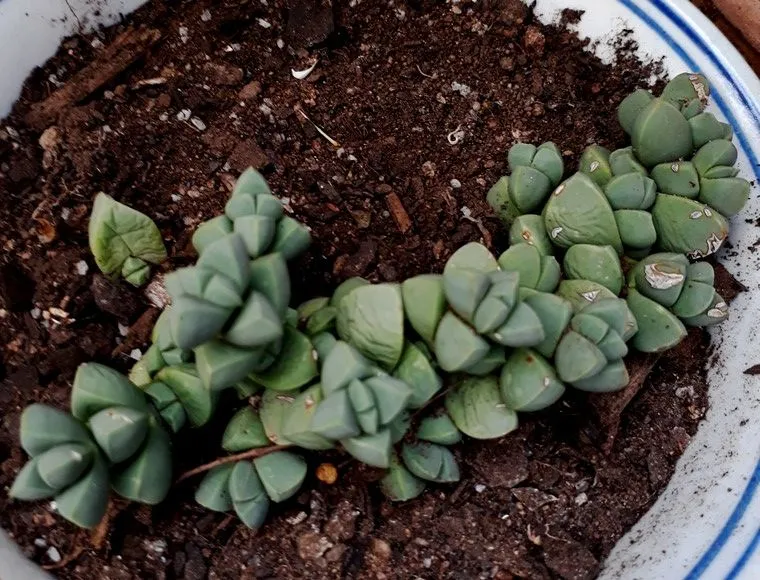
This Ice plant, aka Delosperma lehmmanii isn't looking good because although it only gets morning sun, it's been extremely hot and I repotted it in the hope that it would lose the wrinkled look. Although many succulent growers keep their plants in terracotta pots, I find terracotta dries the soil out too fast in my climate and I only keep cacti and Euphorbia species in unglazed terracotta pots.
Compared to other mesembs, Delosperma is easy to grow and great for beginners to try because many of the desert mesembs are ridiculously easy to kill. Growing these restore confidence if you have had one too many mesembs die on you. If your climate permits, the mat forming vygies make a great groundcover in the garden
