

Image designed by me in canva
¡Hola, amigos Hivers! ¿Alguna vez han escuchado nombrar esta curiosa expresión? probablemente lo parezcan sin saberlo o sin siquiera saber como se llamaba, pero no se preocupen que hoy les hablaré acerca de este curioso tema para que conozcan todos los detalles.
Hello, Hivers friends! Have you ever heard of this curious expression? You probably seem to have heard it without knowing it or even knowing what it was called, but don't worry, today I will tell you about this curious subject so that you will know all the details.

«El valle inquietante» es el nombre que recibe el sentimiento de rechazo, repulsión o desconfianza que sienten algunas personas al ver objetos animados o inanimados que tienen rasgos o apariencia humana, como algunos muñecos o androides.
"The uncanny valley" is the name given to the feeling of rejection, repulsion or distrust felt by some people at the sight of animate or inanimate objects that have human features or appearance, such as dolls or androids.

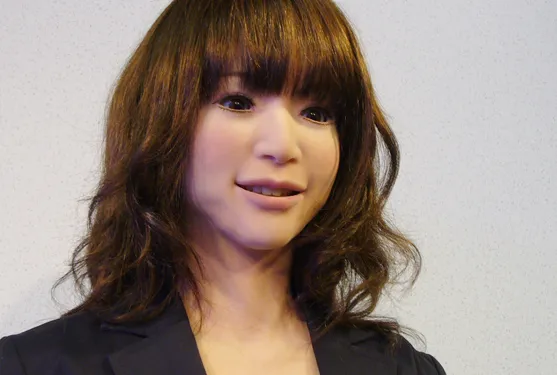
El experto japonés en robótica Masahiro Mori elaboró la hipótesis de «El valle inquietante» en 1970, con la cuál se hizo muy popular. Él afirma que hay una estrecha relación entre un robot con rasgos humanos y los sentimientos que generan en las personas. Si bien este fenómeno ocurre mayormente con objetos que recuerden al ser humano, también puede ocurrir en los que asemejen a animales. Es algo bastante parecido a las pereidolias, pero en ese caso, éstas no generan inquietud.
Japanese robotics expert Masahiro Mori developed the "Uncanny Valley" hypothesis in 1970, with which he became very popular. He claims that there is a close relationship between a robot with human features and the feelings they generate in people. While this phenomenon occurs mostly with objects that are reminiscent of humans, it can also occur with objects that resemble animals. It's rather similar to pereidolias, but in this case, they do not generate unease.
Aquí podemos ver a Masahiro Mori junto a un androide con su apariencia.
Here we can see Masahiro Mori next to an android with his appearance.

No es que el objeto en sí produzca rechazo tan solo por tener rasgos o características humanas, sino porque, según la teoría de Mashahiro Mori, mientras este tenga mayor parecido con el ser humano o con animales, según sea el caso, generará mucha empatía en las personas, pero si por alguna razón el objeto (tal vez un androide) presenta algún desperfecto, este se notará más, provocando un profundo rechazo e inquietud porque sería como ver a una persona con comportamiento errático.
It is not that the object itself produces rejection just because it has human features or characteristics, but because, according to Mashahiro Mori's theory, the more it resembles a human being or animal, as the case may be, the more empathy it will generate in people, but if for some reason the object (perhaps an android) has a flaw, this will be more noticeable, causing a deep rejection and unease because it would be like seeing a person with erratic behaviour.

Aquí podemos ver a un Robot antropomórfico (con forma humana) que aparentemente sufre un desperfecto y se descontrola, pero en realidad se trata de un comportamiento normal ya que el mismo está diseñado de esa forma para entrenar a los estudiantes de odontología para cuando tengan que enfrentarse a niños o personas problemáticas, no obstante genera muchísimo impacto e inquietud.
Here we can see an anthropomorphic Robot (in human form) that apparently suffers a malfunction and gets out of control, but in reality this is normal behaviour as it's designed in this way to train dental students for when they have to deal with children or problematic people, nevertheless it generates a lot of impact and concern.
Precisamente por la caída tan abrupta que hay entre la empatía y el desagrado fue que Mori llamó «Valle» a su hipótesis.
It's precisely because of the steep drop-off between empathy and dislike that Mori called his hypothesis "Valley".

Y bien amigos, esto ha sido todo por hoy, muchas gracias por leer, espero que les haya gustado. Nos vemos en una próxima oportunidad.
And well friends, that's all for today, thank you very much for reading, I hope you liked it. See you next time.

A continuación les dejo el link de la página en la cual encontré información de utilidad para la realización de este artículo.
Here is the link to the page where I found useful information for this article.