What Is an AI?
Well, first of all, we need to have a clear understanding of AI. That's for Part-1.
If you’re like me, you used to think Artificial Intelligence (AI) was just a silly sci-fi concept and it is far away from our reach. But, lately you’ve been hearing it mentioned by some serious people, and you don’t really quite get it. There are some reasons why people are confused by the term AI.
Elon Musk, the billionaire founder of Tesla, SpaceX and PayPal and other high-tech companies has begun to lobby for “the proactive regulation of artificial intelligence because he believes it poses a “fundamental risk to the existence of civilization.”

We have associated AI with movies like Star Wars. Terminator. 2001: A Space Odyssey. Oblivion and many more. We misjudge it by coining every computational topic to the AI topic. Today, from your phone’s calculator to self-driving cars, we all ranges them similarly. Which is confusing.
John McCarthy, who coined the term “Artificial Intelligence” in 1956, complained that “as soon as it works, no one calls it AI anymore.” We use AI all the time in our daily lives, but we often don’t realize it’s AI. To get this article to your screen you may have helped by some sort of them!

Let me clear you more, there are several types of AI. AI with a particular task or a narrow field of access is called weak AI, also known as Artificial Narrow Intelligence (ANI), is an artificial intelligence that is focused on one narrow task. Siri, Alexa, Tesla's Auto-Pilot are good examples of weak artificial intelligence. There’s ANI that can beat the world chess champion in chess, but that’s the only thing it does. Ask it to figure out a better way to store data on a hard drive, and it’ll look at you blankly.

Weak AI is defined in contrast to either strong AI, a machine with consciousness, sentience and mind or Artificial General Intelligence (AGI), a machine with the ability to apply intelligence to any problem, rather than just one specific problem. A machine that can perform any intellectual task that a human being can.
And the last one is where we face singularity of our technologies. Meet the Artificial Superintelligence (ASI). We can say that it will be an intellect that is much smarter than the best human brains in practically every field, including scientific creativity, general wisdom, and social skills. It ranges from a computer that’s just a little smarter than a human to one that’s trillions of times smarter.

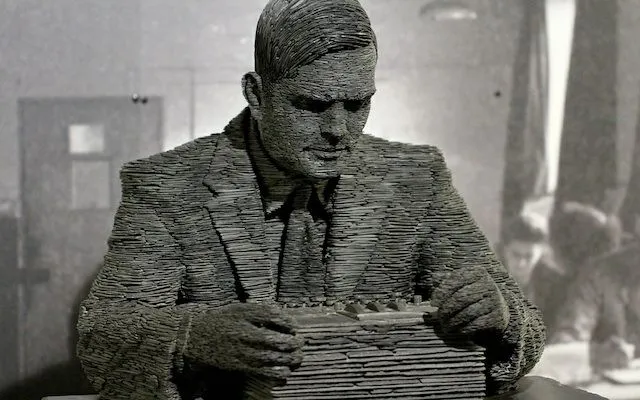
As I stated before, the term artificial intelligence was first coined by John McCarthy in 1956 when he held the first academic conference on the subject. But the journey to understand if machines can truly think began much before that. In Vannevar Bush’s seminal work as we may think, he proposed a system which amplifies people’s own knowledge and understanding. Five years later Alan Turing, a pioneer of computer science wrote a paper on the notion of machines being able to simulate human beings and the ability to do intelligent things, such as playing Chess. He published a paper “On Computable Numbers, with an Application to the Entscheidungs problem” in which he proposed what would later be known as a Turing Machine – a computer capable of computing any computable function.