
The last few years, the hype around electric cars is only growing. More and more companies present concepts of environmentally friendly cars, which can be charged from the outlet. More and more investors are investing their money in industrial production of electric cars. And more and more customers stand in line waiting to get the car of the future.

The important advantage of using electricity as an energy source to propel the vehicle is not only environmentally safety, compared to hydrocarbons, but also its low cost. Yes, we get most of the electricity using hydrocarbons, but every year the use of renewable energy sources is increasing. We can hope that in a few decades it will reduce the world's dependence on oil.
But, it is worth considering the fact that a sharp increase in the production of electric vehicles means an increase in the production and consumption of lithium, which is a key component for batteries. Like oil, and like any other chemical element, lithium is a limited resource.

Lithium - alkaline metal, which enters into a stormy reaction with water and forms the hydroxide LiOH and hydrogen. That's why this metal is not found in nature in pure form. World production and consumption is mainly use lithium carbonate, which looks almost as usual salt.
The first lithium-ion batteries were produced by SONY in 1991. Their high energy intensity and ease of operation made lithium the most popular resource in the electronics market. This event caused the growth of demand and consequently production growth of lithium.
Dynamics of prices for lithium carbonate

Elon Musk contributed in the second explosive growth of prices and volumes of production of this resource. In 2016, at the presentation of Model 3, he announced that for the production of 500,000 cars a year Tesla will be forced to purchase all available lithium in the world.
For comparison: a battery of modern electric car contains 100 times more lithium than laptop battery, and 10,000 times more than the battery of any smartphone.
Tesla battery
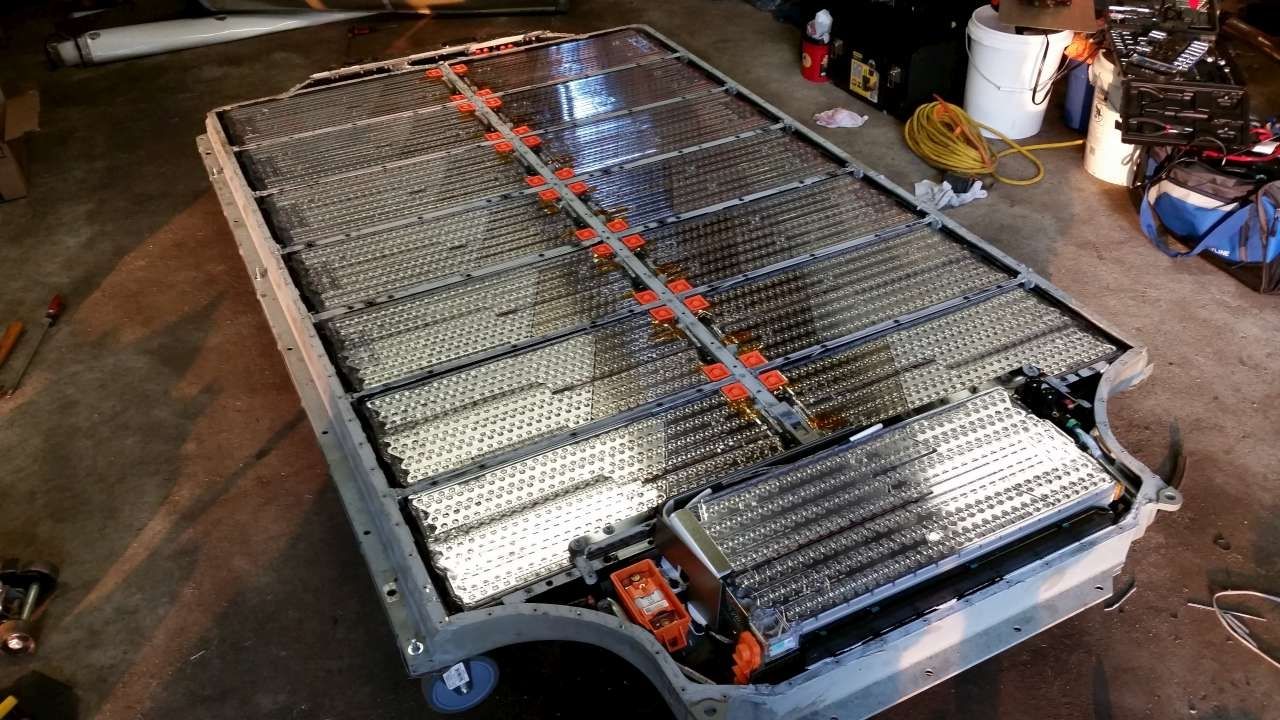
In addition to Tesla, a variety of companies around the world start mass production of electric vehicles. Some countries even passed laws that oblige to increase the production of electric cars. Norway introduced a ban on the sale of vehicles with internal combustion engines starting in 2025. in 2030, a similar law will come into force in Germany.
It is obvious that for realization of tasks, the industry will require significantly more lithium than in the last few years.

From 2000 to 2010, global consumption of lithium has increased from 12,800 tons up to 22,600 tons. In 2015, this figure rose to 32.5 thousand tons, and in 2017 already amounted to 188 thousand!
According to preliminary forecasts, in order to meet world demand in 2035, it is necessary to extract from 1200-1600 thousand tons of lithium per year.
So we came to the main question of this article: where to get so much lithium?
We can produce Li in different ways, because this substance is contained in different sources in different forms.

Spodumene- ore that consists of a silicate of lithium and aluminium, lithium content: 6-7.5% This mineral is remarkable that forms crystals of great size. There are cases of finding spodumena long 13 meters and weighing 90 tons.
Lithium is also found in mica, granite, ores of other metals. where its contents may vary from 3-5%. But mining has never been a cheap treat.
The cheapest and readily available source of lithium is a natural salt water. 1 liter of sea water contains about 0.17 milligram of lithium, this figure depends on the degree of salinity. That's why today the main sources of lithium are a huge area of dried up salt lakes, the so-called salt marshes.

Salar de Uyuni in the East of Bolivia is the largest of the known deposits of lithium. This is a multi-kilometer desert, in place of which was once a salty pond. Only salt remained from it, and it covers the earth with a layer 2-8 mm thick. The concentration of lithium in local salt is 0.3%. Total reserves of salt are estimated at 10 billion tons= 300 million tons of lithium.

Nearby, in the territory of Chile there are about a dozen smaller salt marshes. Despite the lower salt reserves, Chile is the leader in lithium mining, this country supplies 43% of the world's volume. The government is actively attracting foreign investors to develop deposits. While Bolivia restricts access to Li, only use its own manufacturing facilities for production.
Other countries, such as Argentina and China are also not deprived of salt marshes, which are located in mountainous terrain. The salt marshes of China are located in the highlands of Tibet, the most famous of them - Zabuye Lake. This pond has not dried to the end, but China is actively mining lithium, ranking third after Chile and Argentina.

It is obvious, that with increasing demand for lithium, many countries that have access to saline water, seas and oceans may in the long term begin to evaporate salt from seawater.
***
In fact, even the world's known reserves of lithium far exceed the needs of industry. The industry was faced only with short-term deficit because nobody expected much of the sharp growth in demand for this resource. According to the latest forecasts, in 2018 the deficit will come to naught, and in the future the supply will outpace the demand. In 2022 the industry will consume only 25% of the extracted quantity of lithium.

Given the development of many lithium mining projects around the world, worldwide lithium production will reach 500,000 tons in 2020, is 2.5 times higher than in 2016. So we can be sure that none electric car, released today or in the future, will not be left without a battery.
sources: [1], [2], [3], [4], [5], [6], [7], [8], [9], [10] images from Google Serach.
