

Before the days of megacities and concrete jungles, towns in Northern Thailand were abundant with golden teak wood trees. At the turn of the nineteenth century, foreign businessmen poured into the North with dreams of becoming wealthy from these magnificent trees. Thailand’s biggest business boom in the logging industry was born.

Within the old Lanna city of Lampang, the community greatly benefited from the business side of this business boom. The unemployment rate was at the lowest percentage possible with the demand for golden teak wood was at an all-time high. New wealth was up for grabs and logging teams were on the hunt for new money. Among these logging teams were great Burmese businessmen and foreigners from the Western World with great ties to Siam.
To this day, most of the cities of the old Lanna Kingdom are full of golden teak wood homes. A lot of these teak wood homes are on top of pillars also made of teak wood and the ground level space is used as a second living room. Horse carriage tours often take visitors by these magnificent homes while the coachman speaks about the history of Lampang and some of the past residents of the homes. Two homes, in particular, I was excited to visit and upon my visit, I was briefed on the amazing history of both.
The Great House of Louis

I started my journey into a distant past by visiting the home that once belonged to a Briton named Louis Thomas Cunnis Leonowens. Interestingly enough, this Briton served as a captain in the Siamese Royal Calvary and was the son of Anna Leonowens from the novel “Anna and the King of Siam.” After his service to Siam, he became a trader who specialized in the logging trade.

Louis became one of the wealthiest traders in the logging boom and left his property to the city Lampang when he passed in 1919.

In the present day, the property of Louis T. Leonowens is a museum displaying his home and past business. I began my visit by admiring the vehicles that the city of Lampang has on display at “The House of Louis.” These vehicles were part of the city’s logging industry but were used after the life of Louis T. Leonowens. The two Mercedes Benz vehicles were used to transport large logs after they were cut down.

I approached the main house made of all golden teak wood and was in awe of its beauty. I’ve always found beauty in houses made of wood because they’ve always made me feel like I was touching a part of nature. The rooms were filled with enlarged photos and detailed history of Louis T. Leonowens’ logging business. Touching the wooden panels and stairs as I was exiting gave me the feeling of nostalgic wealth. I was amazed at Louis T. Leonowens’ accomplishments as a Briton trader but more importantly, as a captain in the Siamese Royal Calvary.
The House of Many Pillars

The House of Many Pillars is better known as Baan Sao Nak and is a symbol of wealth from a forgotten past. The house was built in 1895 and belonged to an extremely wealthy Chinese family from the Qing Dynasty. The home is now a museum and as you walk through the house, you see artifacts used in the early twentieth century.

I started my tour by admiring the pieces of hand-crafted furniture, which are rare these days. The coffee tables were impressive while almost all of the cabinets we’re handcrafted with great detail. Within these cabinets were symbols of great wealth such as all copper bowls and silverware.

I entered a bedroom on the estate and was shocked to see an antique television since my life has been used to big screen and flat screen television sets.

The bedroom seemed like it was very comfortable for its time.

From the size of the original single bed, it seems to either have been a guest room or a young adult’s room.

The adjacent room had many impressive handcrafted cabinets. The artisans of this era must have been highly skilled for the teak cabinets to last this long in prestigious condition. This room had many antique artifacts on display and its hallway lead to my favorite room, which is the luxurious living room from a different era.

The teak couches and chairs were all handcrafted and the setup seemed very welcoming for the guests of that era.
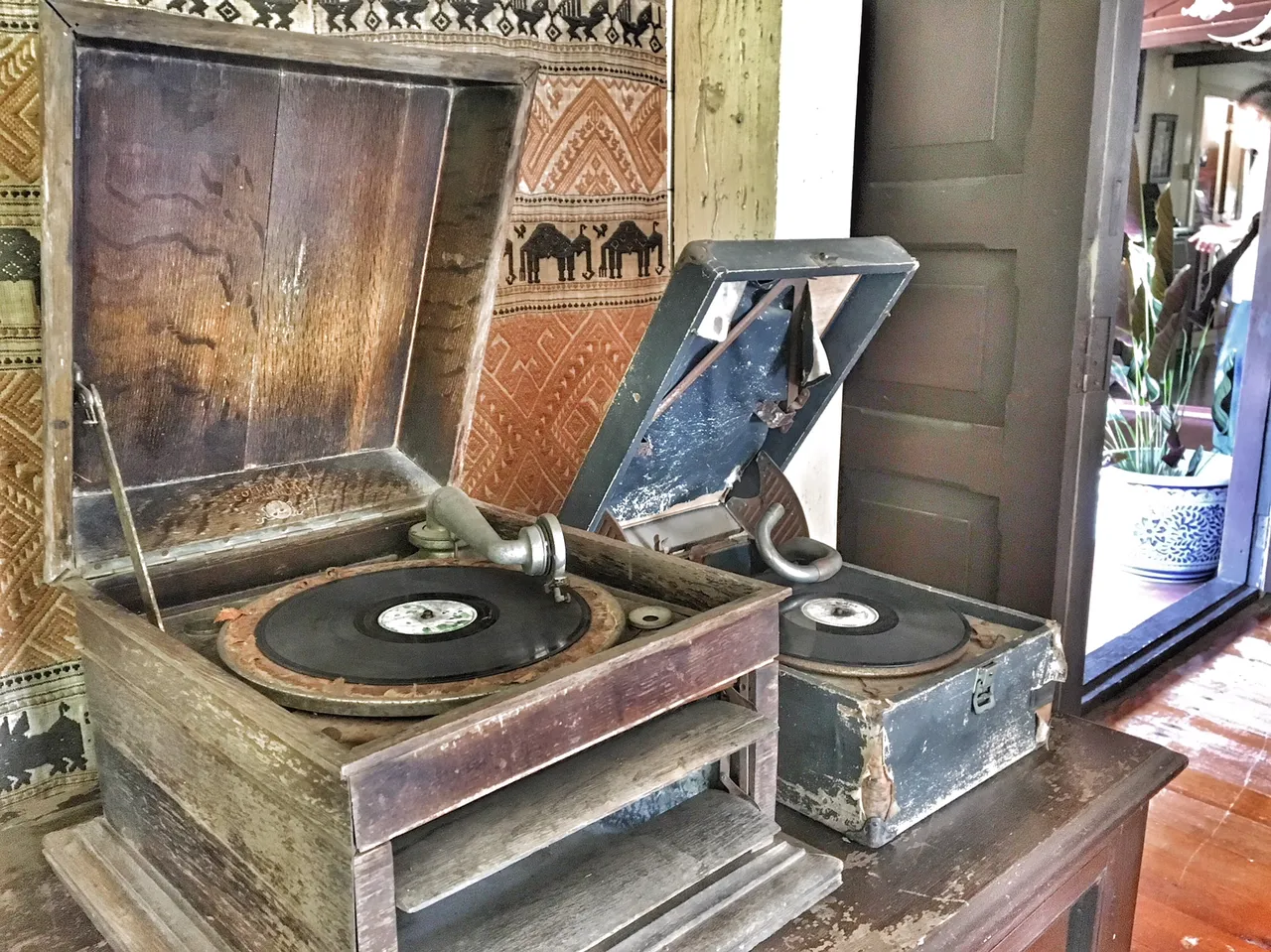
I could also imagine listening to classical music on the collection of phonographs.

I ended my tour by examining the reason the museum is named Baan Sao Nak (The House of Many Pillars). There are 116 teak pillars in total and the bottom of the house seemed to be another residence in itself. There were tables and outdoor furniture for all the museum’s visitors and the staff served us herbal tea to combat the day’s heat.

Upon leaving, I couldn’t help but climb on top of one of the first horse carriages that helped Lampang become Thailand’s most romantic city.
I Wish You Wood

I’ve always wanted to live in a tree house so you can imagine how much I enjoyed the tours of the two homes. Though I’m forced to currently live in concrete blocks, I have always been close to nature. Like earthing/grounding, I believe that wood also absorbs the negative electric charges from our body. I was once told that if you hug a living tree, it absorbs the negative charges from you because the roots are deep in the earth. It also raises your level of oxytocin which is the hormone responsible for the state of calmness and emotional bonding.

Though the modern world has taken Mother Nature from us, some cultures still embrace her. We’ve abandoned her and have been programmed to detach ourselves from our only power source. We don’t have to wonder why there are so many diseases in the modern world if we gave up our only power source. My mother always told me, if nature created the problem then nature has the solution. These magnificent teak wood homes reminded me of her teachings when I see them side by side with modern homes made of concrete. I fell in love with these homes so if you ever have a choice between concrete or teak, I will always wish you wood.
Authored & Photographed by 
Click on the coin to join our Discord Chat

 for Steem witness!
Witness proposal is here:
Go To Steem Witness Page
In the bottom of the page type: adsactly-witness and press vote.

Use small letters and no "@" sign. Or, click here to vote directly!
Thank you!