

The cherry blossom trees are such an iconic part of Washington D.C. that we couldn’t imagine these beautiful trees not being there. In fact, every year millions of visitors go to the Capitol just to see the cherry blossoms brighten up the National Mall and surrounding Capitol. The National Cherry Blossom Festival is a yearly event to celebrate spring in Washington, D.C. and to remember the gift of the Japanese cherry trees from Mayor Yukio Ozaki, who donated these trees to symbolize the expanding friendship between the United States and Japan.

The very first Cherry Blossom Festival actually didn’t occur until 1934. As time progressed, the celebration expanded its activities and celebrations to where it is today with the Blossom Kite Festival on the National Mall, a National Cherry Blossoms Festival Parade, Sakura Matsuri (Japanese Street Festival) which has live performances, food, merchandise and a martial arts demonstration, the Anacostia River Festival which bring people to the parks, the Newseum which has an open beer and wine bar, sake samples, Asian dishes, origami folding, and a Japanese drum performance, a Cherry Blossom Ten Mile Run & 5 K Run-Walk, Annual Cherry Blossom Freedom Walk, the Cinematsuri (Japanese film festival), Japanese Culture Day at the Library of Congress, the National Cherry Blossom Opening Ceremony, the Smithsonian American Art Museum Cherry Blossom Celebration, & a large Fireworks display.

Historically, the first batch of cherry blossom trees, which consisted of 2,000 trees, was donated by the Mayor of Tokyo as a gift to the US. These trees arrived diseased in 1910 and unfortunately had to be burned. The two governments subsequently worked together to bring in 3,000 healthy trees to the US, with the efforts of Dr. Jokichi Takamine, a world famous chemist, Dr. David Fairchild, US Dept of Agriculture, Eliza Scidmore, National Geographic Society board member and First Lady Helen Herron Taft. The second batch arrived in Washington in 1912.

Since this time, the two countries have exchanged gifts including flowering dogwood trees from the US to the people of Japan. Ironically Japan had sustained a major flood that destroyed a lot of their cherry trees so the US gave the Japanese horticulturists many cuttings from the Washington D.C. cherry blossom trees to help Japan replenish Japan’s cherry tree population.
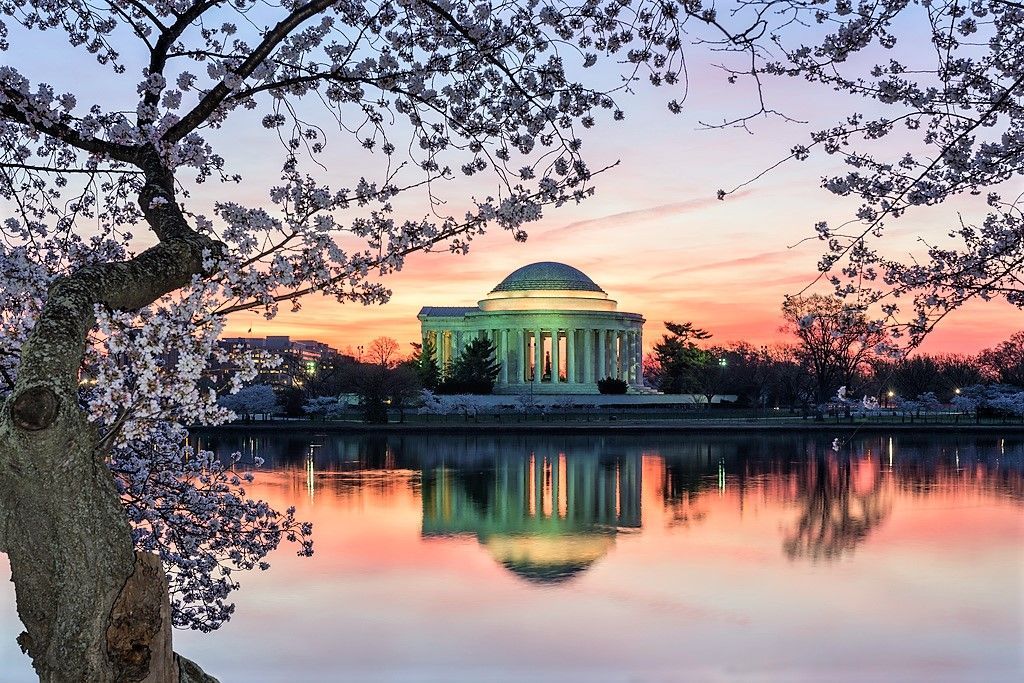
Most of the original trees are gone now because the Sakura cherry tree tends to survive about 25 years and at the most if it is lucky, 50 years. There are only two remaining cherry trees of the original 3,000. They are sagging near the base of the Washington Monument next to the commemorate plaque, stating the day they were planted, March 27, 1912. The other presently living trees in Washington DC are from clones and cuttings of the original lot.

Washington D.C. would not be the same without these beautiful cherry blossom trees. The friendship between the US and Japan has remained strong since WWII and they are still very close allies till today. We are very grateful for the wonderful gift of the cherry blossom trees that grace Washington DC’s landscape with beauty, colorful blossoms and the friendship of two great nations.
The cherry blossom represents the fragility and the beauty of life.
It’s a reminder that life is almost overwhelmingly beautiful
but that it is also tragically short.
-Homaro Cantu
Thank-you for joining me in the third part of my Cherry Blossom series. Please look for my final post which will cover a little more facts about the cherry blossom trees. If you would like to see other posts that I have created, please click HERE.