
After a long stay in India and getting to know the culture, the logical sequence of my wishes for further adventure was Nepal for the reason of the proximity and a similar culture with India. I expected there would be no such cultural surprises, and I felt comfortable in that decision to feel and explore Nepal.

The excitement was so much bigger as I knew I will step into the land where the "roof of the world" is located, the highest peak of our planet Earth ... MontEverest.
I did not even assume that nature on the New Delhi-Kathmandu route leaves breathless, the flight lasts only an hour and a half. After an hour, through the small window of the plane, I saw the magnificent rendered wreath of the Himalayas, which was so long that it was lost from my sight, on both opposite sides. I did not see either the beginning or the end. From all sides, at the foot of a wreath, in this huge vastness, there were huge rivers that were countless, as a result of the melting of glaciers in the Himalayas. The rest of the flight I watched everything I could see, filled with a nice feeling and constant thought "our planet is beautiful”.

At the airport in Kathmandu, I took a visa upon arrival, which cost $ 25 in 15 days, which is convenient for anyone who wants to visit Nepal. The airport is small and it looks modest, and in my memory, I have a security check and a scan, through which I walked five times (on the way back). I have not had this experience before.
Nepal is one of the smallest and least developed countries in Asia. It has about 26 million inhabitants. It was promulgated for the Republic of 2008. The currency is Nepalese Rupee. The standard is low, so everything was very convenient for me. The capital and largest tourist resort is Kathmandu.

The first, and the true impression of the local population of Kathmandu, is hospitality of the people there. From all sides, wherever I went, I have heard "NAMASTE", their greeting which expresses deep, exceptional respect. Residents of Kathmandu make you feel very welcome and you can feel respect by your behavior, which is automatically filling you with positive energy, which you consciously or unconsciously spread to others.

I was located near the tourist part of Kathmandu, Tamel, so I visited a lot of sights, some of which were damaged by the earthquake that struck them in the summer of 2015. Every day I went through their market, the most colorful, the most peaceful and the most marvelous market in which I have ever been. From all sides, Tamel is selling handmade crafts from talented, self-taught and creative Nepalese people. I learned that mostly people from the village are doing it. Toys, "dreamers", sound metallic vases for meditation, Nepal style dressing, colorful, essential oils, souvenirs, mostly cashmere ... all handicrafts. I was fascinated!
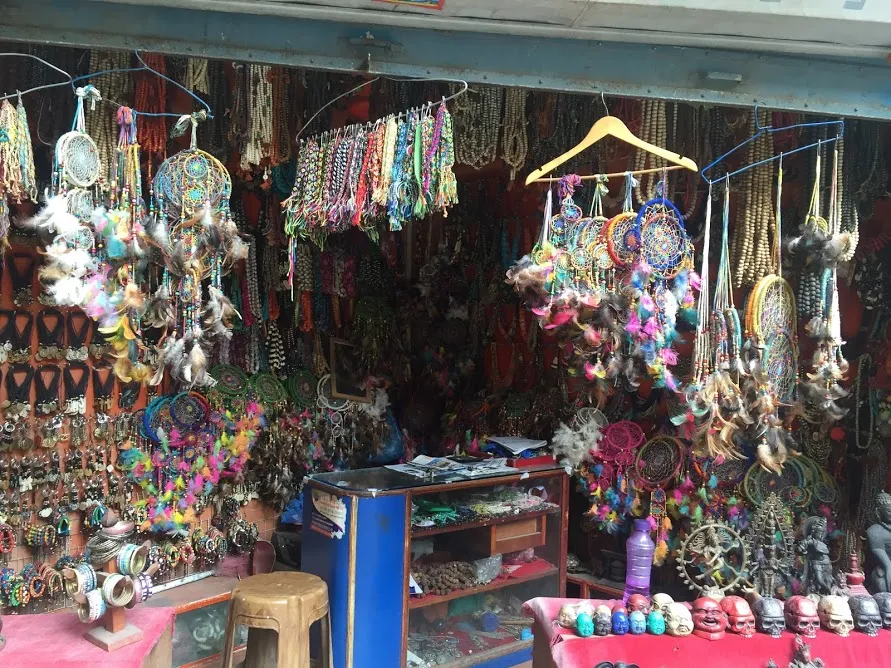
Everywhere I could see peace sign and a hemp leaf, on t-shirts, bags, necklaces, souvenirs... There are also crystal shops, precious and semiprecious stones… I am pointing this out as I am passionate collector of crystals. Another thing that Nepal makes authentic is the Himalayan salt that is used for eating or as a crystal in a large piece of "energy purification". It is available in every store and market, and is known to be healthy and full of minerals. To be precise it has 84 minerals. On the moss, it all looks like a scene from a childish imagination.

However, everyday life in Kathmandu has bad sides, mostly linked to poor standards and poverty. The population faces daily electricity restrictions that last for eight hours a day, sometimes longer. In this case, the restrictions began quite a long time ago, some eight, nine years ago. It's not easy to live that way. The roads are bad and with a lot of holes. Huge dust creates the effect of fog among hills. A lot of people on the streets wear masks to protect themselves from dust. They are used so much among the Kathmandu people that they can be bought at each corner, in a wide variety of designs and colors. Cars are modest, there are, of course, buses, but also popular mini-buses that every inhabitant of Kathmandu uses the most. At a time when people are going or coming back from work, they are so overwhelmed that people "hang out" and spin on the sides, which at first glance seems unsafe.
Food is based on rice. Traditional Nepalese dish, "dalbhat", consists of soup of lentils, vegetables and cooked rice. Nepali rice is eaten daily, mainly for all three meals.
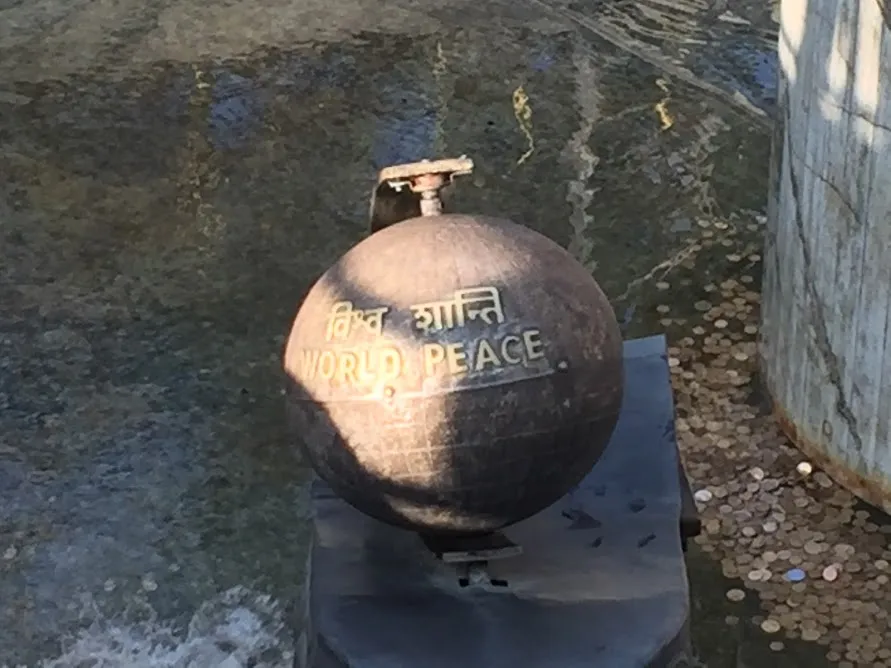
There is a story that the Himalayas have healing energy properties. Through conversation with locals, I noticed that their awareness of the connection between humman and nature is much more profound than in us from Europe. They are aware more than us and they feel better the problem that man creates for himself by separating from nature. It's an unbelievable feeling when talking to a man who sells souvenirs, he does not have even elementary education, and at that moment you are experiencing him as a guru. These "ordinary" sellers told me about the man's consciousness, about happiness no matter how man lives and how much he has, about nature... Perhaps too much information and "education" is distancing us from ourselves, from the core that is in us. I was encouraged to think about it during my entire stay in Kathmandu. Perhaps the Himalayas are really energy-efficient, everything is possible for me when the energy is in question. I felt great, fulfilled, as if I were on the right path ... I was told: “When a man feels happiness for no reason, he is connected with himself.”

In Kathmandu, from all over the world, most tourists come for hiking. At every step there are tourist agencies that organize hiking tours. The hiking season is from March to October. In Nepal there are more than 250 peaks with over 6,000 meters of height and, of course, the highest point on Earth, at the border of Nepal and China - 8,848 meters - the magnificent MontEverest.

Nepal is the evidence that the standard and infrastructure of a country does not leave the main impression. In my opinion through my experience, these characteristics are completely transparent and irrelevant. The feeling and impression that I own in my chest is the result of a different image of Nepal I have experienced. The image that constitutes a desire for the creation and talent of local people, sincere and heartfelt kindness, diversity, promoting work on oneself through the sale of various elements for meditation, actions for kundalini energy healing…
Finally, Nepal "woke me" and reminded me of how big respect nature deserves from us, as without it we would not have this experience of life that we still cannot figure it out what it actually is.

Be blissful.
