
The village of Harie has a unique relationship with water. Fresh spring-water flows through the town in specially designed canals which branch off to feed outhouses, or Kabata.

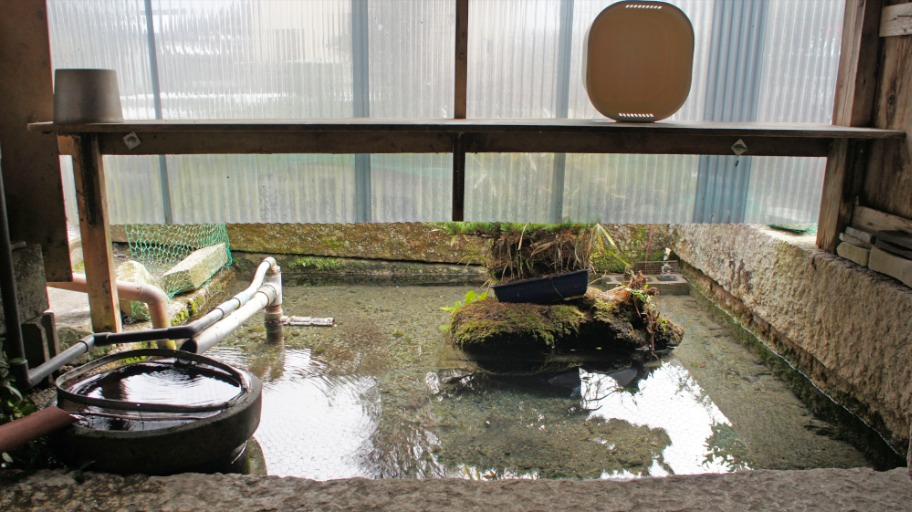
The interior of a Kabata where the water collects until it eventually runs back into the canals.


Residents use the water collected in their Kabatas for cleaning, washing and drinking. They even use the Kabata's cold water to keep vegetables and other foods fresh.
u.jpg](https://images.ecency.com/p/PB8ro82ZpZP5xqHVTtgzxr9jRnPYTxeDK7ZMexdNwBWFbKD7CzDrcBhepXP9QoHxpRoMVoRab9RMRLHczmbRMvTgCiswc94xZKK2JhaM5DPrmd8J?format=match&mode=fit)
Water inevitably loses its purity when man uses it for the aforementioned purposes. However, in the case of the waters of Harie, the residents employ Carp to ensure the cleanliness of their water.

Carps are naturally bottom-feeders and consume any organic waste that enter the water. It is said that each Kabata's water has its own unique taste and visitors to the town are encouraged to sample different sources from homesteads.
The collected water inevitably returns to the canals through outlets in the Kabata ensuring the harmonious cycle continues.

There is a National Geographic short on these Kabatas to which I'll add the link. I saw this documentary by chance and was absolutely entranced by the beauty of this system (thus the reason for this post).

Sources:
All photos are the original work of Benjamin McCracken. They are sourced from
http://en.biwako-visitors.jp/gobiwako/reports/harie/.