
Pecan nuts originate from the eastern United states but have since been cultivated in many parts of the world.
Pecans have seen a boom in the last couple of years due to the emergence of a middle class in China that like to consume these nuts.
Some parts of the world where the climate and other conditions are ripe are becoming new centers of production.
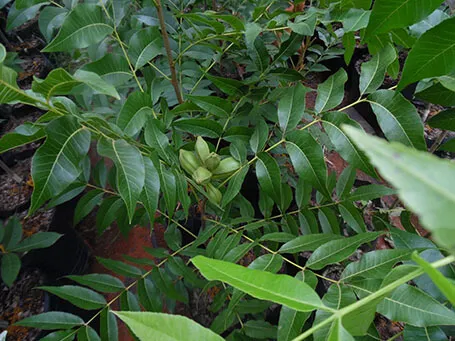
They do very well in arid climates with hot summers and cold winters. Irrigation schemes in deserts or semi desert regions can do particularly well if there is enough water.
Sandy slightly acid soils are best, they don't do well in soils with high clay content or that are poorly drained.
Usually only grafted varieties are planted as this way a predictable uniform tree and nut production is maintained in an orchard.
The pecan tree has both male and female flowers but these usually ripen at different times. It is therefore necessary to plant at least two varieties so that cross pollination can occur.
Trees of these varieties can be bought in bags.

or as bare root which makes transporting large quantities easier.

Growers in South Africa and Australia are benefiting from the seasonal difference between hemispheres.
The US supplies 80% of the market but the Southern Hemisphere production comes in at a time when the world stocks are virtually depleted.
The ongoing trade war between China and the US also favours produces outside the US since there has been a steep rise in tariffs implemented by China just recently