
To cut through the propaganda of both sides and understand what is really going on in Ukraine, one has to have an understanding of the basic principles of warfare.
The most important is understanding that there are two basic types of large scale, high intensity warfare:
- Wars of Manoeuvre; and
- Wars of Attrition.
Manoeuvre Warfare
Manoeuvre Warfare is:
the use of initiative, originality and the unexpected, combined with a ruthless determination to succeed, seeks to avoid opponents' strengths while exploiting their weaknesses and attacking their critical vulnerabilities and is the conceptual opposite of attrition warfare. Rather than seeking victory by applying superior force and mass to achieve physical destruction, maneuver uses preemption, deception, dislocation, and disruption to destroy the enemy's will and ability to fight.
Source Wikipedia
Manoeuvre Warfare is generally favoured by smaller combatants without the resources to win an attritional war.
Classic practitioners are the Prussians, the Germans, the South in the US Civil War and the Israelis (from 1948-1973).
Manoeuvre Warfare is much more exciting and intellectually fascinating, the stuff of movies and computer games.
It is also much more dangerous if the Manoeuvre goes wrong and can lead to the attacking force becoming encircled and defeated.
Attrition Warfare
Attrition warfare is
a military strategy consisting of belligerent attempts to win a war by wearing down the enemy to the point of collapse through continuous losses in personnel and materiel.[1] The word attrition comes from the Latin root atterere, meaning "to rub against", similar to the "grinding down" of the opponent's forces in attrition warfare.
Source Wikipedia
Classic practitioners of attrition warfare are the Russians, although most long wars eventually end up as wars of attrition.
While it is much more fun to analyse Wars of Manoeuvre, Wars of Attrition are actually much more common.
If you want to understand more about these matters I recommend the Big Serge Blog,
The Russian invasion of Ukraine
Phase 1 - Initial Invasion
The initial Russian invasion of Ukraine was, quite uncharacteristically for the Russians, a competent example of Manoeuvre Warfare.
With relatively small forces (~150k) they rapidly penetrated deep into Ukraine, captured smaller cities with large Russian populations and surrounded Ukrainian force concentrations preventing them coalescing.
The Russians conspicuously did not attack Ukrainian infrastructure. The internet, trains, electricity, water and other indicia of modern life were unaffected. Many Ukrainians were posting on Hive and YouTube from Kiev and Kharkov during Russian attacks. This was quite strange given that the first thing the US has always done in its many invasions of and attacks on foreign countries (Iraq, Serbia, Afghanistan, Libya etc) is to destroy or disable infrastructure.
The purpose of this early stage of what was then a "Special Operation", appears to have been to push Ukraine to the negotiating table, without creating either infrastructure damage or civilian casualties that would make absorbsion of annexed areas more difficult.
However this tactic was unsuccessful because the Biden administration ordered its puppet Zelensky to fight total war against the Russians and provided the weapons and support to allow this to happen as well as promises to encourage Ukrainians to fight to the death.
Ukraine's military had 600k men before the war and early on all men between 16 and 60 years of age were called up. This raised the size of Ukraine's military to over 1 million men.
Phase 2 -Tactical Withdrawal
Once that decision was taken, Russia clearly had inadequate troop levels to hold the areas it had taken and took the militarily sensible (but politically embarrassing) decision to withdraw to more defensible lines and to call up 300,000 reserves to bolster its forces.
These tactical withdrawals were generally carried out with good military competence and low losses of men and material, although the withdrawal from Kharkiv did leave behind valuable military equipment.
The withdrawal from Kherson city to the eastern side of the Dnieper River was the final act in the tactical withdrawal phase and was implemented superbly, leaving nothing of value behind and so surprising the Ukrainians that they initially thought it was a trap.
Well it was a trap, but not in the way they thought.
Phase 3 - War of Attrition
With the completion of the tactical withdrawal and the slow buildup of larger forces, the Russians completely changed posture and engaged in a war of attrition against the Ukrainian military itself and Ukraine's infrastructure.
Progressively, more and more of Ukrainian infrastructure was targeted, starting with the electricity grid, and destroyed while the focus of Russian military efforts was to maximise the destruction of Ukrainian men and material while minimising Russian losses.
This played to Russia's substantial advantage in artillery and Ukraine's penchant for fighting to the death for every inch of ground (which sounds brave but is actually militarily stupid.)
Russia was able to consistently lure Ukrainian forces into extremely costly and unsuccessful counter-attacks against well entrenched positions backed by massive artillery.
In Kherson, the withdrawal enabled intelligence gathering equipment to be left hidden in the city to give the Russians complete visibility and with the precise sighting of artillery, Russia was able to make Kherson a complete death trap for anyone to enter with relatively small artillery forces. Ukraine has been unable to actually build up substantial forces in Kherson because anyone entering gets blasted by artillery from across the river.
In Bakhmut, the Russians devastated the defending Ukrainian forces there but did not immediately seek to take the city or encircle it.
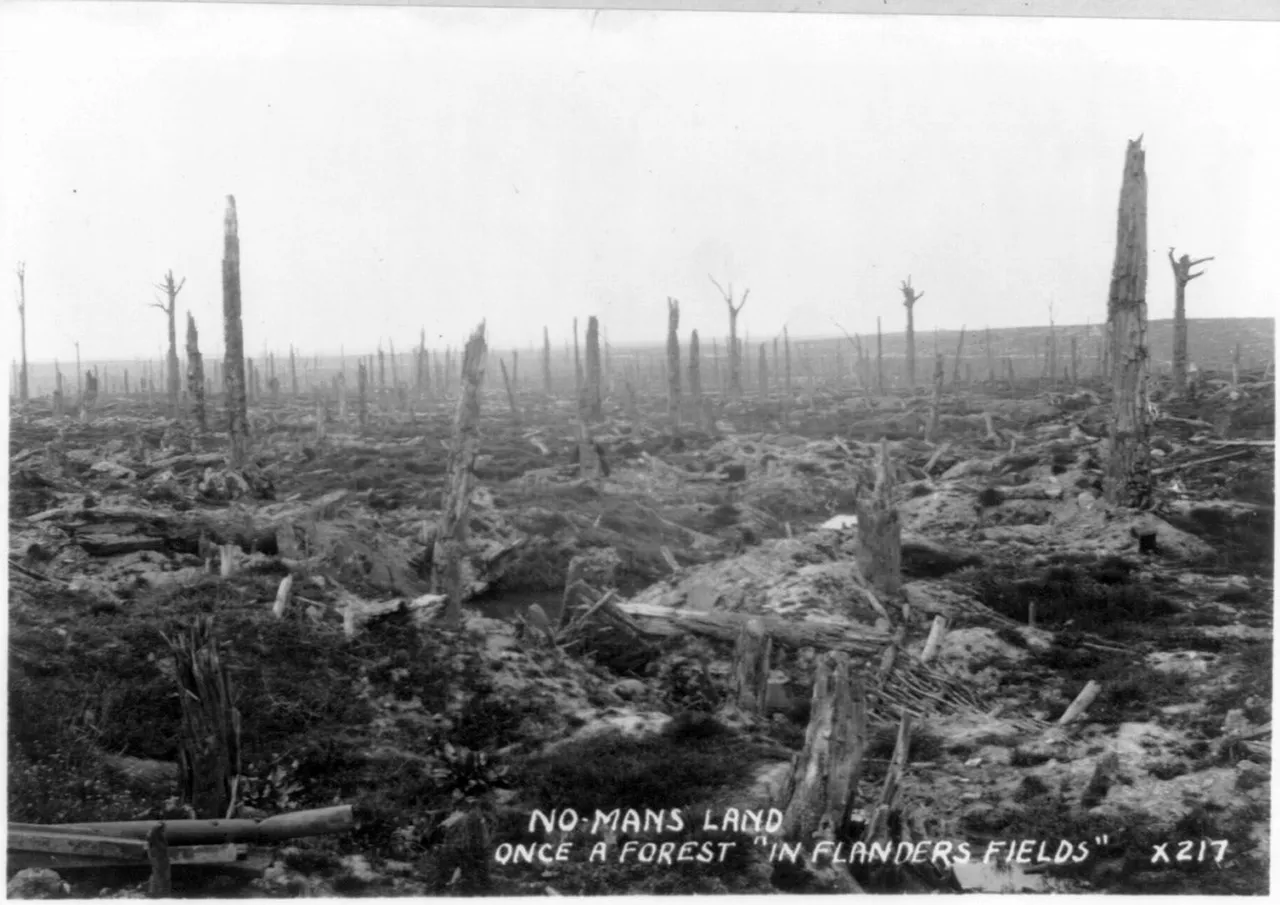
Instead they allowed Ukraine to bring forward reinforcements and pulverised them as they advanced from rear areas across open ground reminiscent of WWI no-man's land to attempt to relieve and reinforce the city.
Instead of taking the militarily sensible (but politically embarrassing) decision to withdraw from Bakhmut they Ukrainians have continued to run down their reserves by driving them into the meat grinder.
The Russians are adopting a rinse and repeat strategy while the Ukrainians obliging send their troops forward to be slaughtered by massive artillery and mortar barrages.
Source: Pinterest (photo is clearly out of copyright)
The Russians say that the Ukrainians are losing 2 battalions a day (600+ men) around Bakhmut
and reports from independent observers of hospital entries support this figure.
I have seen credible estimates from a highly decorated US Colonel that the Ukrainians were down to 190k effective soldiers a few weeks ago.
At this rate of attrition, Ukraine's military will be below 150k by the end of February 2023, at which point Russia will have the 3:1 advantage generally needed by an attacking force to ensure victory in offensive operations.
Phase 4 - Renewed large scale offensive operations?
At some point it is likely that Russian forces will have sufficiently attrited Ukrainian forces and built up sufficient new forces of their own that they will engage in large scale offensive operations. Perhaps they will use elements of Manoeuvre Warfare or perhaps they will just attack exhausted and hollowed out Ukrainian forces across the whole front. Perhaps they will just continue the War of Attrition until there is no one left to fight them.
Risks for Europe and the world
The risks to the EU from all this go beyond destroying its economy by sanctioning its main energy supplier and thus driving up the costs of manufacturing industry and consumers while making its Chinese and Indian competitors get cheaper energy.
Europe faces the real possibility that within 12 months there will be victorious, combat blooded and competent Russian army of around 750k - 1 million men on NATOs border. This comprises 500k Russian army (200k regular + 300k reservists), mercenary forces such as Wagner, and Belorussian forces.
Before the massive sanctions on Russia, the blatant racism against private Russian citizens, the outright theft of private citizen's assets (eg yachts) as well as national assets (Russian reserves held in foreign banks), Putin did not have the political support to engage in large scale military call ups. Many Russians liked The West and thought that The West liked them.
Now most Russians have united behind Putin and see the existential threat to Russian sovereignty posed by US and EU policy that only Putin and his leadership circle saw before.
The opposition to Putin is from people far more aggressive and extreme than Putin.
NATO does not have sufficient forces in Europe to defend against such a large force as Russia is currently assembling for offensive operations in Ukraine. Without substantial and rapid US reinforcements, there is a possibility that such a Russian force could conquer the whole of Europe.
But substantial and rapid US reinforcements depend on heavy sea-lift capability to transport tanks, IFVs, artillery and the massive baggage train that US armies cannot fight without. This depends on deep water ports operating and very substantial transport capability.
Russia has already demonstrated the ability to quickly destroy fixed infrastructure by long range missile (including hypersonic) strikes. If Russia decides to go to war with NATO then the European ports will be quickly destroyed followed by the airfields and airport and then the electricity infrastructure, just as the Russians have done to Ukraine.
The US will be left unable to assist with ground forces and NATO forces will be badly outnumbered and outgunned.
In response to this inferiority of conventional forces, the US may then resort to "tactical" nuclear strikes, as its new nuclear weapons usage policy allows.
Suffice to say the Ukraine War is a complete debacle for The West and may harbour its demise.
It certainly marks the end of the unipolar world we have lived in since the USSR collapsed in 1989.
Please vote for my Hive witness. (KeyChain or HiveSigner)