

I have a Masters Degree in Visual Art and Design. I studied a whole raft of Art, Architecture, and theory; of which a lot was boring historical context behind beautiful pictures. This piece of writing takes the sum total of my scholarship into these topics and contextualises it into the recent events in Paris.
June 17, 2011. Almost eight years ago. I was on a holiday through Europe, my first time away from my home land thousands of kilometres away. I was on a coach tour through Europe, and was in France. I was in Paris. I went to Notre Dame.
April 16, 2019. News spreads around the world as flames sweep through the timber structure of Notre Dame and its spires collapse. Parisians, former tourists, Catholics, Architects, and the people of the world reflect on their time and relationship to this structure and the Earth it sits upon.
It isn't the first time a building of historical notoriety has found itself engulfed in flame, ruined by an earthquake, or overcome by landslides. Though a nuclear disaster, the Pripyat ferris wheel and amusement park stand as monuments to abandoned things, which have gained a deeper resonance and meaning through their disuse, their decay, and classification as derelict.
Notre Dame is an architectural marvel. It's a shining example of Gothic architecture, characterised by vaulted ceilings, and tall, tall walls, designed to reach up into the heavens, and solve a problem that historical structures used as churches often had - a lack of light in the place of worship.
Before that, candles were spread thick through chapels, monasteries and indeed, churches. They were still used for ceremonial purposes, but not for illumination. While Notre Dame is the most famous example of the Gothic Architectural style, it isn't the only one that is visually striking and an incredible marvel of engineering.
The British houses of parliament fall into that realm as well. Spires, stone, lumber.
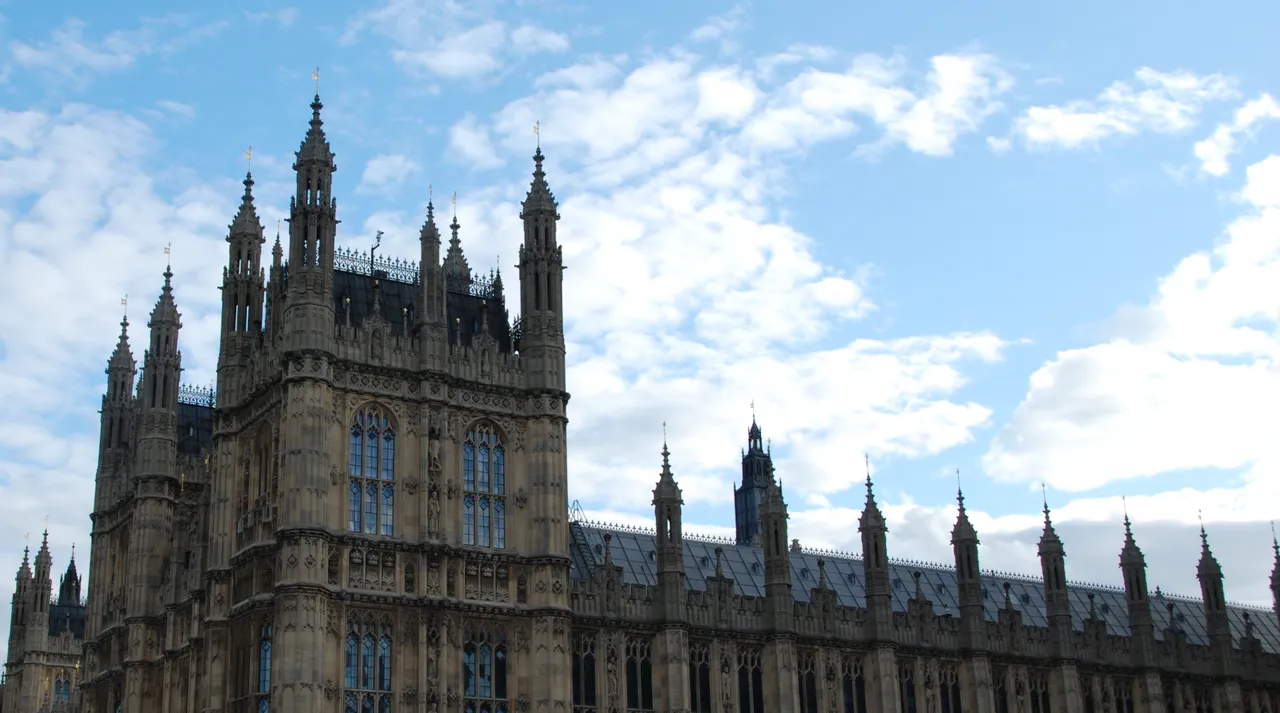
This post isn't just going to focus on pictures I took while on holiday. It is about adding more meaning to something through its destruction.
Allow me to elaborate with an example of where something takes on more meaning through destruction. To make this point, we are going to journey to a cemetery in Rome. There, there's a statue, a funerary monument, erected by a brilliant sculptor, William Wetmore Story. He put it there because his wife, Emelyn had died.
The statue is incredibly detailed, and beautiful in its depiction of a weeping angel. It has been reproduced hundreds of times around the world. You've probably seen it before. In case you haven't, here's a picture:
Image By Carptrash, CC BY-SA 3.0, Link

It is a mesmerising statue. One of the most notable copies of this sculpture is the one at Stanford University, thousands of kilometres away from the old worlds of Europe, and an artisan's grief for his lost love.
We've established the historical importance of this image of a statue. It has sentimental value. It is valued as an object, and can be appreciated for its craftsmanship, beauty, and impact by anyone. Of course, you need to know the context that as human beings we throw stones on top of the places where we intern the remains of dead people, and this act makes us all very sad.
As Story said of his own sculpture: It represents the angel of Grief, in utter abandonment, throwing herself with drooping wings and hidden face over a funeral altar. It represents what I feel.
Back to the United States, and Stanford. There's a copy of the Angel of Grief there. It was just like the one in Rome, and you don't need to see a picture of it, yet.
Read on.
In 1906, there was an incredible, devastating earthquake that hit San Francisco, home of Stanford University. Fires raged across the city, destruction reigned around everywhere, and decades of architecture, culture, monuments, and other public infrastructure were devastated by the aftermath of the Earthquake, of which the greatest damage was done by fire.
Sound familiar?
I'm not going to tell you that the copy of the Angel of Grief in Stanford burnt down. It didn't. It was, however, damaged by the Earthquake. Here's a photograph of what happened to that statue after the Earthquake.

Broken wings. An archway which was erected around the Angel is destroyed. The photograph is from a newspaper report of the days following the earthquake, and I'd like to make a sweeping statement.
The damaged statue has a lot more meaning. It expresses a lot more grief, with ruin and collapse around her. She's still depicted as being in "utter desolation", and immensely sad. The fact that we can't see her face makes this all the more pronounced.
Let us now head back to Paris, and the hours following the fires of less than a week ago. The below video is from The Guardian and their YouTube channel.

It shows the difference between the then and now, as the photographs I've shared above of the Angel of Grief above.
Remember what I said earlier about a Gothic Cathedral having one ambition only? To let the "light of god" into the inner sanctum and the walls of the place of worship? In the destruction of its roof, and the flames burning away the attics of timber, a veritable forest worth of woodwork and carpentry, has the building not achieved, through its "ruin", a more potent version of its original vision?
I think so. There's something to be said about historical monuments, ignoring the significance of who, when, or why they were built, or what they stand for. Some things, destroyed, ruined, or injured; become more beautiful through their desolation.
It'll be interesting to see what happens to the cathedral and its "rebuild" efforts - there's a lot of politics there. It won't be the same as the original cathedral, just as the Angel of Grief in Stanford, destroyed by an Earthquake, isn't the same as the one Story sculpted in Rome.
It's a copy. It's a simulacra, and that is something you'll have to read Jean Baudrillard to learn more about.
