
This is a montage of photos of my favorite interest,
capturing the whitetail bucks on film with my trail cameras as they mature on my woodland property.
In my first blog, I explained the basics of my use of trail cameras for monitoring deer throughout the year.
My second blog was dedicated to the fawns and does from springtime birth through fall.
This blog is dedicated to the bucks.
My property has a history of holding an average of two dominant female does that usually produce a total of 3 to four fawns each year.
I have also observed a phenomenon called "buck displacement" where the dominant does will force bucks out of the area in order to raise their young.
The bucks usually return in fall looking to mate with the local gals.
So naturally, I get excited when the bucks travel through and appear on camera,
in preparation for the fall hunting seasons

The bucks developement during this important growth period, appears slow and rough.
The next photo you can see only one nub growing on the right side of the deer's head.

I think the buck in the next photo heard the shutter click and spotted the camera.
The antler growth is getting bigger.

Only eleven days later looking at the time stamp on the next photo, the antlers are above their ears.

The next photo shows three bucks together in the water hole.
The buck in the back appears to have potential for nice antler size.

I get excited to see bucks like the one in the next photo.
He looks like a nice 10 point buck in the making.
It should be easy to identify him later in the year having darker fur on his snout,
or better yet, in the previous photo that same morning!

Next we have four bucks together getting a drink at the peak of summer.
The buck closest to the camera appears to be an older deer, looking at his larger body size.
He must be eating well too.

I prefer to place at least one camera in the woods through the summer months.
The best place seems to be over this water hole in the red pine plot.
There are 3 other water holes throughout the property, but this one shown is the largest.
I made "birdhouse" style enclosures to mount and protect my cameras.
Cedar siding for materials and some brown paint to help blend into the surroundings.
It takes one deck screw to attach them to a tree.

Fall is approaching and the bow hunting season has begun.
I have 3 cameras out now, and placed one near the edge of the field and hardwoods on a main trail.
The next photo is of a buck with velvet hanging off the right side of his antlers.
The bucks are turning nocturnal as the rut, or mating season approaches.
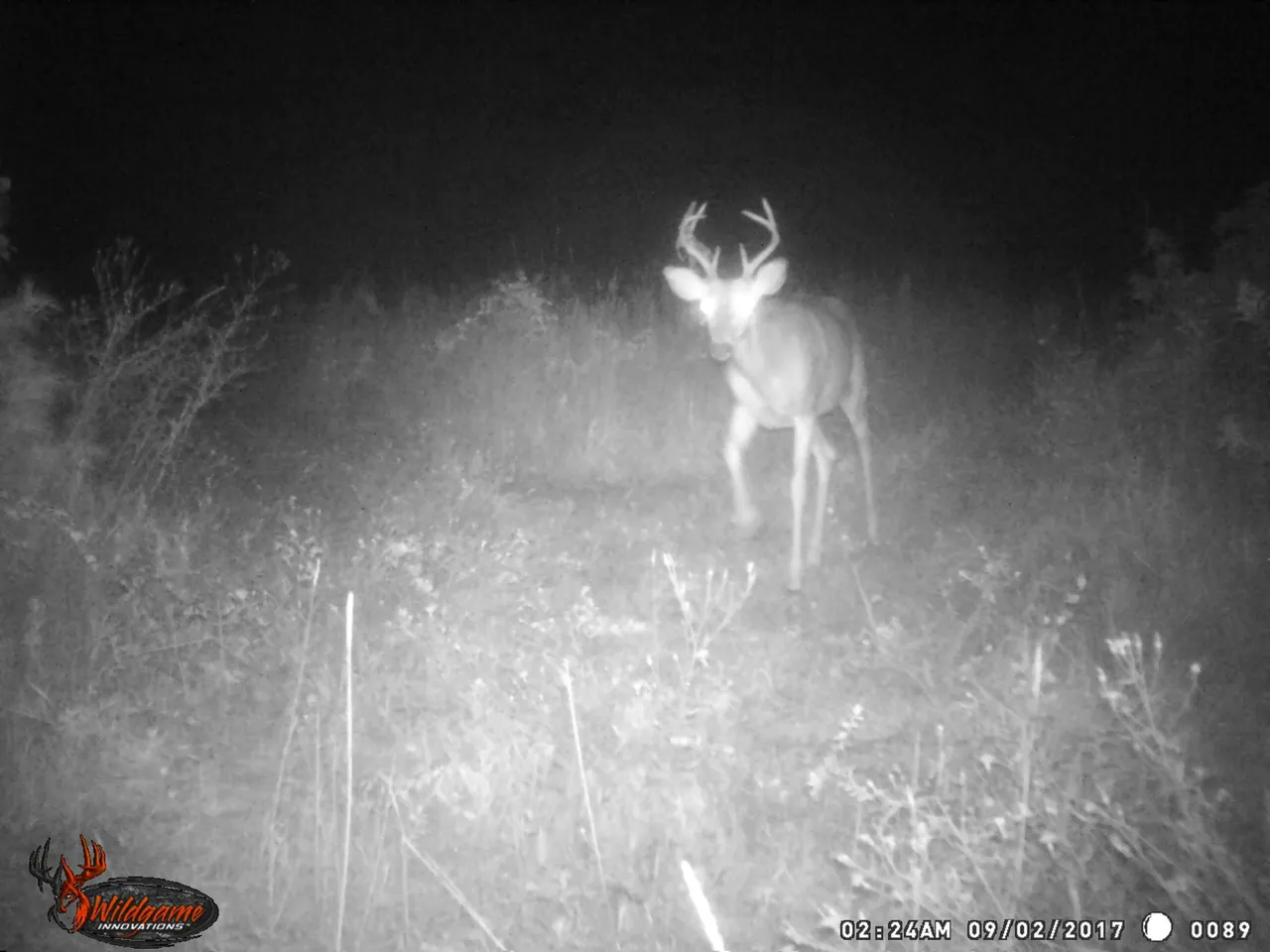
Now that's a nice buck!

Here is a dandy mature buck in the next photo!
But they are not coming out during the day.

The next photo I wanted to share with you last, but kept it in order here.
This is what its all about!
Hoping a mature, trophy whitetail buck is living in the area.
Wow!

The next screenshot of a video is one of the few bucks that traveled past a camera during the daylight hours.

What a difference compared to the photos of deer a few months ago.
The next photo of the buck with only one half of antler growth,
has a different timestamp because it is a screenshot of a video.


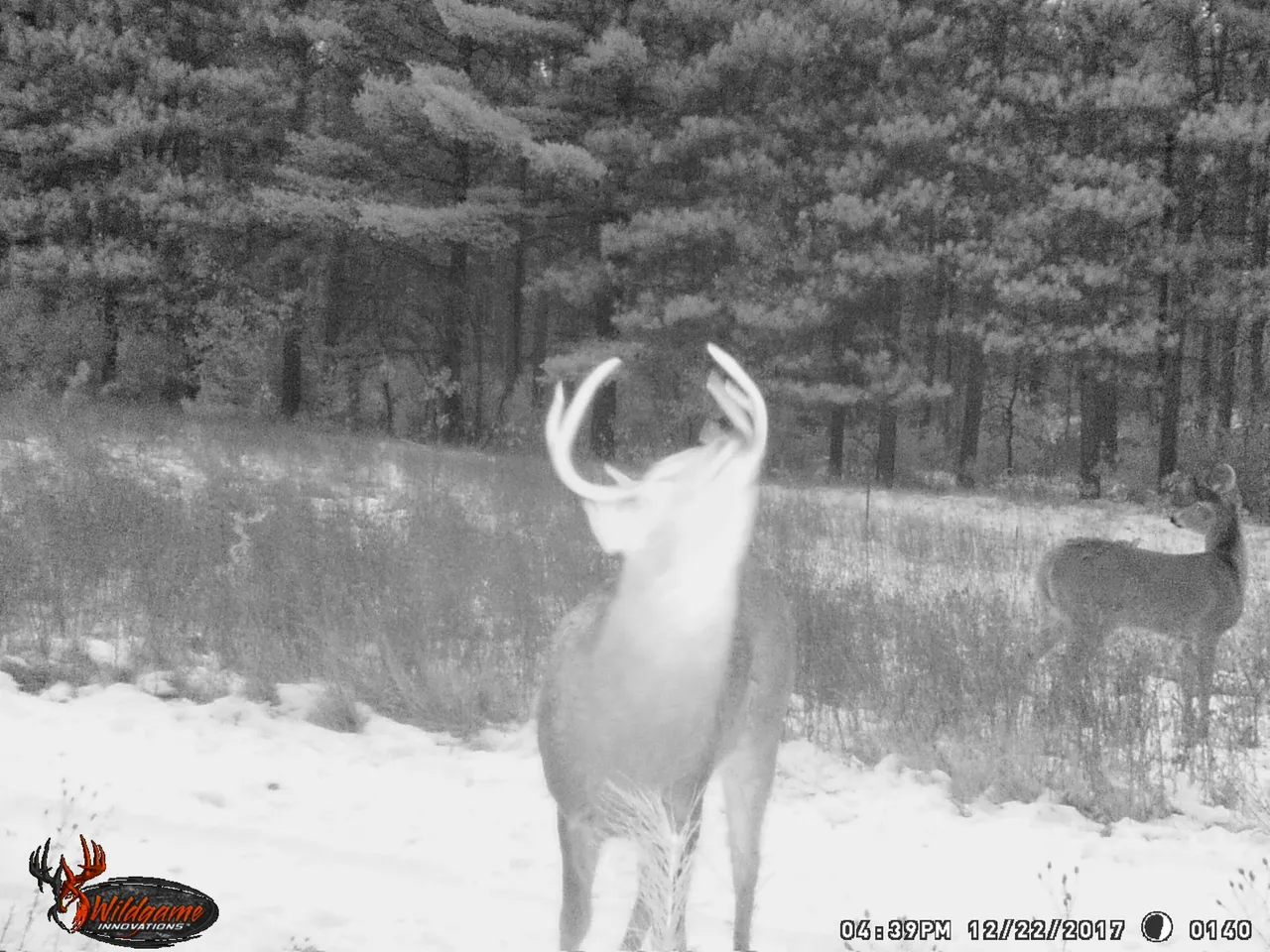
With snow on the ground, the deer are looking for food.

As winter and below freezing conditions continue, the deer have changed their travel routes.
These bucks are traveling from the neighbors property located to the east,
where they bed down in the thick pines, protected by the wind.



The final photo is of yours truly, checking the cameras by mountain bike.
Although I enjoy walks through the woods, I can limit my human footprint
and sneak in and out without alerting deer that might be bedding nearby during the hunting season.

Thanks for your interest in my interest!