
This week i was fortunate enough to get my hands on some aged rib-eye beef. I have used normal rib-eye in a lot in the past and luckily for the same cost per kg i was able to try out my butchers 80 day aged beef. Yes 80 days!
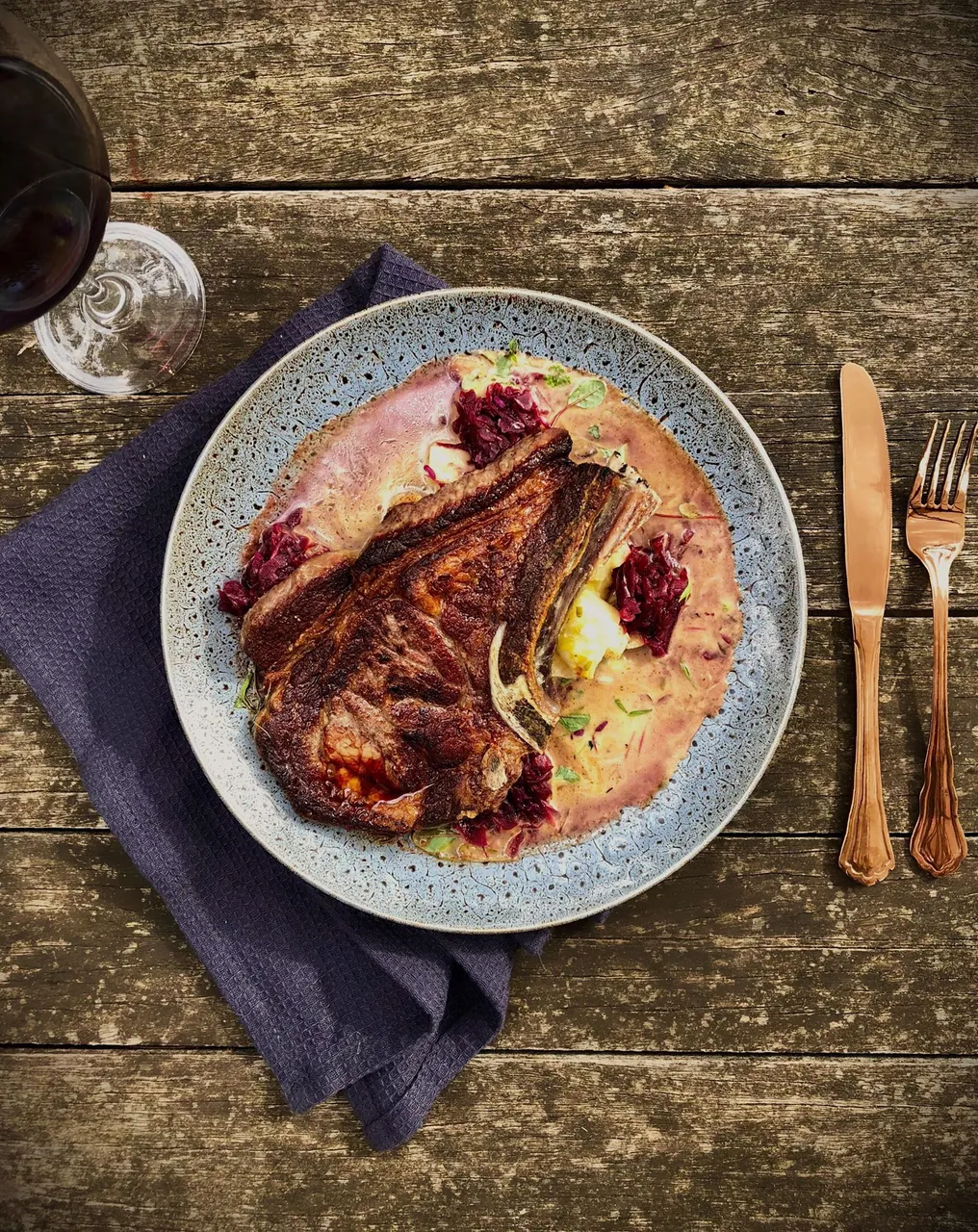
The term dry ageing is probably familiar to you, you’ve most likely seen it on menus, maybe you have eaten it and hopefully you’ve noticed the major difference in taste. But do you know exactly what it means?
Dry ageing beef is the process of drying and dehydrating beef in a controlled environment. A controlled environment means a constant zero degree temperature, 85% humidity, strong air flow and UV lighting. These are the ideal conditions for creating perfect dry aged beef. In the first 14-20 days, enzymes that naturally occur in the beef break down the protein and fat strands, making them smaller and therefore making the beef more tender. They also give off gas as a by product, and this really improves the flavor. At this point the enzymes work is done; the beef sits and dehydrates and this is where you begin to see some serious flavor and texture complexity come through as you can see in my photo above.

So what is the ideal aging period? Personally the 80 day aged piece was fantastic. I had a 35 day cut a few weeks ago but it seemed more intense. This latest cut seemed much more settled and when i was frying it, it caramelized beautifully.
I had a group of mates come on Saturday night and they all had one. There was some rare orders but i recommend them to go at least medium rare as i think the meat is better cooked more than less which you would usually not recommend on normal beef cuts. Either was anything on the bone can always do with a touch more as it will stay moist.

My Verdict
Personally i think its fantastic. The stunning aroma, its almost like a prosciutto infused cut, with sticky, crunchy, melt in your mouth moments. The only thing is off course the price tag and if your not a huge beef fan you will not appreciate the complexity of this cut
Enjoy
chefm31ster