
In every country, there is at least one specialty food that not every traveler is brave to enjoy.
Frog juice - Lima, Peru: It is thought to be able to cure asthma and enhance vitality for men. Frog juice includes:frogs were peeled off the skin and drops the frog into a blender with carrots, the Peruvian maca root and honey.

Frog juice is light green and has a weird flavor. However, if you know the ingredients that make up this drink, very few people can try it.

Khash - Middle East, East Europe and Turkey

A pretty gruesome little dish made up of stewed cows feet and head. It was once a winter comfort food but is now considered a delicacy. I’m sure it’s fine, so long as you don’t mind that grinning skull staring at you through its cold dead eyes.
Witchetty Grub - Australia

Part of the Australian ‘bushmeat’ family, this was another staple of Indigenous Australians in the desert. These can either be eaten raw, when it tastes like almonds, or lightly cooked, where its skin crisps like roast chicken and its insides take on the look and consistency of scrambled egg.
Shirako - Japan

As euphemisms go, this one’s a corker: shirako in Japanese means “white children” but refers to the sperm sacs of either cod, angler fish or puffer fish. Looking like white blobs of goo or miniature brains, they are said to have a sweet custardy taste.
Casu marzu - Italy

Known as “rotten cheese”, Sardinia’s casu marzu is made from Pecorino that has gone bad – really bad. The larvae of cheese flies (piophila casei) are added to the Pecorino, hatching inside, burrowing around and digesting the fats. The result is a weeping, tongue-burning delicacy that you can eat with or without the maggots.
Escamol - Mexico
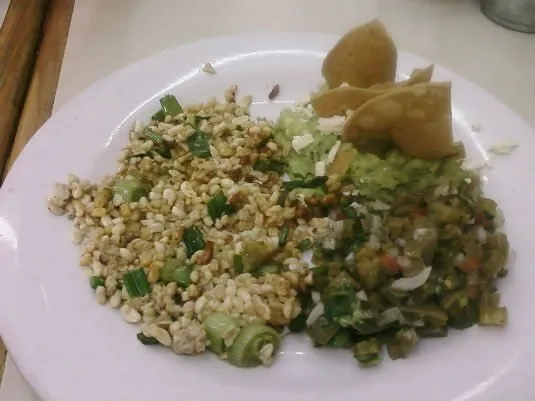
Escamoles are the larvae of a venomous ant species that lay their eggs deep down in the roots of agave or maguey plants in Mexico (so harvesting them is not a barrel of laughs). The larvae are said to have a consistency akin to cottage cheese and taste somewhat nutty; they’re normally eaten as the filling in a taco or omelette.
Hakarl - Iceland

How anyone conceived of this dish is a mystery. To prepare: first gut and behead a Greenland shark, place in a shallow grave and cover with sand and stones. Leave for two to three months, then cut into strips and dry for several more months before serving: first-time tasters are advised to hold their nose and try not to gag.
Jing Leed (Grasshoppers) - Thailand

So, yes, this is a big old grasshopper seasoned with salt, pepper power and chilli and fried in a big wok. Tastes a little like hollow popcorn skin… except a little juice squirts out when you bite into it… nice.
Fried Spider – Cambodia

Fried spider is a regional delicacy popular in the Cambodian town of Skuon, prepared by marinating it in MSG, sugar and salt and then frying it in garlic. Apparently it has more meat on it than a grasshopper, but also has brown sludge in the abdomen, which consists of mainly innards, eggs and excrement. Yum.
Sago Delight – Southeast Asia

Edible sago grubs are said to be creamy tasting when raw or meaty and like bacon when cooked. Generally seasoned and flavoured in the same way as the other Southeast Asian creepy crawly favourite, Jing Leed and served alongside. My friend gaged when she ate one and said it was pregnant – a braver being than me.
Stink Bugs – Africa

Used to flavour stews or eaten on their own, stinkbugs are said to have a crunch to them and taste a little like apple. Prepared by boiling, the bugs release defensive pheromones in a last ditch attempt to survive, and while it hurts the eyes it’s no more successful than the onion’s weak survival attempt.
Mopane Worms – Southern Africa

A big fat, juicy worm that’s said to be full of meat. Although traditionally dried or smoked to preserve, they are usually rehydrated and cooked with tomato or chilli sauce to flavour. According to an American couple who tried the dish on the Food Network, it tastes like honey barbequed chicken. One to give a go, I’d say.
Steak Tartare – France

Is this weird? I mean, French waiters will still ask foreigners over and over again if they know what they are getting themselves into, but surely this is pretty well known now. It’s made up of good quality raw ground beef, served with onions, capers, raw egg and seasoned with Worcester sauce and other condiments, usually with rye bread or fries on the side. Considering I like my steak served blue this was always the next logical step – and man, is it good.
Balut – Philippines

This fertilised duck egg, with its partly developed embryo inside, is boiled alive and then eaten from the shell with salt, chilli and vinegar. You’re supposed to tap a hole in the top of the shell, sup the savoury liquid and then crunch down the rest of what’s inside – feathers, bones and all. Bleurgh.
Locusts - Israel

Israel has of late been suffering from a plague of locusts, but fortunately this is the only insect to be considered Kosher, so Israelis have been eradicating the pests in a unique way: by eating them. Deep-fried and chocolate-covered locusts are apparently going down a storm (no pun intended).
Cobra Heart – Vietnam

So, they slit the struggling poor creature open right in front of you and place its still beating heart into a shot glass of its own blood. You sink it while it still pumps away… enticed?
Dog – Korea, China and Vietnam

Yeah, so call me a bleeding heart westerner and a hypocrite, but this always breaks my heart. As someone who had a dog growing up, who was part of the family and treated as a little four legged sister, it’s tough to see dog carcasses roasted beyond recognition or locked in those tight little cages, waiting for the slaughter. But then I eat all the animals we deem fit for farming over here, so this one is going to turn into a long argument. While not widely consumed in Korea these days, dog meat is big money in Vietnam, leading to a massive increase in the stealing of family pets.