
How to Manually Mill Wheat and Make Bread
You can use your favorite bread recipe or use the link I provided for you at the bottom of this article. Fresh ground sifted wheat flour is the same weight as whole grain wheat flour you buy at the grocery store.
I can eat organic wheat without experiencing an allergic reaction.
I line my bread and bun pans with parchment paper. Organic fresh ground bread products are delicate and will break easily when you try and lift them out of their baking container.

Organic Soft White and Red Wheat
I use a combination of grains when hand milling and baking my own bread. Hard red wheat grain has a lovely nutty taste and more protein than soft white wheat. Soft white wheat is the easiest to hand mill and sift. That's the reason why it's called soft.

Sifting After First Milling
I found out the hard way I had to sift the hull we call bran out after the second milling. With hand mills I found out I had to grind twice. I would sift out the fine flour and regrind what was left and sift out the bran. This was the best way I found not to make hockey puck buns. OMG, they were hard as brick. I got online and did some research on how to make yeasty bread from freshly milled flour. I had no clue! I thought you just ground up the grain and make bread. Boy oh boy, was I wrong.

Second Sifting
If you don't sift out the outer hull of your grain you will get bread that is hard as a rock and only good for football or hockey.

Sifted Flour
Sifted fresh whole grain flour is soft but it is very different from store bought whole grain flour. This fresh flour will only last 24 hours before it starts to go rancid. Real flour fresh from the mill is full of healthy oil and nutrients. However, the healthy part of milled wheat does not store well. To extend shelf life corporate milling companies processed all the fragile oil and nutrients out of their flour for shelf life. Even if they add nutrients back in the chemical structure isn't the same and the body doesn't know what to do with the man made vitamins and oils. Besides the chemicals added back into the flour you also have herbicides sprayed on almost all grains to kill the plant before harvest so the grain will be drying out and also products like glyphosate in Roundup will cause accelerated growth before death. The flours not marked organic all have glyphosate residue and that may be why most people like me can't eat wheat products because the wheat products causes inflammation and infections.

Wheat Bran
I save the bran and freeze it for later use in my cereals or I give the bran to my chickens. You want to see chickens go crazy? Feed them fresh wheat bran.

How To Start Your Yeast
You can use egg, milk, or water, any kind of liquid will do, even left over water from steaming vegetables. I heat the water up to just below body temperature. Don't heat up the liquid above 110 degrees or you will kill the yeast. I buy bulk yeast and freeze it in 1lb packages. I pull a package out and dump it into a quart jar and put it in the refrigerator. When you are making fresh milled wheat dough you need to double up on your yeast. I add 1 tablespoon for 2 loves of bread.
Once the liquid is warmed up add 2 tablespoons of sugar and a 1/4 cup of fat that you like, I use butter or coconut oil to the mix. Mix the ingredients up until thoroughly dissolved. Add your yeast and let sit for at least 15 minutes to give the little yeasty beings a chance to start growing.


Adding Yeast to Flour

Incorporating Remaining Flour
I add flour cup by cup. I mill 10 cups of flour, which you need about 12 cups of wheat berries. You lose some of the bulk from the bran and you need extra flour just in case you need to add extra flour to you dough and you need extra flour when shaping your bread. Freshly milled wheat dough is sticky!

Dough Is Ready For Hand Work
I keep adding flour until the liquid completely disappears and I can start using my hands. Remember freshly milled wheat flour is very sticky so get ready to get your hands messy!

Adding Flour Until Flour Is Easy To Handle
Even though the dough is sticky there will come a time where it isn't that sticky and ready for 10 minutes of kneading. Only experience and several failures can teach you exactly when you need to stop adding flour and start the steady kneading.


Many first timers making bread suffer from lack of confidence either over work their bread or don't work it enough to activate the protein called gluten which gives bread that nice stretchy fluffy consistency. Find a good bread recipe that other people have tried and had success and stick with the process. Keep trying until you get it right. I've ate most of my mistakes except for the hard as rock breads I first made when I didn't sift out the wheat berry hulls.

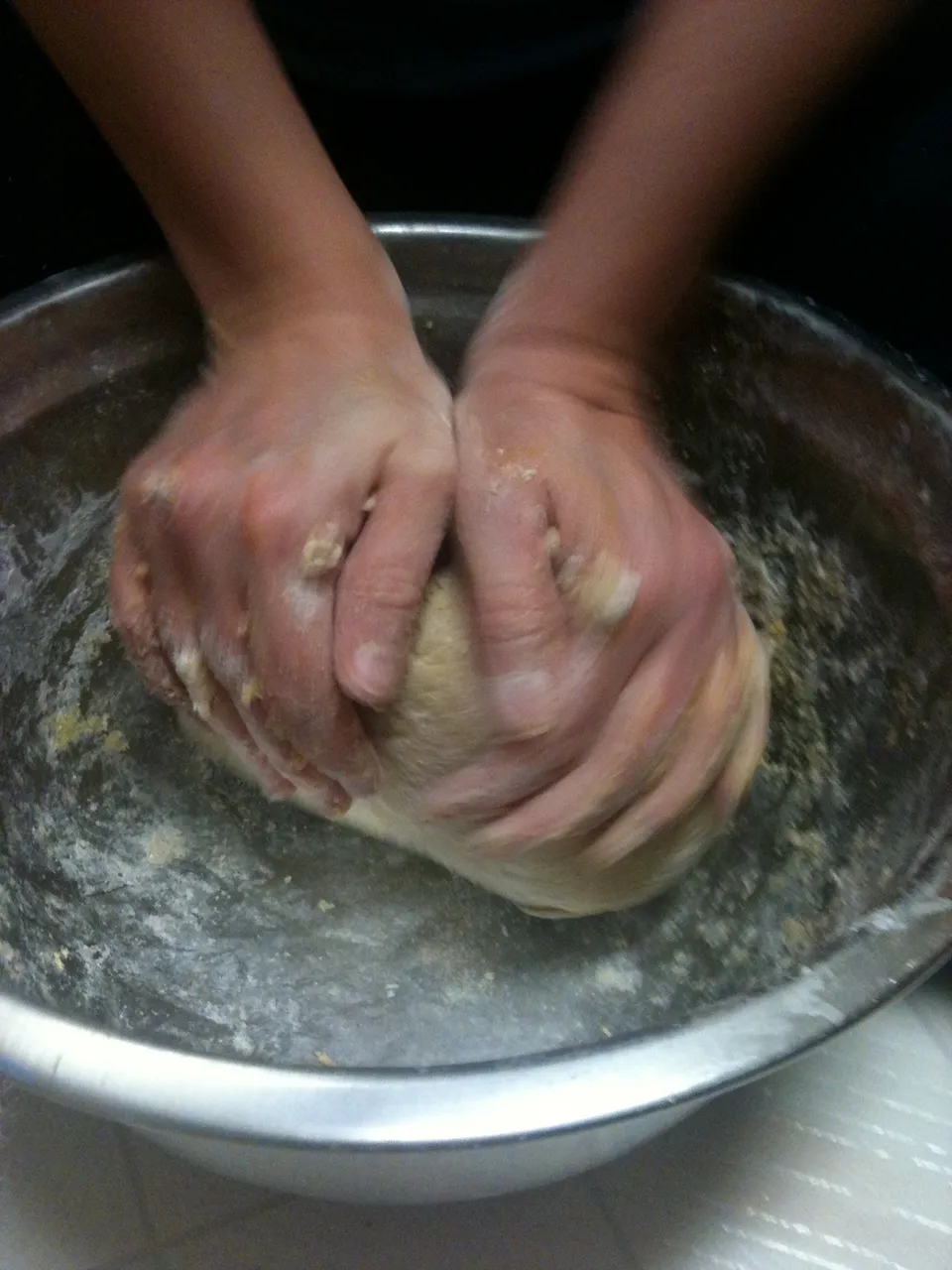
How To Tell When It's Time To Stop Kneading
The bread dough will stretch without breaking and look kinda like a brain. Freshly milled grains don't stretch the same as store bought processed wheat flours but freshly milled flour still has a little stretch.

First Rise

Formed Bread Dough
I found out from several mistakes you can't let the formed fresh milled flour dough rise for an hour the second time. The dough is delicate and 30 minutes will suffice. I found if you give the dough an hour for second rise it will collapse and you will get flat bread loaves and buns.

Products Are Ready For Baking
With all this product I needed two ovens. I usually make bread for the week which includes pizza crust, buns, and bread loaves.

Freshly milled wheat berry bread taste intense and I hope you get a chance to eat some or even try to make some for yourself. Can you imagine planting, harvesting, storing, milling, baking your own grain products? We just don't have the time to do that with full time jobs. But if you want to learn the ancient art of making bread from scratch you have to spend a little money or have someone mill your grain for you. My mill coast $130.00 and I bought it off of eBay. I can't remember who made the mill, sorry.
If you want to buy your own grain, you can buy fresh grain berries from cooperatives. I stored 20lb bags in steel food barrels. If you don't store your grain properly weevil beetles will find a way in and start breeding like crazy. It's happened to me, that's why I bought huge storage barrels.


 A link to My Blog