

When I left you last week, my wife and I had just completed our tour of the Quincy Mine Hoist building in Hancock, MI.
I didn't realize the building was going to be part of our tour when I made the reservations. I am really glad it was though, it was potentially my favorite part of the whole thing.
From what I understand, before Covid we would have then ridden the Midwest's only cog-wheel tram down the side of the hill to the entrance of the mine. Unfortunately, due to social distancing rules they had to shut that down and instead we had to caravan in our vehicles to the entrance.
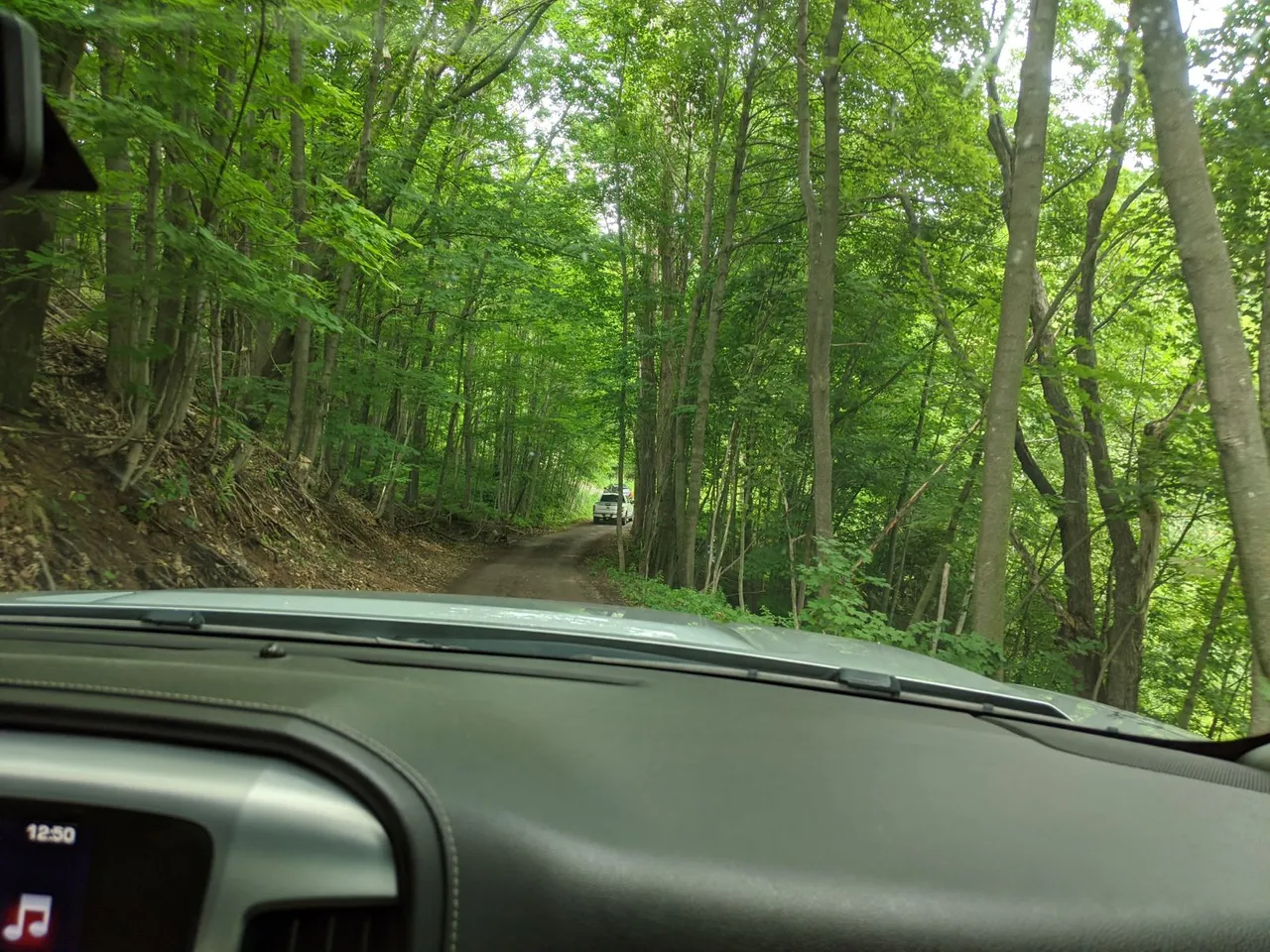
It is pretty interesting, because this road that we took to the entrance is right in a residential neighborhood. From the road it looks just like another driveway (if not a little overgrown).
We did this tour on a Sunday which was slated to be the hottest day of our time in the Upper Peninsula. Having read the Quincy Mine Hoist webpage, we knew that the temperatures in the mine were pretty cold. We felt a little silly (and hot) walking around the hoist house in our jeans and jackets.

All of that changed when we got to the entrance of the mine shaft. You could immediately feel the 43 degree Fahrenheit air coming out of the shaft. In fact if you look at the picture you can see the mist it created when it met the warm humid air outside.
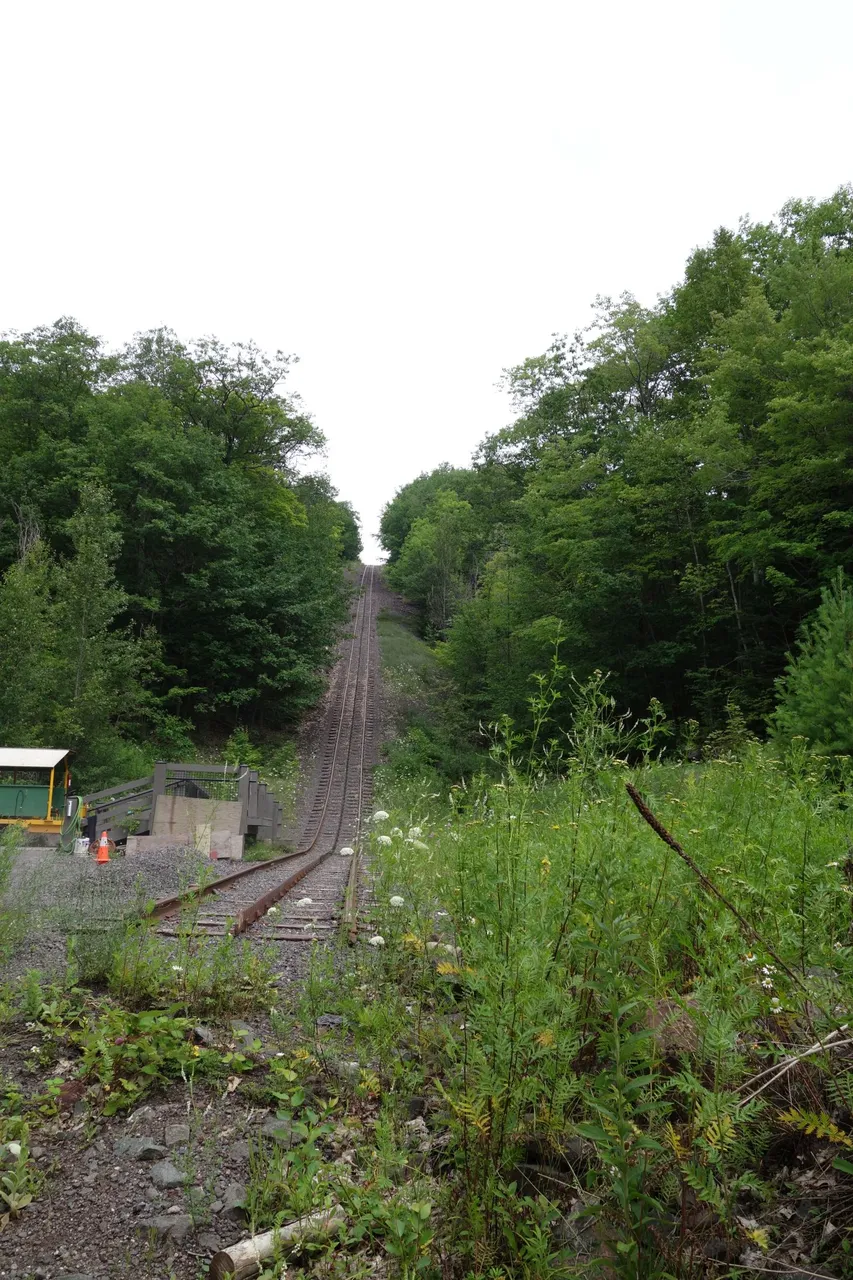
I forgot to mention, this is the track we would have come down on had we been able to take the cog-wheel tram.
Additionally, the regular mine tour has you riding a wagon into the mine shaft. Again, because of social distancing we had to walk the entire length. It wasn't too bad, but it was a bit muddy. I will explain why in a second.

If I remember correctly, this shaft was dug at the seventh level of the mine. It isn't part of the main shaft. It is actually an exploratory shaft that they dug many years ago to try and see if copper was in this part of the mountain.
When they didn't find any, they instead used the shaft to divert water out of the rest of the mine. That was the main reason why it was so muddy for our walk, plus we were underground...

As I mentioned in the last post, our tour guide was pretty awesome. He really knew his stuff and he presented it in a way that made you really want to pay attention. This picture shows where he was showing us the different strata of the earth where the different layers had formed back when everything was in a volcanic state.
The super-heated water from the volcanic activity would flow up through the fissures and cracks carrying minerals with it. When the water receded, or evaporated those deposits would be left for the miners to find many many many years later.
Apparently, there is a fault line up in the area and there was another point in the tour where he showed us where the two plates come together at the fault line. It was really intersting.

On the wagon you can see a huge hunk of copper ore like they used to mine in the main shaft.

I took this picture looking up just to give you an idea of what kind of environment we were in. It makes your wonder why they needed to put those metal braces up there...
Eventually, we made our way to a deeper part of the exploratory shaft and the tour guide gave us a small demonstration.
Having been on tours like this in the past, I knew what to expect, but 
The guide lit a candle and then turned off all the lights in the shaft. He demonstrated what it was like for the early miners to work the rock with a chisel and hammer by candlelight. Then, as I was expecting he blew the candle out.
It is crazy how your eyes keep trying to adjust to the darkness looking for some glimmer or hint of light that just isn't there. It is a feeling I have only ever had three or four times in my life (all of them on cave or mine tours). Usually, no matter where you are, you can find some faint light source. As I mentioned, having never been on a tour like this before my wife had a "death grip" on my hand.

From there the tour guide gave us a demonstration of some of the more "modern" tools they used to mine. The machinery was a welcome change, but it also meant many people lost their jobs due to the increased efficiency.

Finally, we ended the tour in this vast cavern. The picture doesn't really give you a good idea of just how big the area is. All of it had been excavated by hand which is pretty impressive. There was a series of wooden ladders led higher and higher into the cavern.
The guide had a brief question and answer session in this area and then we headed back out above ground.
If you get to this area of the world, I highly recommend taking one of these tours. It is fascinating to get a picture of what life was like back then. It is definitely not the kind of work I would have been able to handle.
Make sure you come back for the next post in this series as we make our way farther up the Keweenaw Peninsula.
Other posts in this series:
@bozz/bozzlife-the-beginning-of-a-grand-adventure
@bozz/bozzlife-traveling-the-up-part-1
@bozz/bozzlife-traveling-the-up-part-2
@bozz/bozzlife-traveling-the-up-part-3

