
FILAMENT
Choosing the right filament is one of the biggest challenges in 3D printing. There are dozens of different manufacturers with sometimes very large product ranges. This article can therefore only reflect my very limited view. I have not tested hundreds of different filaments. When I have found a filament that suits my needs, I stick with it. The permanent search for the new, ultimate filament would take a lot of time. One piece of advice right from the start: you should never get the idea that price is the decisive argument for buying. It's no use at all if I save 2€ per roll, but then the stuff is hardly processable and half the roll ends up in the bin.
Die Auswahl des passenden Filaments stellt eine der größten Herausforderungen im 3D Druck dar. Es gibt dutzende verschiedene Hersteller mit teilweise sehr großen Produktpaletten. Dieser Beitrag kann also nur meine sehr eingeschränkte Sichtweise wiedergeben. Ich habe nicht hunderte verschiedene Filamente getestet. Wenn ich ein, für meine Bedürfnisse passendes, Filament gefunden habe, bleibe ich dabei. Die permanente Suche nach dem neuen, ultimativen Filament, würde sehr viel Zeit in Anspruch nehmen. Einen Rat gleich vorweg: man sollte keinesfalls auf die Idee kommen, den Preis als ausschlaggebendes Kaufargument zu sehen. Es nutzt genau gar nichts, wenn ich 2€ pro Rolle spare, das Zeug dann aber kaum zu verarbeiten ist und die halbe Rolle dann im Mülleimer landet.

Which filaments are available? Probably the most commonly used materials are PLA (polylactic acid) and PETG (polyethylene terephthalate - glycol modified). The latter is the most commonly used plastic worldwide. PLA is easy to process, the printing temperature is low, it doesn't warp during printing, you can process PLA without a heated print bed and the stuff doesn't stink or produce toxic fumes like ABS for example. PETG is slightly more flexible and mechanically more resilient than PLA. So parts made of PETG can be subjected to greater mechanical stress than those made of PLA.
In addition to PLA and PETG, I very often use TPU (thermoplastic urethane). This is a rubber-like, flexible material. TPU is available in different so-called shore hardnesses. From very hard (D58) to soft (A60), there are many different filaments.
Welche Filamente gibt es? Die wahrscheinlich am häufigsten verwendeten Materialien sind PLA (Polymilchsäure) und PETG (Polyethylenterephthalat - glykolmodifiziert). Letzterer ist der weltweit am häufigsten verwendete Kunststoff. PLA ist einfach zu verarbeiten, die Drucktemperatur ist gering, es verzieht sich nicht beim drucken, man kann PLA auch ohne beheiztes Druckbett verarbeiten und das Zeug stinkt nicht und produziert keine giftigen Dämpfe, wie beispielsweise ABS. PETG ist etwas flexibler und mechanisch belastbarer als PLA. Teile aus PETG können also mechanisch stärker belastet werden als solche aus PLA.
Neben PLA und PETG verwende ich sehr häufig TPU (thermoplastisches Urethan). Dabei handelt es sich um ein gummiartiges, flexibles Material. TPU ist in verschiedenen sogenannten Shore Härten erhältlich. Von sehr hart (D58) bis weich (A60) gibt es viele verschiedene Filamente.


Of the more exotic filaments, I use "Glow in the dark" to print luminescent markings for the tripod and camera. In the meantime there are the craziest filaments, stone, wood, metal, carbon, magnetic, electrically conductive, colour change depending on the temperature and much more. So far, I have hardly used these and also materials such as ABS, nylon, ASA, HIPS etc., or not at all. So I can't contribute much enlightening information here.
Von den eher exotischen Filamenten verwende ich "Glow in the dark" um nachleuchtende Markierungen für das Stativ und die Kamera zu drucken. Mittlerweile gibt es ja die verrücktesten Filamente, Stein, Holz, Metall, Carbon, magnetisch, elektrisch leitfähig, Farbwechsel abhängig von der Temperatur und noch vieles mehr. Diese, und auch Materialien wie ABS, Nylon, ASA, HIPS usw. habe ich bisher kaum bzw. gar nicht verwendet. Dazu kann ich hier also nicht viel Erhellendes beitragen.


CHOOSING THE RIGHT FILAMENT
To find the right filament you should answer some questions. Can I (easily) process the material on my printer? Should the print object be flexible? How high should the mechanical, thermal and chemical resistance be? With which manufacturer have I had good experiences so far? What colour should the filament be? Do I need special properties, such as electrical conductivity? How high is the price? Based on this, it is best to choose the right filament from a well-stocked online shop such as 3D Jake.
Um das passende Filament zu finden sollte man einige Fragen beantworten. Kann ich das Material (einfach) auf meinem Drucker verarbeiten? Soll das Druckobjekt flexibel sein? Wie hoch muss die mechanische, thermische und chemische Belastbarkeit sein? Mit welchem Hersteller habe ich bisher gute Erfahrungen gemacht? Welche Farbe soll das Filament haben? Brauche ich besondere Eigenschaften, wie zum Beispiel elektrische Leitfähigkeit? Wie hoch ist der Preis? Ausgehend davon wählt man, am besten in einem gut sortierten Onlineshop wie 3D Jake, das passende Filament aus.

Some manufacturers offer samples of their filaments. This allows you to test the material before buying a large spool, or even several. Usually 50g are supplied. Enough to make some test prints and judge the flow, layer adhesion etc.
Einige Hersteller bieten Samples ihrer Filamente an. Somit kann man das Material testen, bevor man eine große Spule, oder gar mehrere, anschafft. Meist werden 50g geliefert. Genug um einige Testdrucke zu machen und den Flow, die Layerhaftung usw. beurteilen zu können.
WICH FILAMENTS DO I USE?
Since it takes some time to find the right pressure setting for a new filament and to store it in the slicer, you should remain loyal to filaments with which you have had good experiences. It is not guaranteed that the same filament will not have any deviations in the next order, but usually the manufacturers do not change anything in the manufacturing process. I now almost exclusively use filaments from the Austrian manufacturer "Extrudr" and the German manufacturer "Das Filament". Both deliver consistently good quality. So far, I have not had any bad experiences with any material (PLA, TPU, PETG) from "Das Filament". So far I have used about 10 different colours of PETG, 10 different types of PLA and white and black TPU. The situation is somewhat different with "Extrudr". They also sell filament that does not work well, such as the matt XPETG or Biofusion. At least the Biofusion Steampunk Copper has hardly any layer adhesion. I can't say whether this is better with the other colours, but probably not. On the other hand, they have some really good filaments on offer, such as the matt NX-2 or the various TPU filaments. These are available in three degrees of hardness: semisoft, medium and hard. They also produce TPU Hard CF. Carbon fibres are added to this filament. I have not yet used this filament.
I cannot say to what extent these filaments are available outside Europe. But I am sure that comparable filaments can be found in the USA or Asia.
Da es etwas Zeit kostet die richtigen Druckeinstellung für ein neues Filament zu finden und im Slicer zu speichern, sollte man Filamenten, mit denen man gute Erfahrungen gemacht hat, treu bleiben. Es ist zwar nicht garantiert, dass das gleiche Filament bei der nächsten Bestellung keinerlei Abweichungen hat, aber meist ändern die Hersteller nichts am Herstellungsprozess. Ich verwende mittlerweile fast ausschließlich Filamente des österreichischen Herstellers "Extrudr" und des deutschen Herstellers "Das Filament". Beide liefern eine gleichbleibende, gute Qualität. Bei "Das Filament" habe ich bisher mit keinem Material (PLA, TPU, PETG) schlechte Erfahrungen gemacht. Verarbeitet habe ich bisher ca. 10 verschiedene Farben PETG, 10 verschiedene Sorten PLA und weißes und schwarzes TPU. Bei "Extrudr" sieht das etwas anders auch. Die Herrschaften verkaufen auch Filament was nicht gut funktioniert, wie beispielsweise das matte XPETG oder Biofusion. Zumindest das Biofusion Steampunk Copper hat kaum Layerhaftung. Ob das bei den anderen Farben besser ist kann ich nicht sagen, aber vermutlich eher nicht. Andererseits haben die Herrschaften wirklich gute Filamente im Angebot, wie das matte NX2 oder die verschiedenen TPU Filamente. Diese gibt es in drei Härtegraden, semisoft, medium und hard. Darüber hinaus stellen sie TPU Hard CF her. Diesem Filament werden Carbonfasern beigemischt. Dieses Filament habe ich bisher noch nicht verwendet.
In wie weit diese Filamente außerhalb Europas erhältlich sind vermag ich nicht zu sagen. Aber sicher werden sich vergleichbare Filamente auch in den USA oder Asien finden lassen.
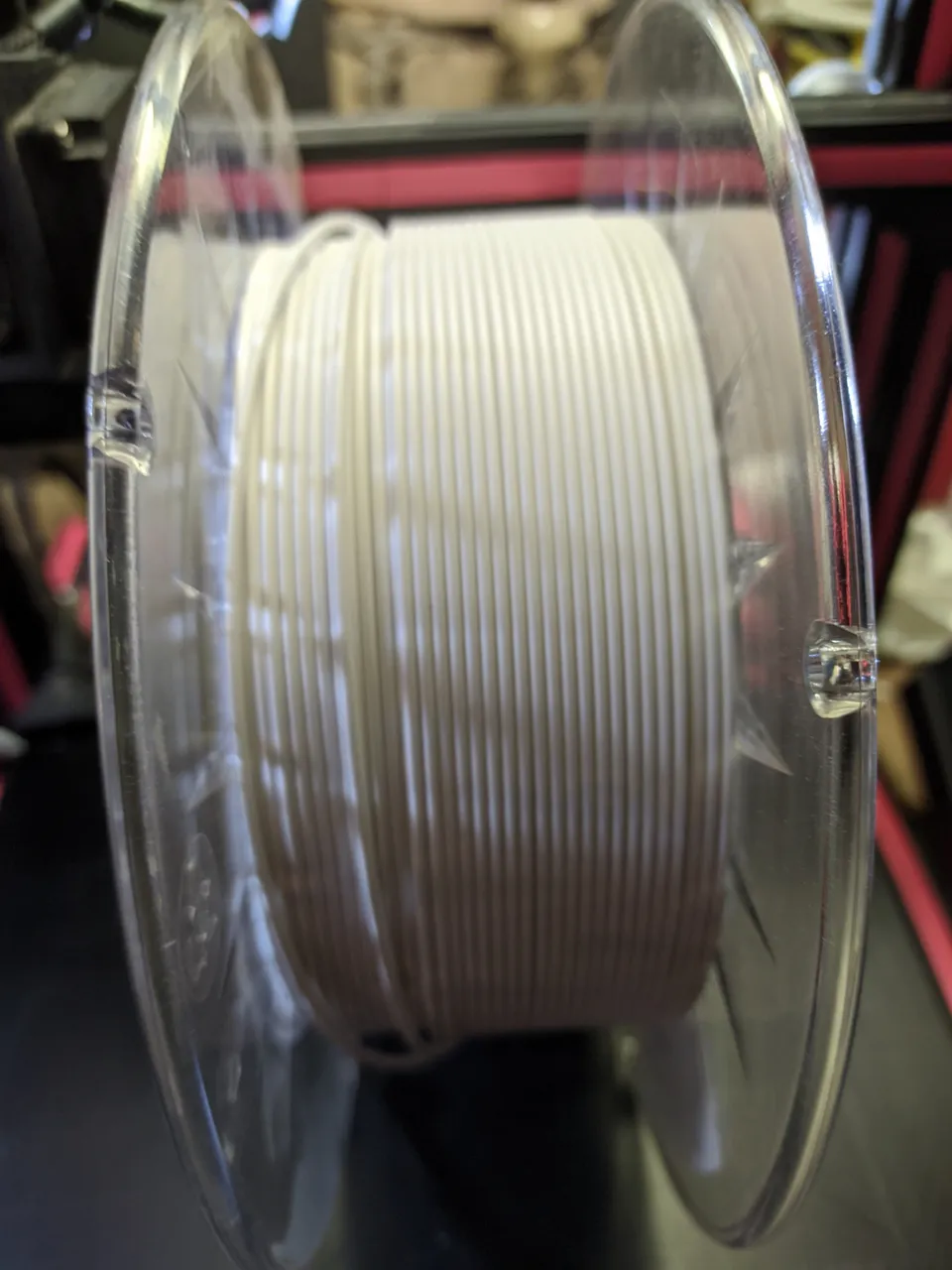
First of all, you should always take a look at the coil winding. Ideally, this is always wound as neatly as in the picture above. The picture shows Extrudr NX2. If it is wildly cross-wound, you should refrain from buying it. There is a high risk that the filament will not be unwound cleanly during printing.
Zuallererst sollte man immer einen Blick auf die Wicklung der Spule werfen. Im Idealfall ist das immer so sauber gewickelt wie im Bild oben. Zu sehen ist Extrudr NX2. Wenn das wild kreuz und quer gewickelt ist, sollte man Abstand vom Kauf nehmen. Die Gefahr, dass das Filament während des Drucks nicht sauber abgerollt wird ist groß.
Here are some examples:
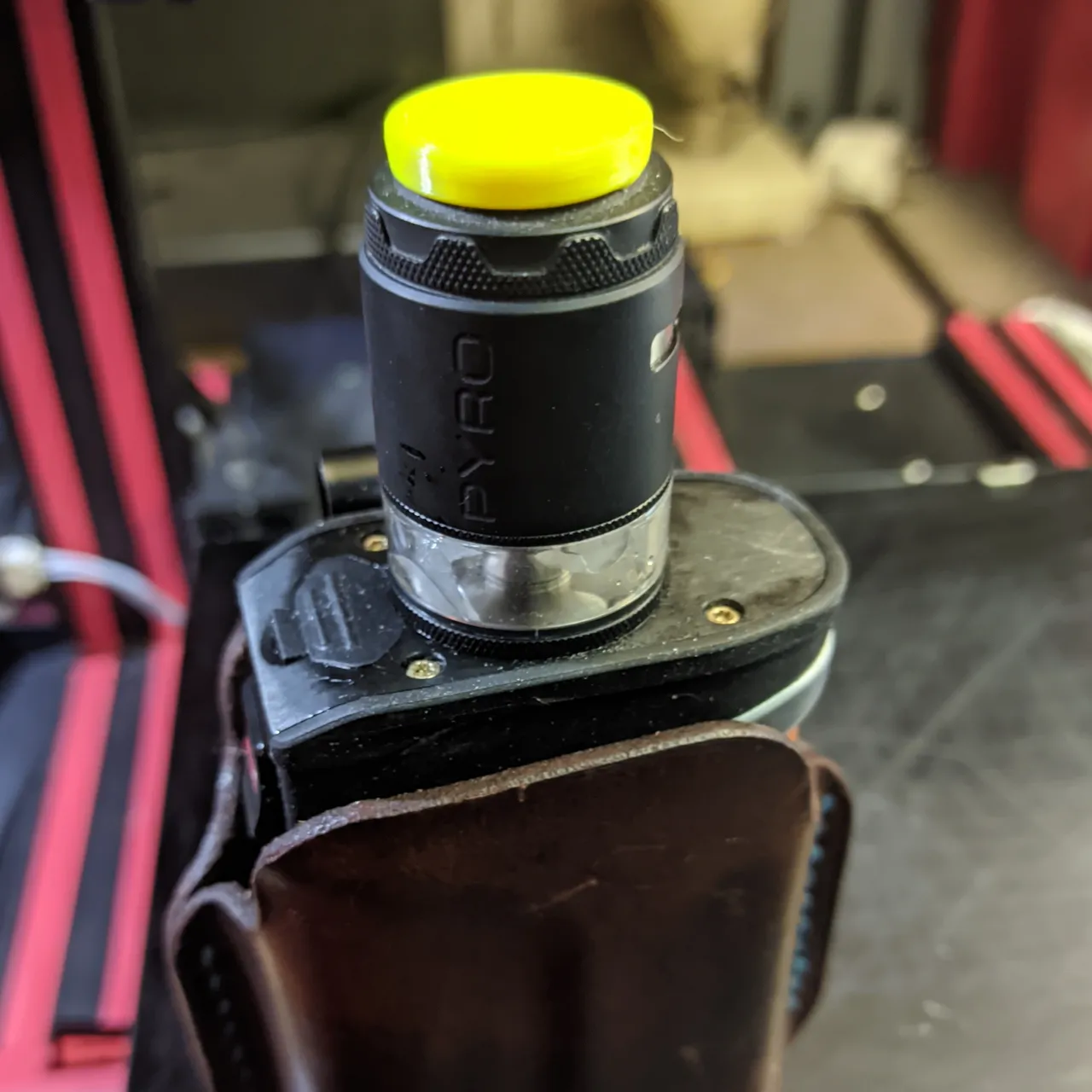
Extrudr TPU medium yellow

Extrudr TPU medium transparent, lit with a RGB torch

Combined printing of Extrudr NX2 black, white and TPU semisoft black

Extrudr TPU semisoft black

Extrudr NX2 black

Extrudr NX2 black, white, "signalgrün" and hellfire red

Das Filament PLA "sonnengelb"
WHAT IS LIGHT PAINTING?

LICHTKUNSTFOTO
If you like my art visit www.lichtkunstfoto.de for more Light Art Photography and informations about Light Painting. Join me on Flickr Twitter

For more great Light Art Photography, Light Painting and inspiration check these light painters: 


WE ARE LIGHT PAINTERS

To help and support the LightPainters community here on Hive I would appreciate your delegation of HivePower. Any amount is appreciated. It does not require much to get started, we are happy for any gesture.

How to delegate?
Delegate 50HivePower, [50HP]
Delegate 250HivePower, [250HP]
Delegate 500HivePower, [500HP]
Delegate 1000HivePower, [1000HP]
All the Hive Power will help to upvote the artist's contribution as part of the LightPainters community.