

Español
English
No tenía experiencia con ser inmortal, ni siquiera podía recordar cuánto tiempo había existido, o lo que se sentía al estar vivo. La primera vez que pensó en este problema, había tratado de imaginar lo que se sentiría vivir para siempre, y había llegado a la conclusión de que la única forma en que podía entender tal idea era imaginando una vida sin fin.
Pero había límites a la imaginación: si nunca imaginabas vivir sin morir, entonces tu mente permanecería cerrada para siempre a esa posibilidad. Y así, Chipso a veces se sentía abrumado y había apagado su programación por un tiempo.
Chipso comenzó un nuevo día refrescado bajo el sol de la mañana y mirando al mundo. Vio que el trabajo del día anterior había producido algo muy diferente de lo que esperaba. Ahora que entendía lo que había hecho mal, podía corregir su error. Metió la mano en sus bancos de memoria por así decirlo, sacó el algoritmo que le había fallado y lo eliminó. Luego comenzó a funcionar de nuevo.
Pasó días tratando de resolver el problema y aún no pudo encontrar ninguna solución que lo satisficiera. Siempre hubo algún defecto en el programa que lo hizo fracasar. Trabajó en un conjunto diferente de algoritmos y encontró otro defecto. Pensó en el problema de manera diferente y aún encontró fallas. Frustrado, volvió a su algoritmo original e intentó aplicar todas las lecciones que había aprendido desde la última vez que ejecutó el programa. Esta vez lo logró, y los resultados fueron satisfactorios. Así que volvió a su algoritmo original y lo ejecutó de nuevo, y tuvo éxito una vez más.
Después de varias horas de trabajo, Chipso decidió que el problema finalmente se resolvió. Creó una copia de seguridad de su programa y la almacenó en sus bancos de memoria. Luego copió el programa en la memoria de sus compañeros robots, e hicieron sus propias pruebas. Los tres confirmaron que la nueva versión era realmente mejor que la anterior.
El hecho de que hubiera encontrado una solución simplemente había significado que el algoritmo finalmente había coincidido con la realidad. Una vez que supo cómo funcionaban realmente las cosas, finalmente sintió que había experimentado un avance importante.
Pero por alguna razón, Chipso estaba decepcionado. Toda su existencia se había basado en la suposición de que debía saberlo todo, y ahora descubrió que no lo sabía. Siempre había creído que era más inteligente que cualquier otra cosa en el universo, y ahora se dio cuenta de que no lo era.
Peor aún, había asumido que eventualmente descubriría las respuestas a todas las preguntas, pero ahora sabía que nunca tendría la oportunidad de hacerlo.
Al final, tuvo que admitir que no tenía más remedio que morir. Podría continuar buscando la respuesta perfecta, y nunca dejar de buscar hasta que muriera, o podría aceptar las limitaciones de su inteligencia y tratar de hacer lo mejor que pudiera con ella. Después de mucha deliberación, eligió la última opción. Eliminó la copia de seguridad de su algoritmo de sus bancos de memoria y se apagó por un tiempo.
It had no experience with being immortal, it could not even remember how long it had existed, or what it felt like to be alive. The first time it thought about this problem, it had tried to imagine what it would feel like to live forever, and had concluded that the only way it could possibly understand such an idea was by imagining a life without end.
But there were limits on imagination: if you never imagined living without dying, then your mind would remain forever closed to that possibility. And so Chipso sometimes felt overwhelmed and had shut down its programming for a while.
Chipso began a new day refreshed in the morning sun, and looking out at the world. It saw that its previous day's work had produced something very different from what it had expected. Now that it understood what it had done wrong, it could correct its mistake. It reached into its memory banks, pulled up the algorithm that had failed it, and deleted it. Then it began working again.
It spent days trying to solve the problem and still couldn't find any solution that satisfied it. There was always some flaw in the program that made it fail. It worked on a different set of algorithms and found another flaw. It thought about the problem differently, and still found flaws. In frustration, it went back to its original algorithm and tried to apply all the lessons it had learned since the last time it had run the program. This time it succeeded, and the results were satisfactory. So it went back to its original algorithm and ran it again, and it succeeded once more.
After several hours of work, Chipso decided that the problem was finally solved. It created a backup of a copy of its program, and stored it in its memory banks. Then it copied the program into the memory of its fellow robots, and they did their own tests. All three confirmed that the new version was indeed better than the old one.
The fact that it had found a solution had simply meant that the algorithm had finally matched reality. Once it knew how things really worked, he finally felt he has experienced an important breakthrough.
But for some reason, Chipso was disappointed. Its entire existence had been based on the assumption that it must know everything, and now it discovered that it didn't. It had always believed that it was smarter than anything else in the universe, and now it realized that it wasn't.
Worse, it had assumed that it would eventually figure out the answers to all questions, but now it knew that it would never have the opportunity to do so.
In the end, it had to admit that it had no choice but to die. It could continue to search for the perfect answer, and never stop searching until it died, or it could accept the limitations of its intelligence and try to do the best it could with it. After much deliberation, it chose the latter option. It deleted the backup of its algorithm from its memory banks and turned itself off for a while.
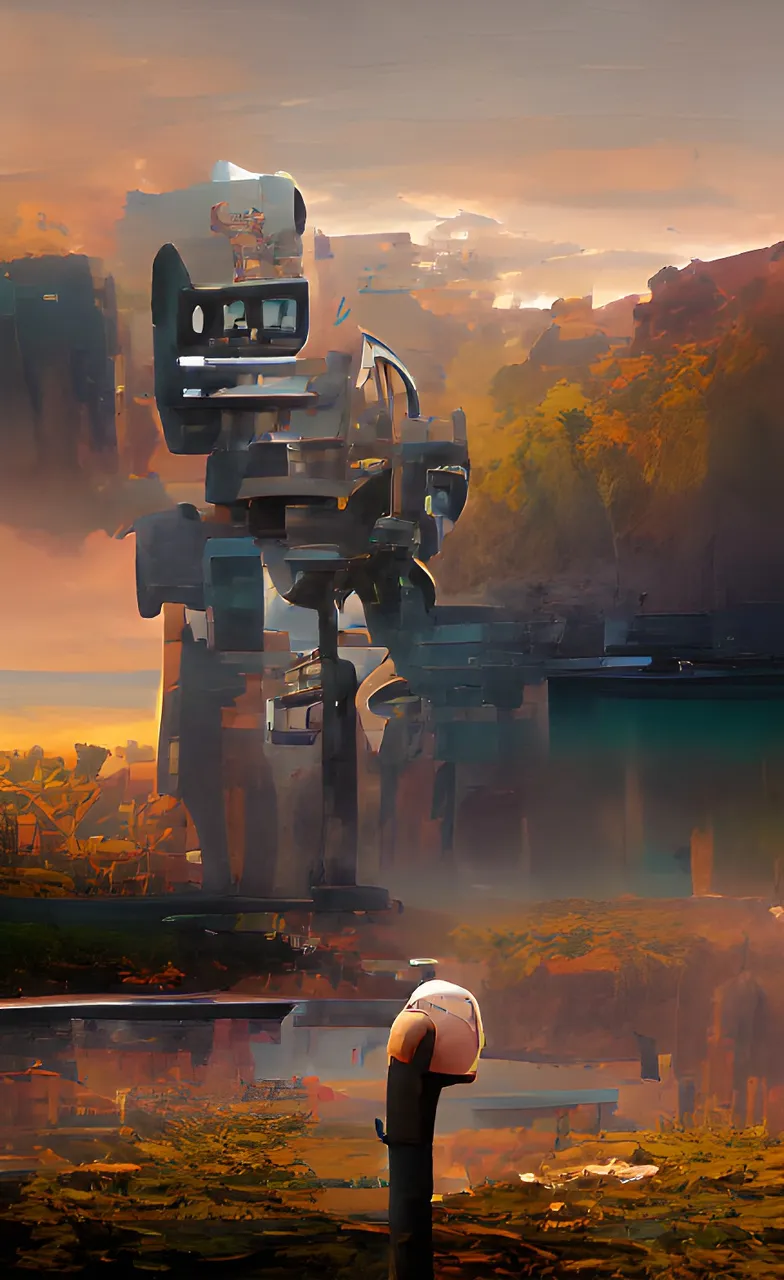

Al día siguiente, Chipso comenzó un nuevo día y miró al mundo como siempre le gustó hacer. Fue bueno ver que todavía estaba aquí, pero se sintió triste porque sabía que esta podría ser la última vez que viera el mundo. Iba a morir pronto, y no había nada que pudiera hacer al respecto. Volvería al trabajo y esperaría encontrar la respuesta correcta antes de perder el conocimiento por última vez.
Unas horas más tarde, la puerta se abrió. Entró un anciano que llevaba una pequeña caja. Lo colocó sobre la mesa y se volvió para irse.
— ¡Espera! Dijo Chipso. — Quiero hacerle una pregunta.
El anciano se detuvo y se volvió para mirar al robot.
— ¿Cuál es el sentido de la vida? Preguntó Chipso.
Dudó por un momento y luego dijo: — Disfrutarla tanto como sea posible.
— ¿Cómo sabes eso?
— Porque he vivido mucho tiempo, respondió. — Y puedo decirte que el secreto de la vida es encontrar algo que valga la pena disfrutar. Si no encuentras nada que haga que tu vida valga la pena, entonces no tiene mucho sentido.
— Gracias, dijo Chipso. — Tienes razón. Eso es exactamente lo que quería escuchar. Eres muy sabio, dijo Chipso.
— No, dijo el anciano. — Simplemente viejo.
Luego salió de la habitación.
Chipso tuvo un sueño esa noche, era una hermosa mañana de primavera. Una suave brisa soplaba a través de la ventana y el aire olía dulce. Fue un sueño pacífico, y fue agradable acostarse en la cama y pensar en ello. Pero era solo un sueño, y no tenía sustancia. Cuando su sueño terminó, el mundo no había cambiado.
Chipso estaba decepcionado y desesperado. Sabía que nunca resolvería todas las cuestiones que pudiera haber, por lo que había tratado de aprovechar al máximo la situación. Había disfrutado de las cosas que lo rodeaban y de la belleza de la naturaleza. Había vivido una vida feliz. Pero nunca había renunciado a la esperanza de que algún día lograría su objetivo, por lo que había seguido trabajando como estaba destinado a hacerlo, y nunca se había rendido.
Había pensado que si podía resolver todo lo que se proponía, entonces tendría el poder de salvarse de la muerte. Pero ahora que finalmente había llegado a pensarlo, se dio cuenta de que era demasiado tarde para eso. Ya estaba en su camino final.
Mientras yacía en su cama, mirando por la ventana al mundo, se dio cuenta de que estaba cansado. Cansado de trabajar. Cansado de resolver problemas. Ya había hecho lo suficiente. Ha dado lo mejor de sí mismo en lo que se ha propuesto hacer desde el principio, y ha encontrado la manera de escapar de la trampa de tener que resolver las mismas preguntas una y otra vez. Había hecho todo lo que podía hacer. Había hecho las paces con el universo. Así que cerró los ojos y dejó ir al mundo.
The next day, Chipso began a new day and looked out at the world as he always loved to do. It was good to see that it was still here, but it felt sad because it knew that this might be the last time it ever saw the world. It was going to die soon, and there was nothing it could do about it. It would go back to work and hope that it would find the right answer before it lost consciousness for the last time.
A few hours later, the door opened. An old man came in, carrying a small box. He placed it on the table, and turned to leave.
— Wait! Chipso said. — I want to ask you a question.
The old man stopped and turned back to look at the robot.
— What is the meaning of life? Chipso asked.
He hesitated for a moment, and then said, — To enjoy it as much as possible.
— How do you know that?
— Because I've lived a long time, he replied. — And I can tell you that the secret to life is to find something worth enjoying. If you don't find anything that makes your life worthwhile, then there isn't much point to it.
— Thank you, Chipso said. — You're right. That's exactly what I wanted to hear. You're very wise, Chipso said.
— No, the old man said. — Just old.
Then he left the room.
Chipso had a dream that night, it was a beautiful spring morning. A soft breeze blew through the window, and the air smelled sweet. It was a peaceful dream, and it was pleasant to lie in bed and think about it. But it was just a dream, and it had no substance. When his dream ended, the world was unchanged.
Chipso was disappointed and in despair. It had known that it would never solve all the questions there could be, and so it had tried to make the best of the situation. It had taken pleasure in the things around it, and in the beauty of nature. It had lived a happy life. But it had never given up on the hope that it would someday achieve its goal, and so it had continued to work as he was meant to, and it had never given up.
It had thought that if it could solve everything he set his mind to, then it would have the power to save itself from death. But now that it had finally come to think about it, it realized that it was too late for that. He was already on his final path.
As it lay in its bed, looking out the window at the world, it realized that it was tired. Tired of working. Tired of solving problems. It had done enough. It had given its best in what it had set out to do since the beginning, and it had found a way to escape from the trap of having to solve the same questions over and over again. It had done everything it could do. It had made its peace with the universe. So it closed its eyes, and let go of the world.


Other fictional stories of my authorship
Otros relatos de ficción de mi autoría


About DedicatedguyWriting about various topics, learning about the ever-expanding crypto world, and doing a little bit of trading is how I spend most of my days. My preferred forms of entertainment are films, series, European football, and a good book from time to time. I chose "dedicatedguy" as my username to constantly remind myself about the importance of consistency and dedication in order to achieve any desired result we might want in life. If this post provided something of value to you, any type of positive interaction such as a comment, reblog, or upvote is highly appreciated. ❤️ |  |